McBride Angela, Chanh Ho Q, Fraser John F, Yacoub Sophie, Obonyo Nchafatso G
Oxford University Clinical Research Unit, Ho Chi Minh City, Viet Nam.
Brighton and Sussex Medical School, United Kingdom.
Glob Cardiol Sci Pract. 2020 Nov 30;2020(2):e202029. doi: 10.21542/gcsp.2020.29.
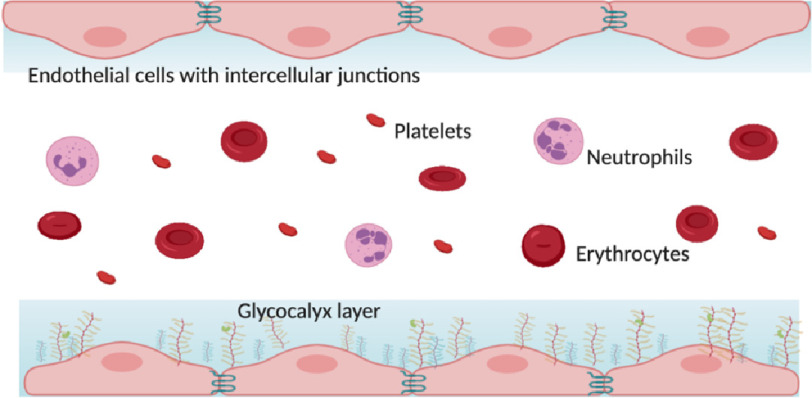
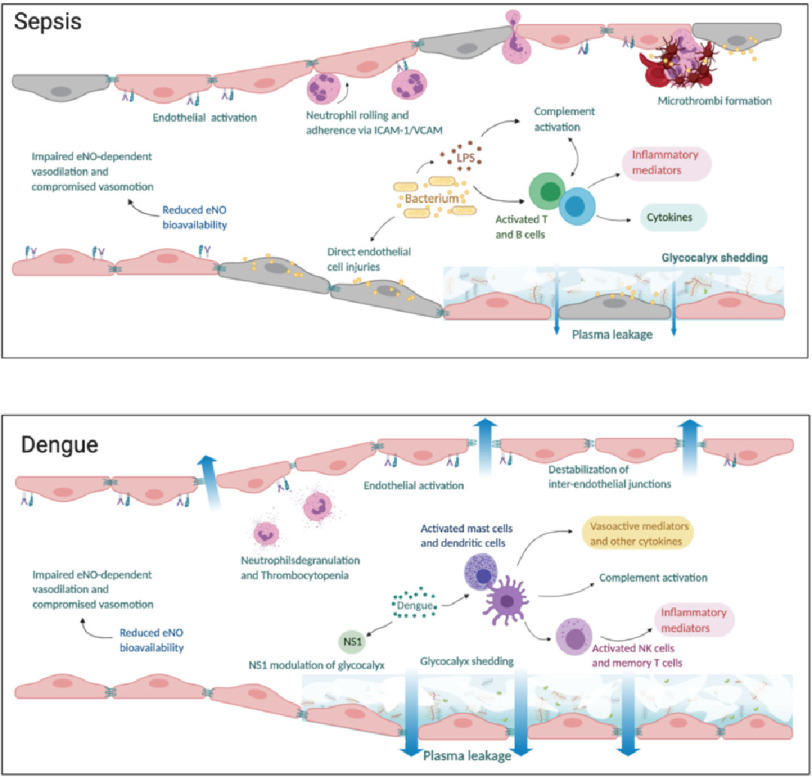
The microcirculation comprising of arterioles, capillaries and post-capillary venules is the terminal vascular network of the systemic circulation. Microvascular homeostasis, comprising of a balance between vasoconstriction, vasodilation and endothelial permeability in healthy states, regulates tissue perfusion. In severe infections, systemic inflammation occurs irrespective of the infecting microorganism(s), resulting in microcirculatory dysregulation and dysfunction, which impairs tissue perfusion and often precedes end-organ failure. The common hallmarks of microvascular dysfunction in both septic shock and dengue shock, are endothelial cell activation, glycocalyx degradation and plasma leak through a disrupted endothelial barrier. Microvascular tone is also impaired by a reduced bioavailability of nitric oxide. In vitro and in vivo studies have however demonstrated that the nature and extent of microvascular dysfunction as well as responses to volume expansion resuscitation differ in these two clinical syndromes. This review compares and contrasts the pathophysiology of microcirculatory dysfunction in septic versus dengue shock and the attendant effects of fluid administration during resuscitation.
由小动脉、毛细血管和毛细血管后微静脉组成的微循环是体循环的终末血管网络。微血管稳态,即在健康状态下血管收缩、血管舒张和内皮通透性之间的平衡,调节组织灌注。在严重感染中,无论感染的微生物是什么,都会发生全身炎症,导致微循环失调和功能障碍,这会损害组织灌注,并常常先于终末器官衰竭出现。脓毒性休克和登革热休克中微血管功能障碍的共同特征是内皮细胞活化、糖萼降解以及血浆通过破坏的内皮屏障渗漏。一氧化氮生物利用度降低也会损害微血管张力。然而,体外和体内研究表明,这两种临床综合征中微血管功能障碍的性质和程度以及对容量扩充复苏的反应有所不同。本综述比较并对比了脓毒性休克与登革热休克中微循环功能障碍的病理生理学以及复苏期间液体给药的伴随效应。