Department of Mechanical Engineering, Stanford University, Stanford, California, USA.
Mathematical Institute, University of Oxford, Oxford, UK.
Biomech Model Mechanobiol. 2021 Apr;20(2):651-669. doi: 10.1007/s10237-020-01408-2. Epub 2021 Jan 15.
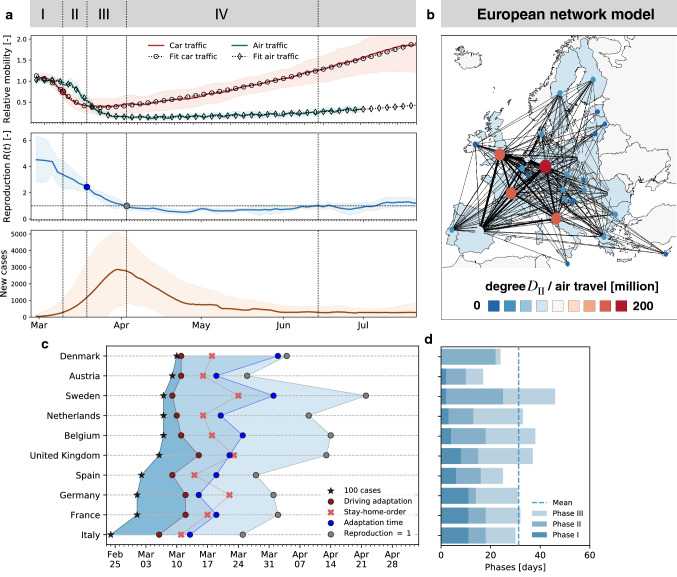
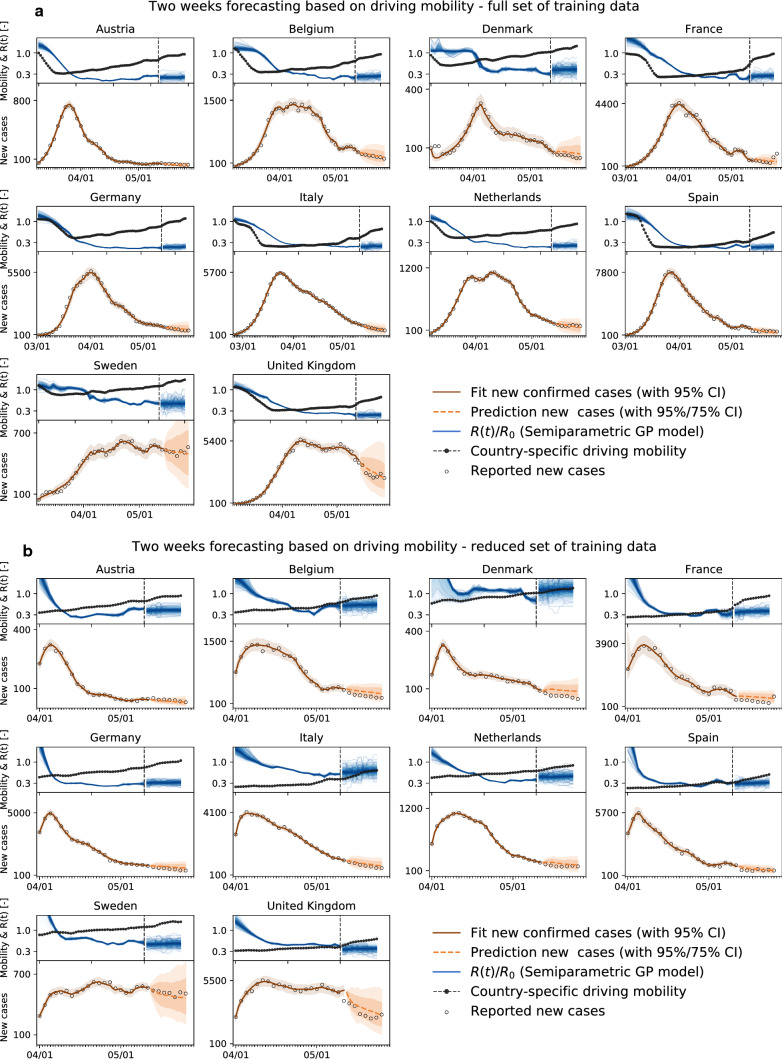
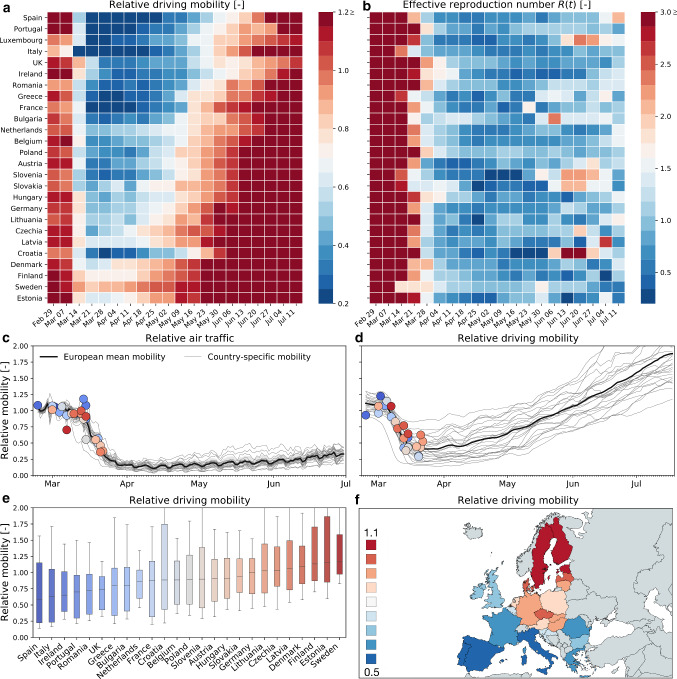
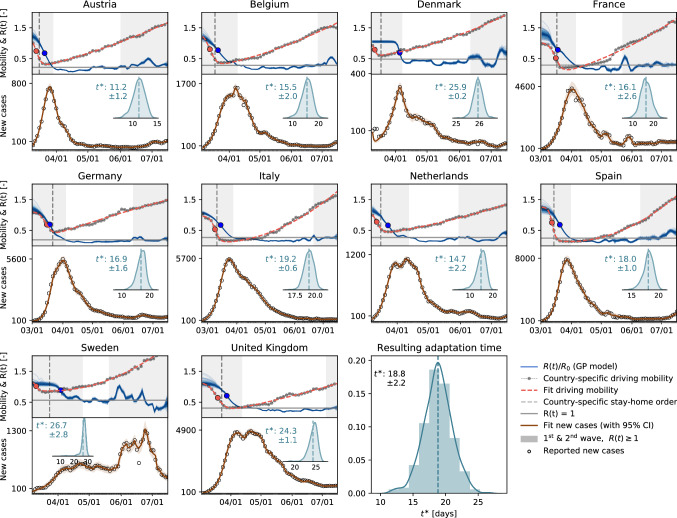
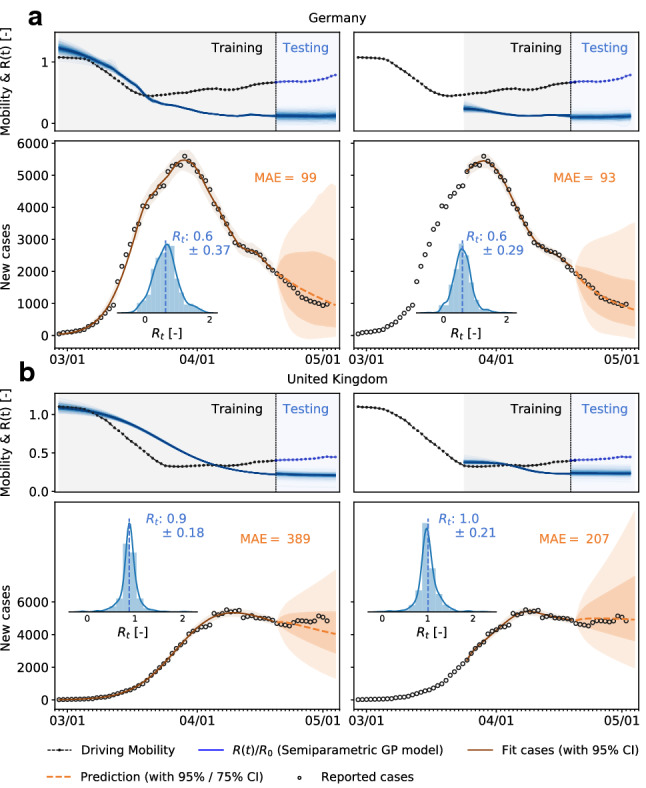
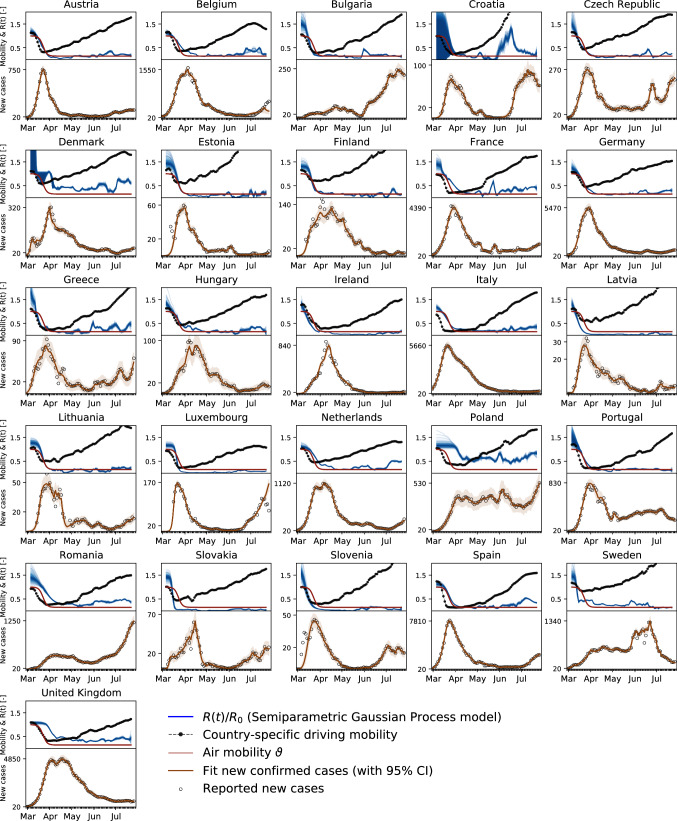
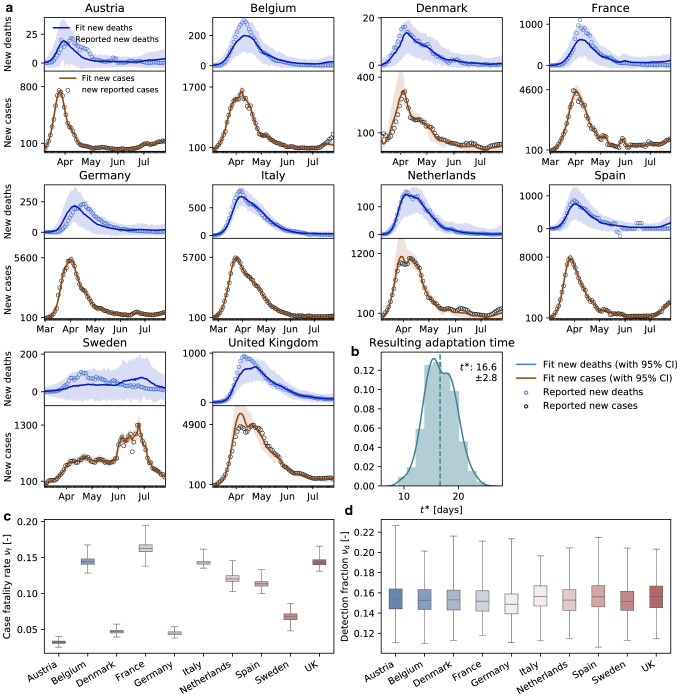
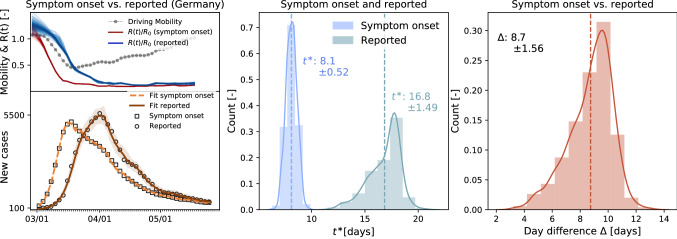
The spreading of infectious diseases including COVID-19 depends on human interactions. In an environment where behavioral patterns and physical contacts are constantly evolving according to new governmental regulations, measuring these interactions is a major challenge. Mobility has emerged as an indicator for human activity and, implicitly, for human interactions. Here, we study the coupling between mobility and COVID-19 dynamics and show that variations in global air traffic and local driving mobility can be used to stratify different disease phases. For ten European countries, our study shows a maximal correlation between driving mobility and disease dynamics with a time lag of [Formula: see text] days. Our findings suggest that trends in local mobility allow us to forecast the outbreak dynamics of COVID-19 for a window of two weeks and adjust local control strategies in real time.
传染病(包括 COVID-19)的传播取决于人际互动。在行为模式和身体接触根据新的政府规定不断变化的环境中,衡量这些互动是一项重大挑战。移动性已成为人类活动的指标,也间接地成为人际互动的指标。在这里,我们研究了流动性和 COVID-19 动态之间的耦合,并表明全球航空交通和本地驾驶流动性的变化可用于划分不同的疾病阶段。对于十个欧洲国家,我们的研究表明,驾驶流动性和疾病动态之间的最大相关性的时间滞后为[Formula: see text]天。我们的研究结果表明,本地流动性趋势使我们能够预测 COVID-19 的爆发动态,并在两周的时间窗口内进行预测,并实时调整本地控制策略。