Zhao Yunchen, Fu Wenjiang, Hu Changwei, Chen Guangquan, Xiao Zhanwen, Chen Yuru, Wang Zhijiang, Cheng Hongyu
School of Agriculture and Ecological Engineering, Hexi University, Zhangye, 734000, Gansu, China.
College of Biological, Chemical Science and Engineering, Jiaxing University, Jiaxing, 314000, Zhejiang, China.
Sci Rep. 2021 Jan 15;11(1):1544. doi: 10.1038/s41598-021-81228-1.
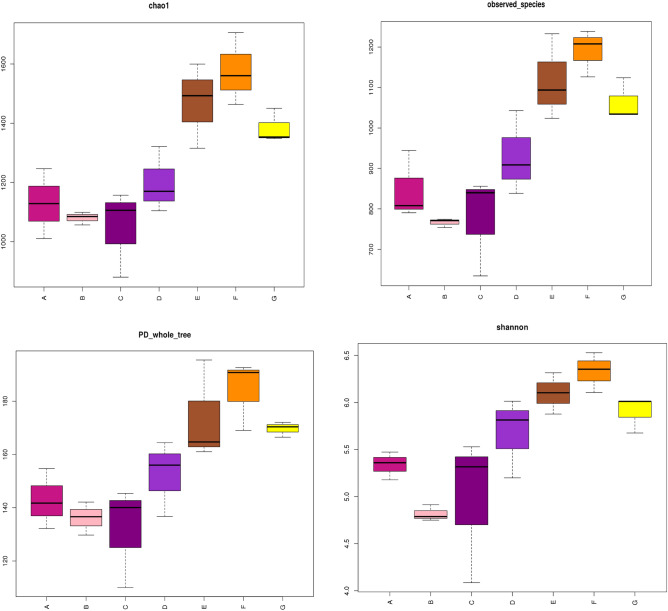
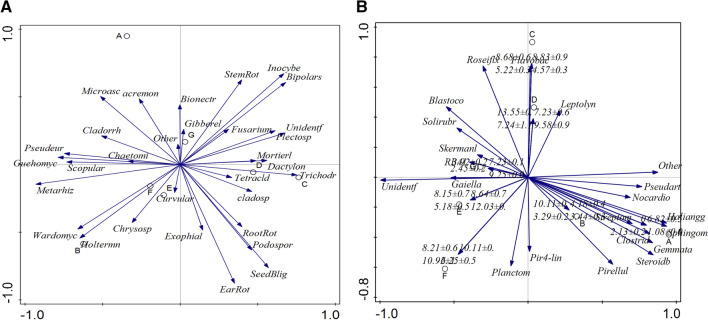
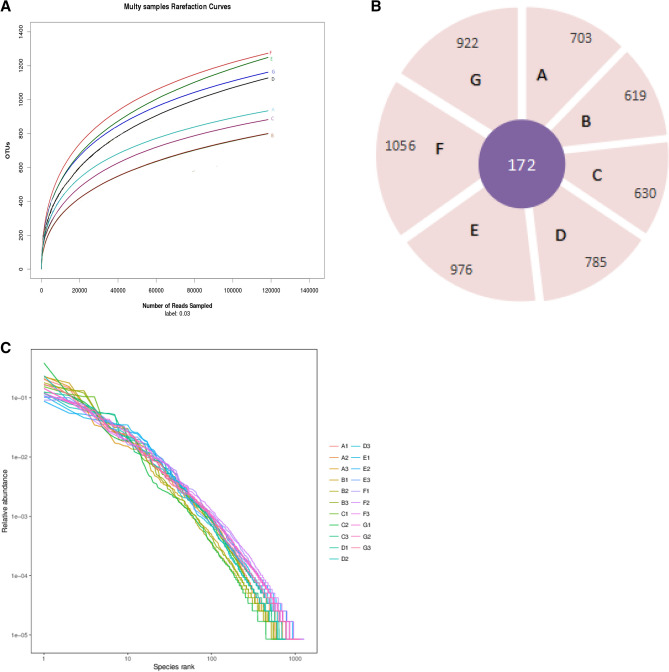
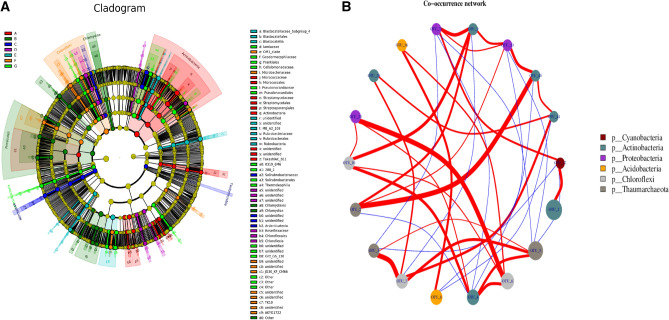
Soil microbe is crucial to a healthy soil, therefore its diversities and abundances under different conditions are still need fully understand.The aims of the study were to characterize the community structure and diversity of microbe in the rhizosphere soil after continuous maize seed production, and the relationship between the disease incidence of four diseases and the variation of the rhizosphere microbe. The results showed that different fungal and bacterial species were predominant in different cropping year, and long-term maize seed production had a huge impact on structure and diversity of soil microbial. Ascomycota and Mortierellomycota were the dominant fungal phyla and Mortierella and Ascomycetes represented for a large proportion of genus. A relative increase of Fusarium and Gibberella and a relative decrease of Mortierella, Chrysosporium, Podospora, and Chaetomium were observed with the increase of cropping year. Pathogenic Fusarium, Curvularia, Curvularia-lunata, Cladosporium, Gibberella-baccata, and Plectosphaerellaceae were over-presented and varied at different continuous cropping year, led to different maize disease incidence. Proteobacteria and Actinobacteria ranked in the top two of all bacterial phyla, and genus Pseudarthrobacter, Roseiflexus and RB41 dominated top 3. Haliangium and Streptomyces decreased with the continuous cropping year and mono-cropping of maize seed production increased disease incidence with the increase of cropping year, while the major disease was different. Continuous cropping of maize seed production induced the decrease of protective microbe and biocontrol genera, while pathogenic pathogen increased, and maize are in danger of pathogen invasion. Field management show great effects on soil microbial community.
土壤微生物对健康土壤至关重要,因此其在不同条件下的多样性和丰度仍需充分了解。本研究的目的是表征连续玉米制种后根际土壤中微生物的群落结构和多样性,以及四种病害的发病率与根际微生物变化之间的关系。结果表明,不同的真菌和细菌物种在不同种植年份占主导地位,长期玉米制种对土壤微生物的结构和多样性有巨大影响。子囊菌门和被孢霉门是主要的真菌门类,被孢霉属和子囊菌纲占属的很大比例。随着种植年份的增加,镰刀菌属和赤霉菌属相对增加,而被孢霉属、金孢子菌属、柄孢壳属和毛壳菌属相对减少。致病性镰刀菌、弯孢霉属、新月弯孢霉、枝孢属、浆果赤霉和盘菌科在不同连作年份中过量存在且有所变化,导致不同的玉米病害发病率。变形菌门和放线菌门在所有细菌门类中排名前两位,假节杆菌属、玫瑰弯菌属和RB41属占前三位。随着连作年份的增加,盐土单胞菌属和链霉菌属减少,玉米单作制种随着种植年份的增加发病率上升,而主要病害不同。玉米种子生产连作导致保护性微生物和生防菌属减少,而致病性病原体增加,玉米面临病原体入侵的危险。田间管理对土壤微生物群落有很大影响。