Department of Chemical and Petroleum Engineering, Sharif University of Technology, Tehran, Iran.
Department of Biomedical Engineering, Amirkabir University of Technology, Tehran, Iran.
Sci Rep. 2021 Jan 15;11(1):1565. doi: 10.1038/s41598-021-81214-7.
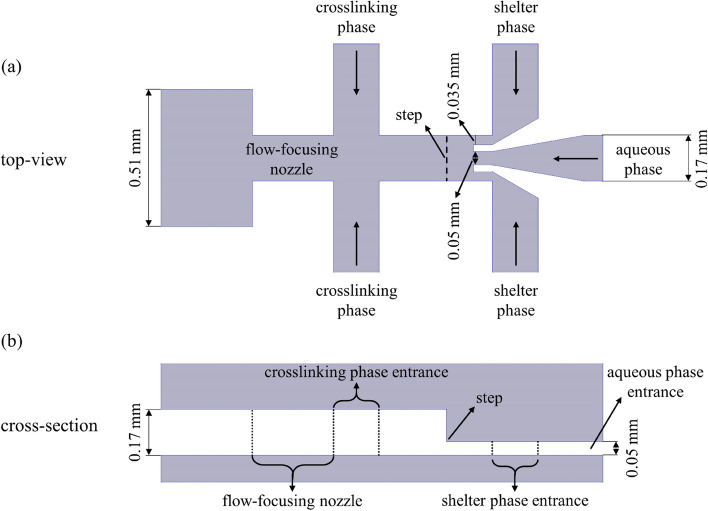
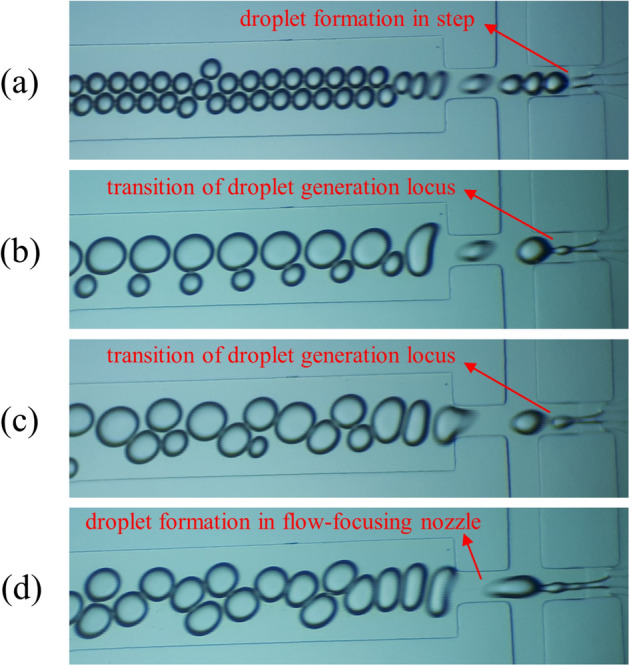
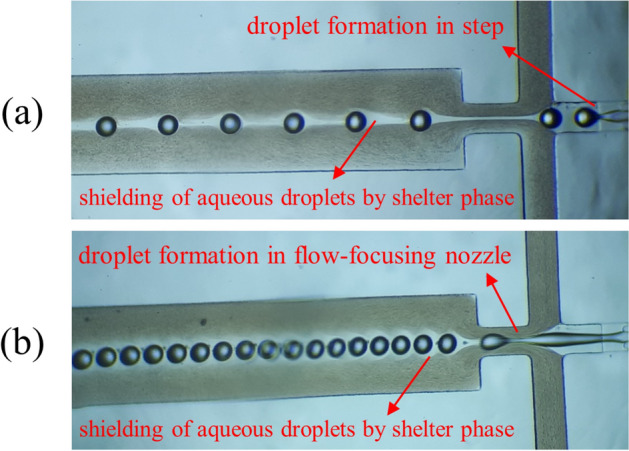
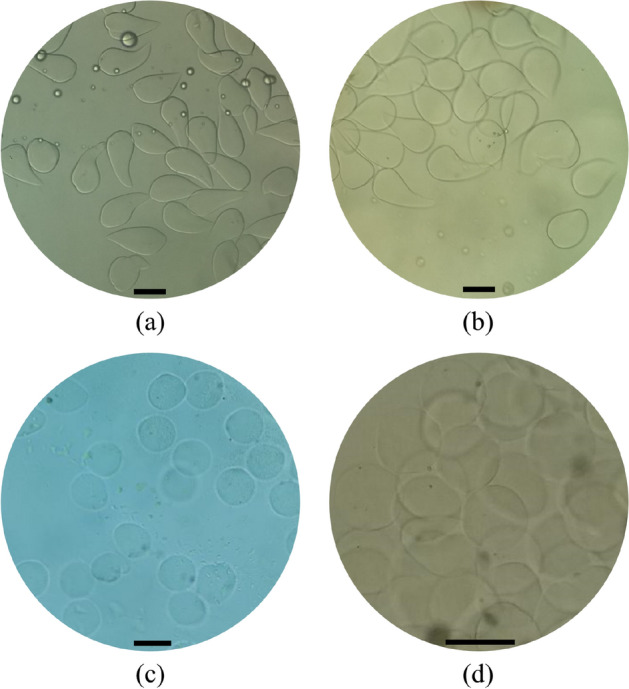
Microfluidic on-chip production of microgels using external gelation can serve numerous applications that involve encapsulation of sensitive cargos. Nevertheless, on-chip production of microgels in microfluidic devices can be challenging due to problems induced by the rapid increase in precursor solution viscosity like clogging. Here, a novel design incorporating a step, which includes a sudden increase in cross-sectional area, before a flow-focusing nozzle was proposed for microfluidic droplet generators. Besides, a shielding oil phase was utilized to avoid the occurrence of emulsification and gelation stages simultaneously. The step which was located before the flow-focusing nozzle facilitated the full shielding of the dispersed phase due to 3-dimensional fluid flow in this geometry. The results showed that the microfluidic device was capable of generating highly monodispersed spherical droplets (CV < 2% for step and CV < 5% for flow-focusing nozzle) with an average diameter in the range of 90-190 μm, both in step and flow-focusing nozzle. Moreover, it was proved that the device could adequately create a shelter for the dispersed phase regardless of the droplet formation locus. The ability of this microfluidic device in the production of microgels was validated by creating alginate microgels (with an average diameter of ~ 100 μm) through an external gelation process with on-chip calcium chloride emulsion in mineral oil.
使用外部凝胶化在微流控芯片上生产微凝胶可用于许多涉及封装敏感货物的应用。然而,由于前驱体溶液粘度迅速增加而导致的问题,如堵塞,在微流控装置中生产微凝胶具有挑战性。在这里,提出了一种在流聚焦喷嘴前包含一个台阶的新设计,用于微流控液滴发生器。此外,还使用了屏蔽油相来避免乳化和凝胶化阶段同时发生。由于该几何形状中的三维流,位于流聚焦喷嘴之前的台阶有利于分散相的完全屏蔽。结果表明,该微流控器件能够生成具有高度单分散性的球形液滴(台阶处的 CV<2%,流聚焦喷嘴处的 CV<5%),其平均直径在 90-190 μm 范围内,在台阶和流聚焦喷嘴处均如此。此外,证明了该装置无论在液滴形成位置如何,都能为分散相提供充分的保护。该微流控器件通过在矿物油中的芯片氯化钙乳液中进行外部凝胶化过程,成功制备了海藻酸钠微凝胶(平均直径约为 100 μm),验证了其生产微凝胶的能力。