Mortaz Esmaeil, Tabarsi Payam, Jamaati Hamidreza, Dalil Roofchayee Neda, Dezfuli Neda K, Hashemian Seyed MohammadReza, Moniri Afshin, Marjani Majid, Malekmohammad Majid, Mansouri Davood, Varahram Mohammad, Folkerts Gert, Adcock Ian M
Clinical Tuberculosis and Epidemiology Research Center, National Research Institute of Tuberculosis and Lung Diseases (NRITLD), Shahid Beheshti University of Medical Sciences, Tehran, Iran.
Department of Immunology, School of Medicine, Shahid Beheshti University of Medical Sciences, Tehran, Iran.
Front Immunol. 2021 Apr 22;12:592727. doi: 10.3389/fimmu.2021.592727. eCollection 2021.
Severe acute respiratory syndrome coronavirus 2 (SARS-CoV-2) that causes coronavirus disease 2019 (COVID-19) has infected over 112M patients and resulted in almost 2.5M deaths worldwide. The major clinical feature of severe COVID-19 patients requiring ventilation is acute respiratory distress syndrome (ARDS) possibly associated with a cytokine storm.
To elucidate serum levels of TNF-α and soluble TNF-Receptor 1 (sTNFR1) in patients with severe and mild COVID-19 disease as determinants of disease severity.
We determined serum TNF-α and sTNFR1 concentrations in 46 patients with laboratory-confirmed COVID-19 (17 patients with severe disease within the intensive care unit [ICU] and 29 non-severe, non-ICU patients) and 15 healthy controls upon admission using ELISA. Subjects were recruited between March-May 2020 at the Masih Daneshvari Hospital Tehran, Iran.
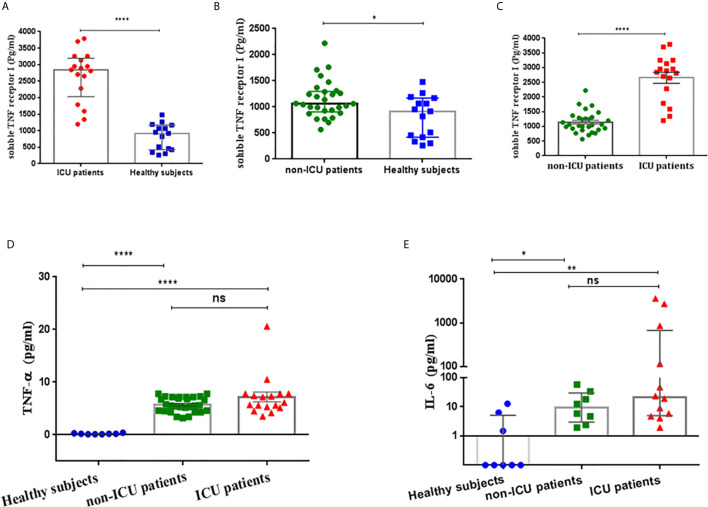
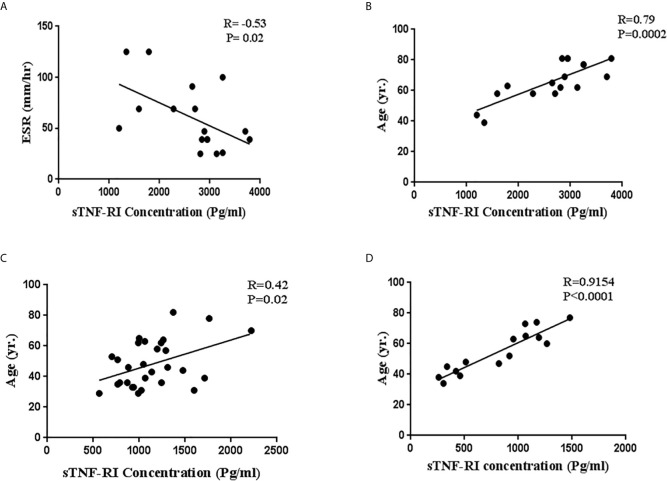
Serum levels of sTNFRI were significantly higher in ICU patients (P<0.0001) and non-ICU patients (P=0.0342) compared with healthy subjects. Serum sTNFR1 were significantly higher in ICU patients than in non-ICU patients (P<0.0001). Serum TNF-α levels were greater in ICU and non-ICU patients than in the healthy subjects group (p<0.0001). The sTNFRI concentration in ICU (r=0.79, p=0.0002) and non-ICU (r=0.42, p=0.02) patients positively correlated with age although serum sTNFRI levels in ICU patients were significantly higher than in older healthy subjects. The sTNFRI concentration in ICU patients negatively correlated with ESR.
The study demonstrates higher sTNFRI in ICU patients with severe COVID-19 disease and this be a biomarker of disease severity and mortality. Future studies should examine whether lower levels of systemic sTNFR1 at admission may indicate a better disease outcome.
导致2019冠状病毒病(COVID-19)的严重急性呼吸综合征冠状病毒2(SARS-CoV-2)已感染全球超过1.12亿患者,并导致近250万人死亡。需要通气的重症COVID-19患者的主要临床特征是可能与细胞因子风暴相关的急性呼吸窘迫综合征(ARDS)。
阐明重症和轻症COVID-19患者血清肿瘤坏死因子-α(TNF-α)和可溶性肿瘤坏死因子受体1(sTNFR1)水平作为疾病严重程度的决定因素。
我们使用酶联免疫吸附测定法(ELISA)在入院时测定了46例实验室确诊的COVID-19患者(17例重症监护病房[ICU]内的重症患者和29例非重症、非ICU患者)以及15名健康对照者的血清TNF-α和sTNFR1浓度。研究对象于2020年3月至5月在伊朗德黑兰的马西·达内什瓦里医院招募。
与健康受试者相比,ICU患者(P<0.0001)和非ICU患者(P=0.0342)的血清sTNFRI水平显著更高。ICU患者的血清sTNFR1显著高于非ICU患者(P<0.0001)。ICU和非ICU患者的血清TNF-α水平高于健康受试者组(p<0.0001)。ICU患者(r=0.79,p=0.0002)和非ICU患者(r=0.42,p=0.02)的sTNFRI浓度与年龄呈正相关,尽管ICU患者的血清sTNFRI水平显著高于老年健康受试者。ICU患者的sTNFRI浓度与红细胞沉降率(ESR)呈负相关。
该研究表明,重症COVID-19的ICU患者中sTNFRI水平较高,这可能是疾病严重程度和死亡率的生物标志物。未来的研究应检查入院时较低水平的全身sTNFR1是否可能预示更好的疾病结局。