Leong Kieran, Gaglani Bhavita, Khanna Ashish K, McCurdy Michael T
Division of Pulmonary & Critical Care, University of Maryland School of Medicine, Baltimore, MD 21201, USA.
Department of Anesthesiology, Section on Critical Care Medicine, Wake Forest University Hospital, Winston-Salem, NC 27157, USA.
Biomedicines. 2021 Mar 18;9(3):311. doi: 10.3390/biomedicines9030311.
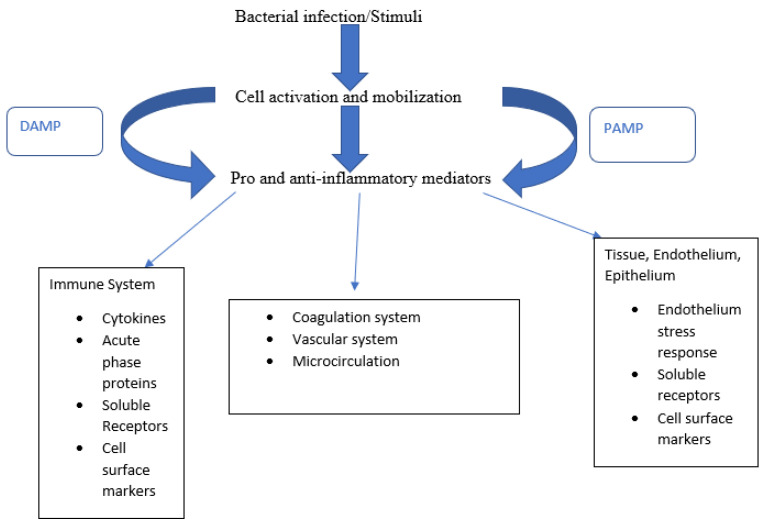
Sepsis management demands early diagnosis and timely treatment that includes source control, antimicrobial therapy, and resuscitation. Currently employed diagnostic tools are ill-equipped to rapidly diagnose sepsis and isolate the offending pathogen, which limits the ability to offer targeted and lowest-toxicity treatment. Cutting edge diagnostics and therapeutics in development may improve time to diagnosis and address two broad management principles: (1) source control by removing the molecular infectious stimulus of sepsis, and (2) attenuation of the pathological immune response allowing the body to heal. This review addresses novel diagnostics and therapeutics and their role in the management of sepsis.
脓毒症的管理需要早期诊断和及时治疗,包括源头控制、抗菌治疗和复苏。目前使用的诊断工具在快速诊断脓毒症和分离致病病原体方面能力不足,这限制了提供针对性和低毒性治疗的能力。正在研发的前沿诊断和治疗方法可能会缩短诊断时间,并遵循两大广泛的管理原则:(1)通过消除脓毒症的分子感染刺激进行源头控制,以及(2)减轻病理性免疫反应以使身体得以恢复。本综述探讨了新型诊断和治疗方法及其在脓毒症管理中的作用。