Jaarsma-Coes Myriam G, Marinkovic Marina, Astreinidou Eleftheria, Schuurmans Megan S, Peters Femke P, Luyten Gregorius P M, Rasch Coen R N, Beenakker Jan-Willem M
Ophthalmology, Leiden University Medical Centre, Leiden, Netherlands.
Radiology, C.J. Gorter Centre for High Field MRI, Leiden University Medical Centre, Leiden, Netherlands.
Phys Imaging Radiat Oncol. 2020 Oct 6;16:33-36. doi: 10.1016/j.phro.2020.09.010. eCollection 2020 Oct.
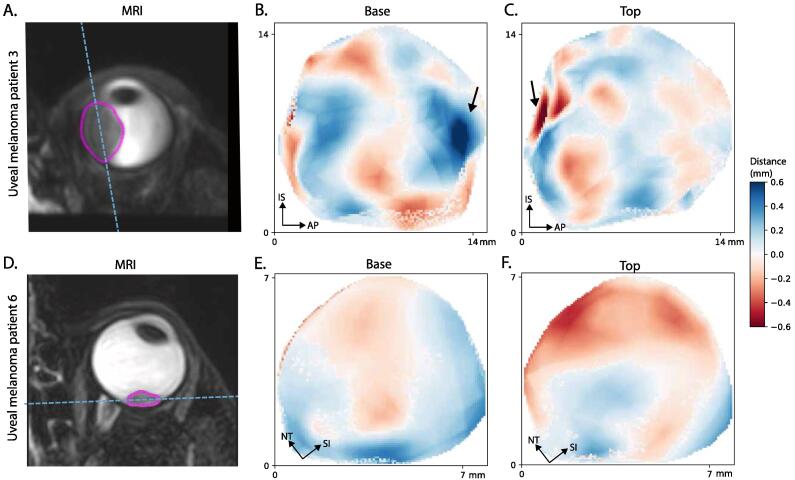
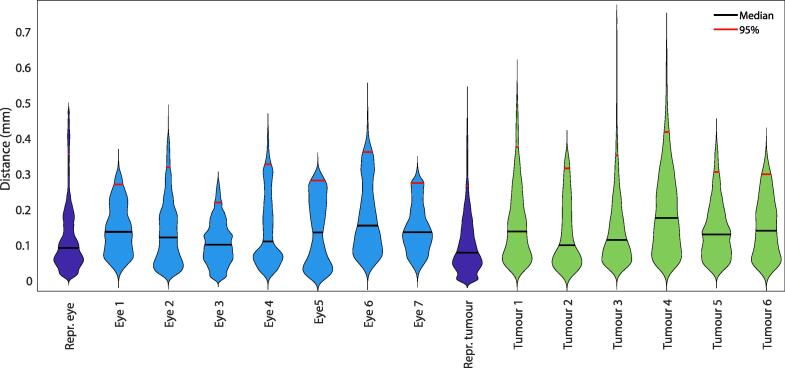
Proton beam therapy (PBT) for uveal melanoma (UM) is performed in sitting position, while the acquisition of the Magnetic resonance (MR)-images for treatment planning is performed in supine position. We assessed the effect of this difference in position on the eye- and tumour- shape. Seven subjects and six UM-patients were scanned in supine and a seating mimicking position. The distances between the tumour/sclera in both positions were calculated. The median distance between both positions was 0.1 mm. Change in gravity direction produced no substantial changes in sclera and tumour shape, indicating that supinely acquired MR-images can be used to plan ocular-PBT.
葡萄膜黑色素瘤(UM)的质子束治疗(PBT)是在坐姿下进行的,而用于治疗计划的磁共振(MR)图像采集则是在仰卧位进行的。我们评估了这种体位差异对眼睛和肿瘤形状的影响。对7名受试者和6名UM患者在仰卧位和模拟坐姿下进行了扫描。计算了两个体位下肿瘤/巩膜之间的距离。两个体位之间的中位距离为0.1毫米。重力方向的改变未导致巩膜和肿瘤形状发生实质性变化,这表明仰卧位采集的MR图像可用于眼部PBT的治疗计划。