Department of Neurosurgery, Gil Medical Center, Gachon University College of Medicine, #24, 74th Street, Namdongdaero Namdong-Gu, Incheon, 405-220, South Korea.
BMC Surg. 2021 Jan 18;21(1):39. doi: 10.1186/s12893-020-00949-8.
Trans-sacral epiduroscopic laser decompression (SELD) using slender epiduroscope and a holmium YAG laser is one of the minimally invasive surgical options for lumbar disc herniation. However, the learning curve of SELD and the effect of surgical proficiency on clinical outcome have not yet been established. We investigated patients with lumbar disc herniation undergoing SELD to report the clinical outcome and learning curve.
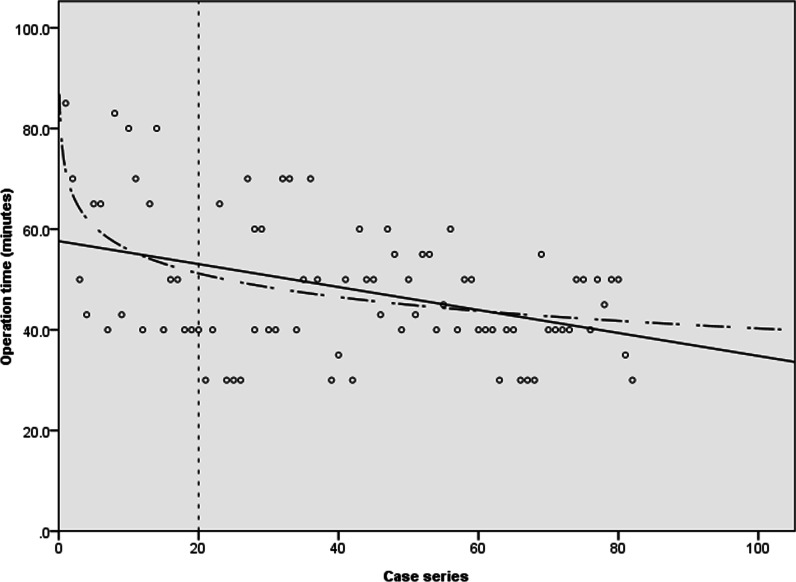
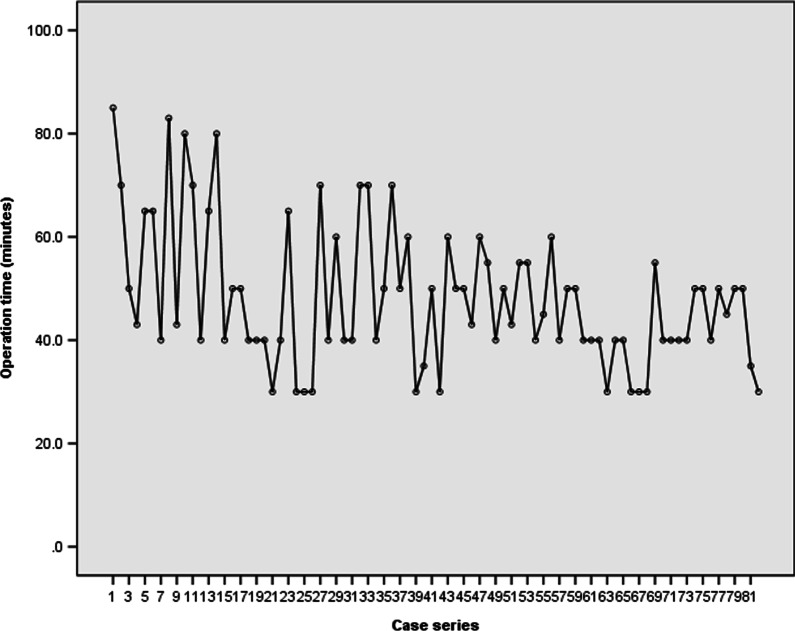
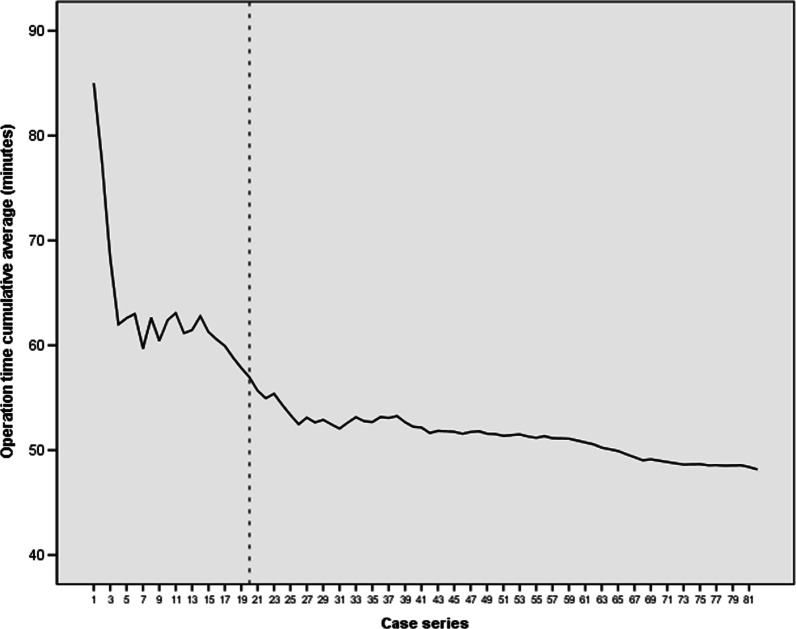
Retrospective analysis of clinical outcome and learning curve were performed at a single center from clinical data collected from November 2015 to November 2018. A total of 82 patients who underwent single-level SELD for lumbar disc herniation with a minimum follow-up of 6.0 months were enrolled. Based on the findings that the cut-off of familiarity was 20 cases according to the cumulative study of operation time, patients were allocated to two groups: early group (n = 20) and late group (n = 62). The surgical, clinical, and radiological outcomes were retrospectively evaluated between the two groups to analyze the learning curve of SELD.
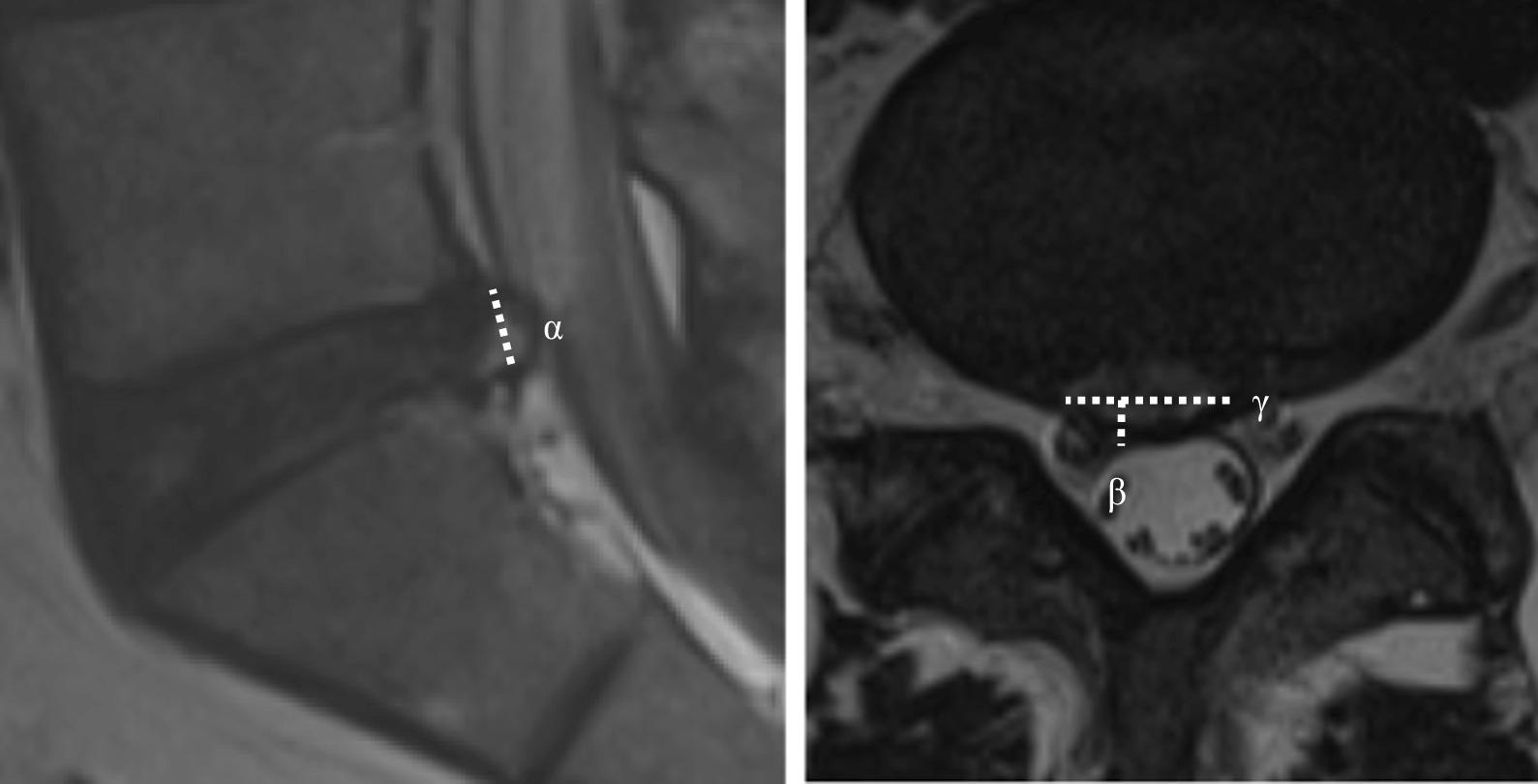
According to linear and log regression analyses, the operation time was obtained by the formula: operation time = 58.825-(0.181 × [case number]) (p < 0.001). The mean operation time was significantly different between the two groups (mean 56.95 min; 95% confidence interval [CI], 49.12-64.78 in the early group versus mean 45.34 min; 95% CI, 42.45-48.22 in the late group; p = 0.008, non-parametric Mann-Whitney U test). Baseline characteristics, including demographic data, clinical factors, and findings of preoperative magnetic resonance imaging, did not differ between the two groups. Also, there was no significant difference in terms of surgical outcomes, including complication and failure rates, as well as clinical and radiological outcomes between the two groups.
The learning curve of SELD was not as steep as that of other minimally invasive spinal surgery techniques, and the experience of surgery was not an influencing factor for outcome variation.
经骶骨硬膜外镜激光减压术(SELD)使用细的硬膜外镜和钬 YAG 激光,是治疗腰椎间盘突出症的微创外科手术之一。然而,SELD 的学习曲线以及手术熟练程度对临床结果的影响尚未确定。我们对接受 SELD 治疗的腰椎间盘突出症患者进行了调查,以报告临床结果和学习曲线。
我们对 2015 年 11 月至 2018 年 11 月在一家单中心收集的临床资料进行了回顾性分析。共纳入 82 例接受单节段 SELD 治疗腰椎间盘突出症的患者,随访时间至少为 6.0 个月。根据手术时间累积研究发现,熟悉度的截止值为 20 例,因此患者被分为两组:早期组(n=20)和晚期组(n=62)。对两组患者的手术、临床和影像学结果进行回顾性评估,以分析 SELD 的学习曲线。
根据线性和对数回归分析,手术时间可由以下公式得出:手术时间=58.825-(0.181×[病例数])(p<0.001)。两组之间的平均手术时间存在显著差异(早期组的平均手术时间为 56.95 分钟;95%置信区间[CI]:49.12-64.78;晚期组的平均手术时间为 45.34 分钟;95%CI:42.45-48.22;p=0.008,非参数曼-惠特尼 U 检验)。两组患者的基线特征,包括人口统计学数据、临床因素和术前磁共振成像检查结果均无显著差异。两组患者的手术结果(包括并发症和失败率)、临床和影像学结果也无显著差异。
SELD 的学习曲线不像其他微创脊柱手术技术那样陡峭,手术经验不是影响结果变化的因素。