Aquatic Disease Control Division, National Institute Fisheries Science, Busan, Korea.
Department of Biological Sciences, University of Ulsan, Ulsan, Korea.
PLoS Pathog. 2021 Jan 19;17(1):e1009213. doi: 10.1371/journal.ppat.1009213. eCollection 2021 Jan.
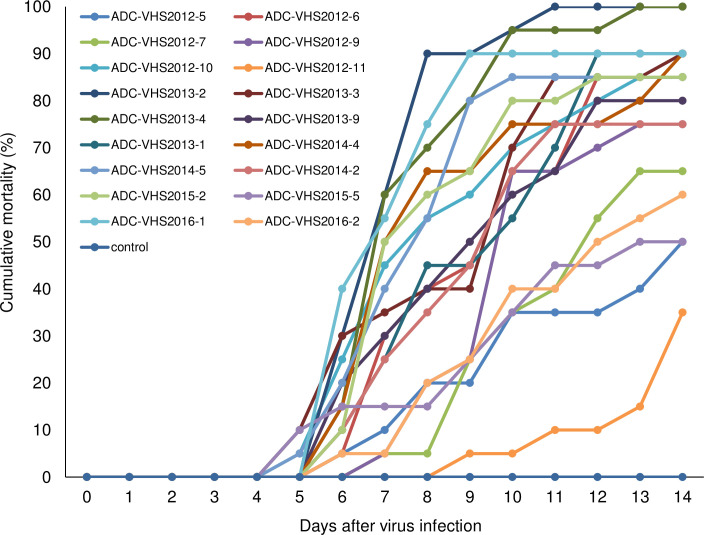
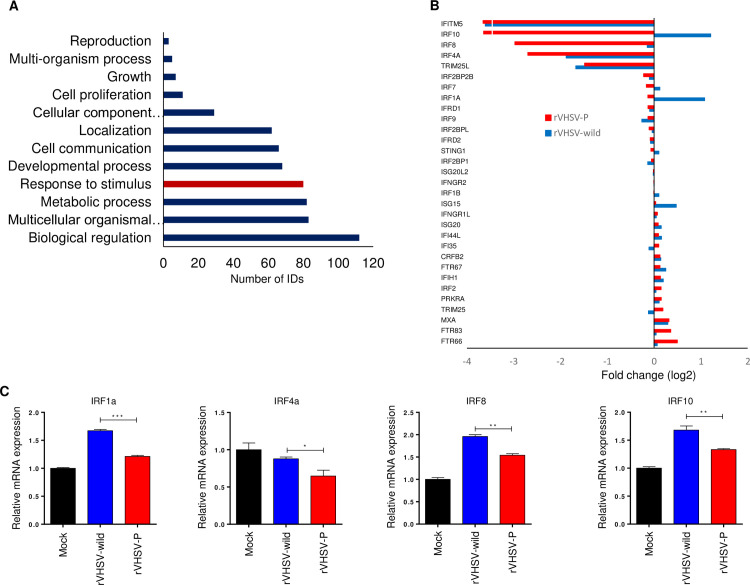
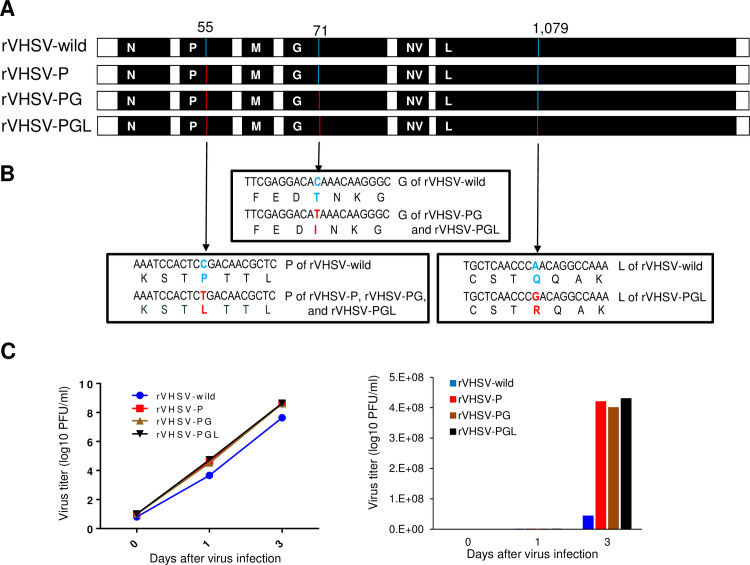
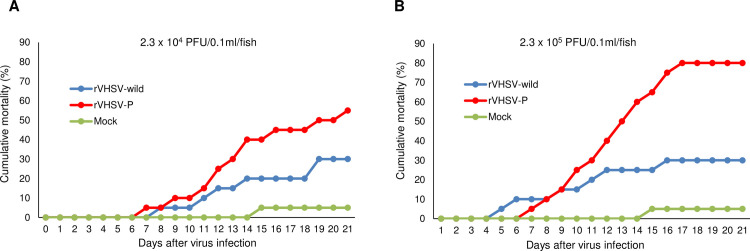
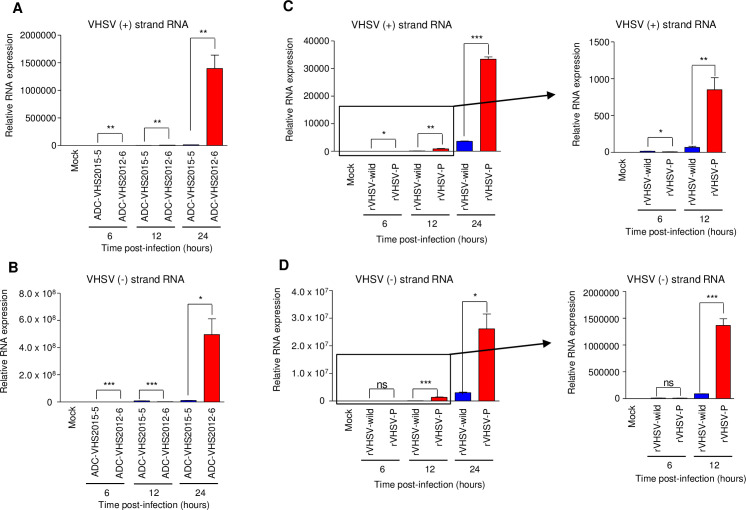
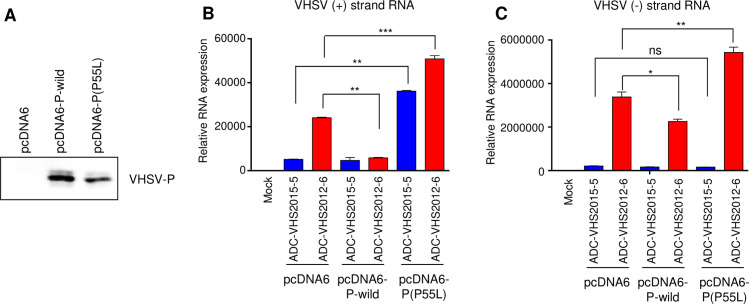
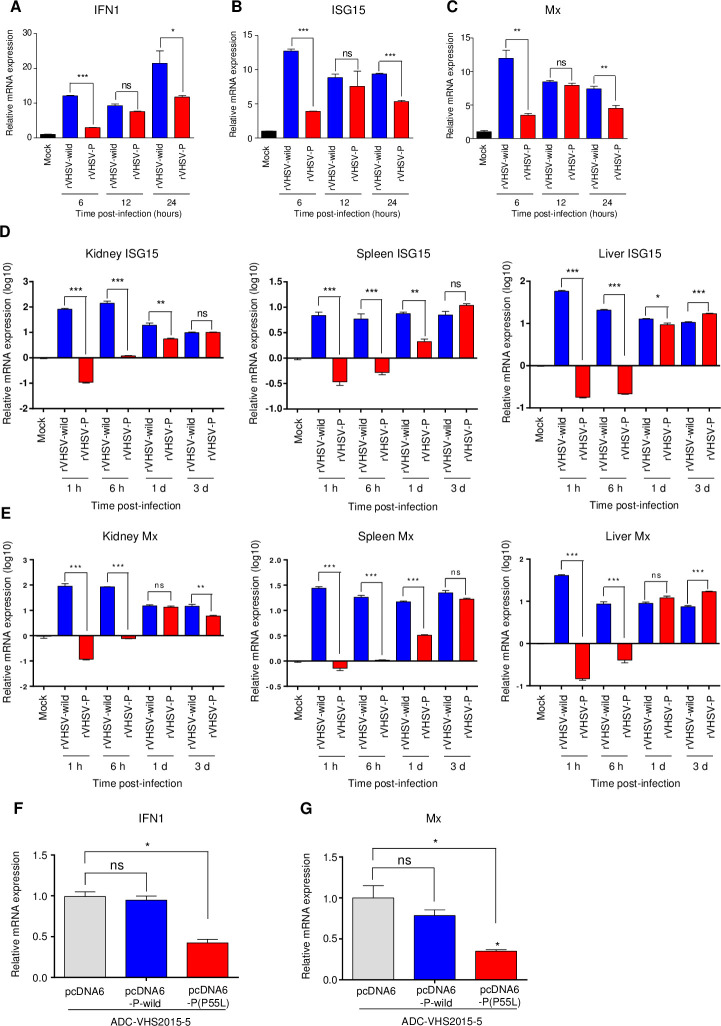
Viral hemorrhagic septicemia virus (VHSV) is a rhabdovirus that causes high mortality in cultured flounder. Naturally occurring VHSV strains vary greatly in virulence. Until now, little has been known about genetic alterations that affect the virulence of VHSV in flounder. We recently reported the full-genome sequences of 18 VHSV strains. In this study, we determined the virulence of these 18 VHSV strains in flounder and then the assessed relationships between differences in the amino acid sequences of the 18 VHSV strains and their virulence to flounder. We identified one amino acid substitution in the phosphoprotein (P) (Pro55-to-Leu substitution in the P protein; PP55L) that is specific to highly virulent strains. This PP55L substitution was maintained stably after 30 cell passages. To investigate the effects of the PP55L substitution on VHSV virulence in flounder, we generated a recombinant VHSV carrying PP55L (rVHSV-P) from rVHSV carrying P55 in the P protein (rVHSV-wild). The rVHSV-P produced high level of viral RNA in cells and showed increased growth in cultured cells and virulence in flounder compared to the rVHSV-wild. In addition, rVHSV-P significantly inhibited the induction of the IFN1 gene in both cells and fish at 6 h post-infection. An RNA-seq analysis confirmed that rVHSV-P infection blocked the induction of several IFN-related genes in virus-infected cells at 6 h post-infection compared to rVHSV-wild. Ectopic expression of PP55L protein resulted in a decrease in IFN induction and an increase in viral RNA synthesis in rVHSV-wild-infected cells. Taken together, our results are the first to identify that the P55L substitution in the P protein enhances VHSV virulence in flounder. The data from this study add to the knowledge of VHSV virulence in flounder and could benefit VHSV surveillance efforts and the generation of a VHSV vaccine.
病毒性出血性败血症病毒 (VHSV) 是一种弹状病毒,可导致养殖比目鱼高死亡率。天然存在的 VHSV 株在毒力上差异很大。到目前为止,人们对影响比目鱼 VHSV 毒力的遗传改变知之甚少。我们最近报道了 18 株 VHSV 全基因组序列。在这项研究中,我们测定了这 18 株 VHSV 株在比目鱼中的毒力,然后评估了 18 株 VHSV 株的氨基酸序列差异与其对比目鱼的毒力之间的关系。我们发现 P 蛋白中有一个氨基酸取代(P 蛋白中的脯氨酸 55 突变为亮氨酸;PP55L),这是高度毒力株特有的。该 PP55L 取代在 30 次细胞传代后仍稳定存在。为了研究 PP55L 取代对比目鱼 VHSV 毒力的影响,我们从 P 蛋白中携带 P55 的 rVHSV (rVHSV-wild)中生成了携带 PP55L 的重组 VHSV(rVHSV-P)。与 rVHSV-wild 相比,rVHSV-P 在细胞中产生高水平的病毒 RNA,并且在培养细胞中的生长和比目鱼中的毒力都增加。此外,rVHSV-P 在感染后 6 小时显著抑制了 IFN1 基因在细胞和鱼中的诱导。RNA-seq 分析证实,与 rVHSV-wild 相比,rVHSV-P 感染在感染后 6 小时阻断了病毒感染细胞中几种 IFN 相关基因的诱导。PP55L 蛋白的异位表达导致 rVHSV-wild 感染细胞中 IFN 诱导减少和病毒 RNA 合成增加。总之,我们的结果首次确定 P 蛋白中的 P55L 取代增强了 VHSV 在比目鱼中的毒力。这项研究的数据增加了比目鱼中 VHSV 毒力的知识,并有助于 VHSV 监测工作和 VHSV 疫苗的产生。