Dagur Raghubendra Singh, New-Aaron Moses, Ganesan Murali, Wang Weimin, Romanova Svetlana, Kidambi Srivatsan, Kharbanda Kusum K, Poluektova Larisa Y, Osna Natalia A
Research Service, Veterans Affairs Nebraska-Western Iowa Health Care System, Omaha, NE 68105, USA.
Department of Internal Medicine, University of Nebraska Medical Center, Omaha, NE 68198, USA.
Biology (Basel). 2021 Jan 5;10(1):29. doi: 10.3390/biology10010029.
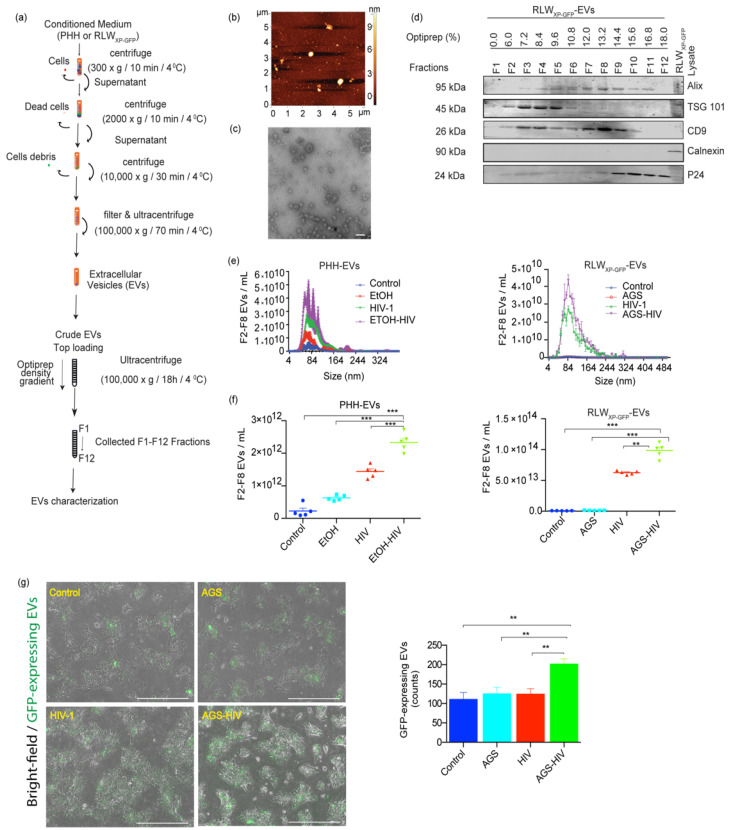
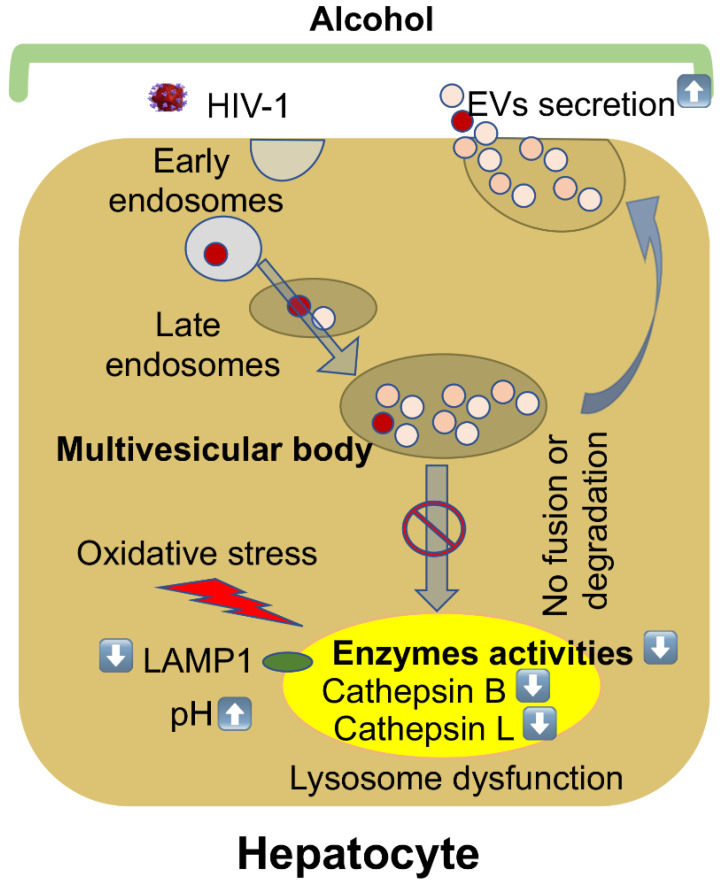
Alcohol abuse is common in people living with HIV-1 and dramaticallyenhances the severity of HIV-induced liver damage by inducing oxidative stress and lysosomaldysfunction in the liver cells. We hypothesize that the increased release of extracellular vesicles(EVs) in hepatocytes and liver humanized mouse model is linked to lysosome dysfunction.
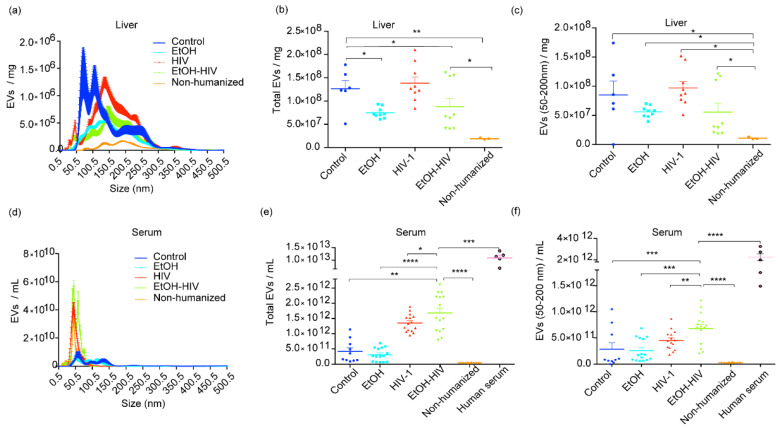
The study was performed on primary human hepatocytes and human hepatoma RLWXP-GFP (Huh7.5 cells stably transfected with CYP2E1 and XPack-GFP) cells and validated on ethanol-fed liverhumanizedfumarylacetoacetate hydrolase (Fah)-/-, Rag2-/-, common cytokine receptor gamma chainknockout (FRG-KO) mice. Cells and mice were infected with HIV-1ADA virus.
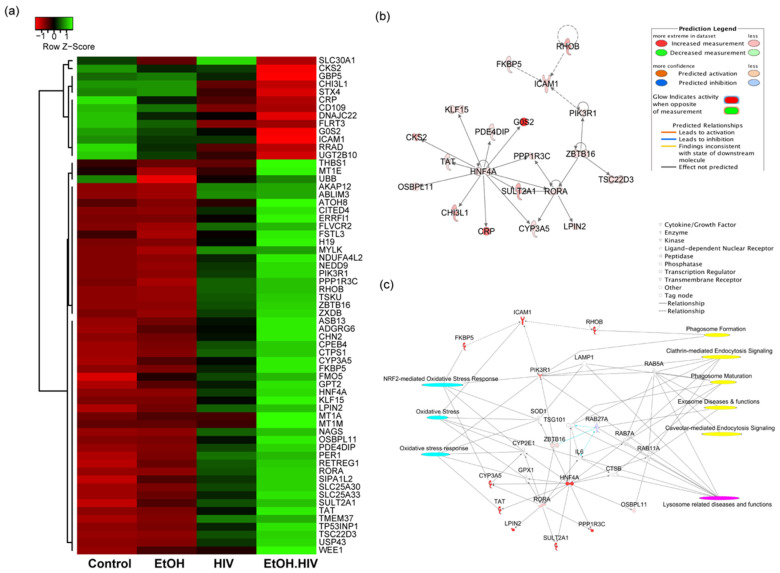
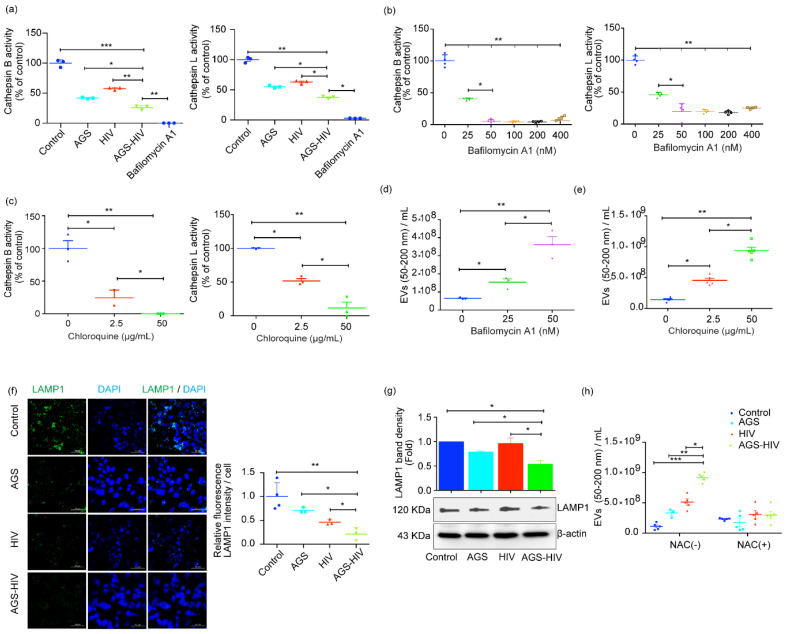
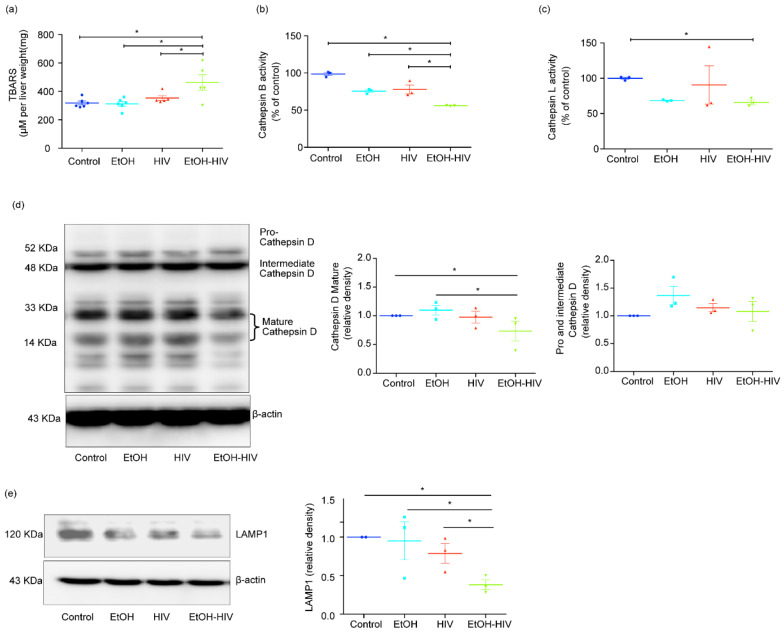
We observedan increase in the secretion of EVs associated with a decrease in lysosomal activity and expressionof lysosomal-associated membrane protein 1. Next-generation RNA sequencing of primary humanhepatocytes revealed 63 differentially expressed genes, with 13 downregulated and 50 upregulatedgenes in the alcohol-HIV-treated group. Upstream regulator analysis of differentially expressedgenes through Ingenuity Pathway Analysis identified transcriptional regulators affecting downstreamgenes associated with increased oxidative stress, lysosomal associated disease, and function andEVs biogenesis. Our in vitro findings were corroborated by in vivo studies on human hepatocytetransplantedhumanized mice, indicating that intensive EVs' generation by human hepatocytes andtheir secretion to serum was associated with increased oxidative stress and reduction in lysosomalactivities triggered by HIV infection and ethanol diet.
HIV-and-ethanol-metabolisminducedEVs release is tightly controlled by lysosome status in hepatocytes and participates in thedevelopment of double-insult-induced liver injury.
酒精滥用在HIV-1感染者中很常见,通过诱导肝细胞中的氧化应激和溶酶体功能障碍,显著加剧了HIV引起的肝损伤的严重程度。我们假设肝细胞和肝脏人源化小鼠模型中细胞外囊泡(EVs)释放的增加与溶酶体功能障碍有关。
该研究在原代人肝细胞和人肝癌RLWXP-GFP(稳定转染CYP2E1和XPack-GFP的Huh7.5细胞)细胞上进行,并在乙醇喂养的肝脏人源化富马酰乙酰乙酸水解酶(Fah)-/-、Rag2-/-、共同细胞因子受体γ链敲除(FRG-KO)小鼠上进行验证。细胞和小鼠感染HIV-1ADA病毒。
我们观察到EVs分泌增加,同时溶酶体活性和溶酶体相关膜蛋白1的表达降低。原代人肝细胞的下一代RNA测序显示,在酒精-HIV处理组中有63个差异表达基因,其中13个下调,50个上调。通过Ingenuity Pathway Analysis对差异表达基因进行上游调节因子分析,确定了影响与氧化应激增加、溶酶体相关疾病以及功能和EVs生物发生相关的下游基因的转录调节因子。我们的体外研究结果在人肝细胞移植人源化小鼠的体内研究中得到了证实,表明人肝细胞大量产生EVs并将其分泌到血清中与HIV感染和乙醇饮食引发的氧化应激增加和溶酶体活性降低有关。
HIV和乙醇代谢诱导的EVs释放受到肝细胞溶酶体状态的严格控制,并参与了双重损伤诱导的肝损伤的发展。