Research School of Population, Australian National University, Acton, Canberra, ACT 2601, Australia.
Royal Centre for Disease Control, Ministry of Health, Thimphu 11001, Bhutan.
Int J Environ Res Public Health. 2021 Jan 5;18(1):354. doi: 10.3390/ijerph18010354.
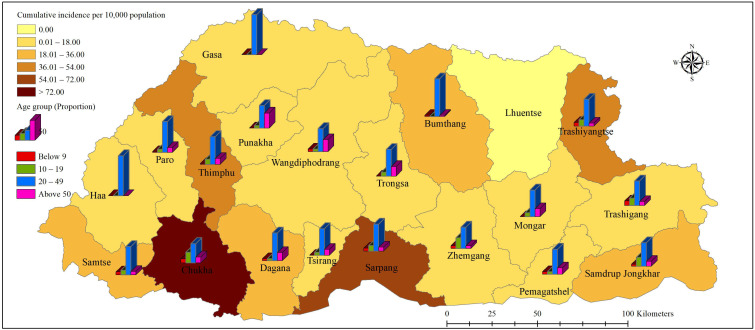
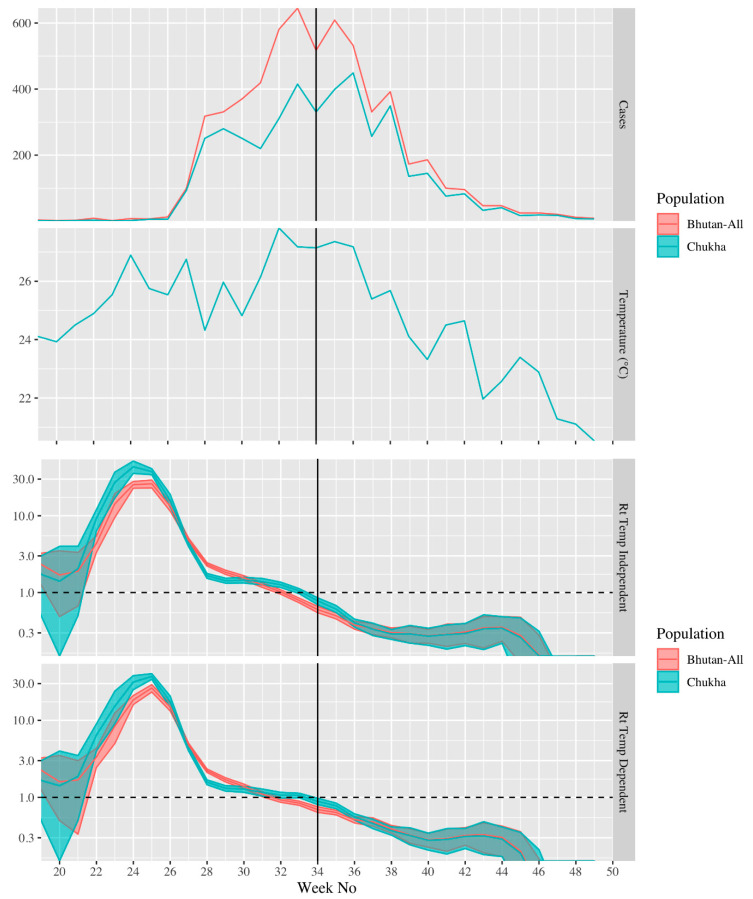
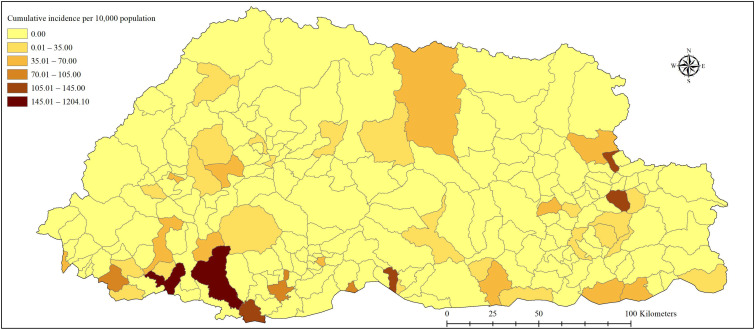
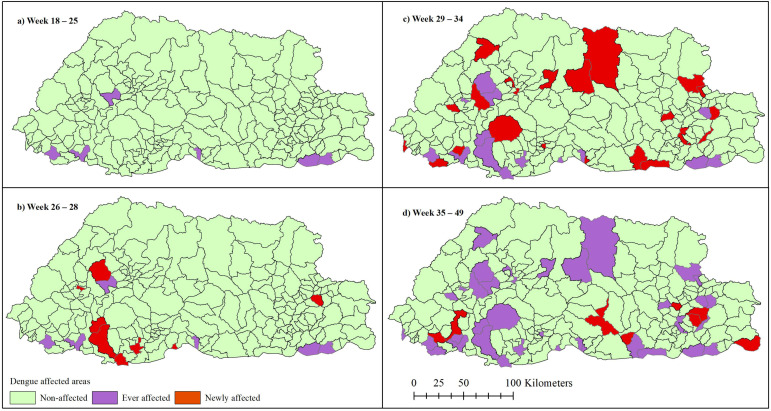
Bhutan experienced its largest and first nation-wide dengue epidemic in 2019. The cases in 2019 were greater than the total number of cases in all the previous years. This study aimed to characterize the spatiotemporal patterns and effective reproduction number of this explosive epidemic. Weekly notified dengue cases were extracted from the National Early Warning, Alert, Response and Surveillance (NEWARS) database to describe the spatial and temporal patterns of the epidemic. The time-varying, temperature-adjusted cohort effective reproduction number was estimated over the course of the epidemic. The dengue epidemic occurred between 29 April and 8 December 2019 over 32 weeks, and included 5935 cases. During the epidemic, dengue expanded from six to 44 subdistricts. The effective reproduction number was <3 for most of the epidemic period, except for a ≈1 month period of explosive growth, coinciding with the monsoon season and school vacations, when the effective reproduction number peaked >30 and after which the effective reproduction number declined steadily. Interventions were only initiated 6 weeks after the end of the period of explosive growth. This finding highlights the need to reinforce the national preparedness plan for outbreak response, and to enable the early detection of cases and timely response.
2019 年,不丹经历了有史以来最大和首次全国范围的登革热疫情。2019 年的病例数超过了以往所有年份的病例总数。本研究旨在描述这一爆发性疫情的时空模式和有效繁殖数。从国家早期预警、警报、响应和监测 (NEWARS) 数据库中提取每周报告的登革热病例,以描述疫情的空间和时间模式。在疫情期间,时变、温度调整的队列有效繁殖数随时间变化而变化。登革热疫情发生在 2019 年 4 月 29 日至 12 月 8 日的 32 周内,共报告了 5935 例病例。在疫情期间,登革热从六个区扩展到 44 个分区。除了季风季节和学校假期这一约 1 个月的爆炸性增长期外,有效繁殖数在疫情的大部分时间都<3,在此期间,有效繁殖数达到了>30 的峰值,之后有效繁殖数稳步下降。干预措施仅在爆炸性增长期结束后 6 周才开始实施。这一发现强调了需要加强国家对疫情爆发的应对准备计划,并能够早期发现病例和及时做出反应。