Laboratory of Malaria and Vector Research, National Institute of Allergy and Infectious Diseases, 12735 Twinbrook Parkway, Rockville, MD20852, United States of America (USA).
Department of Ecology and Evolution, University of Chicago, Chicago, USA.
Bull World Health Organ. 2023 Sep 1;101(9):605-616. doi: 10.2471/BLT.23.289713. Epub 2023 Jul 5.
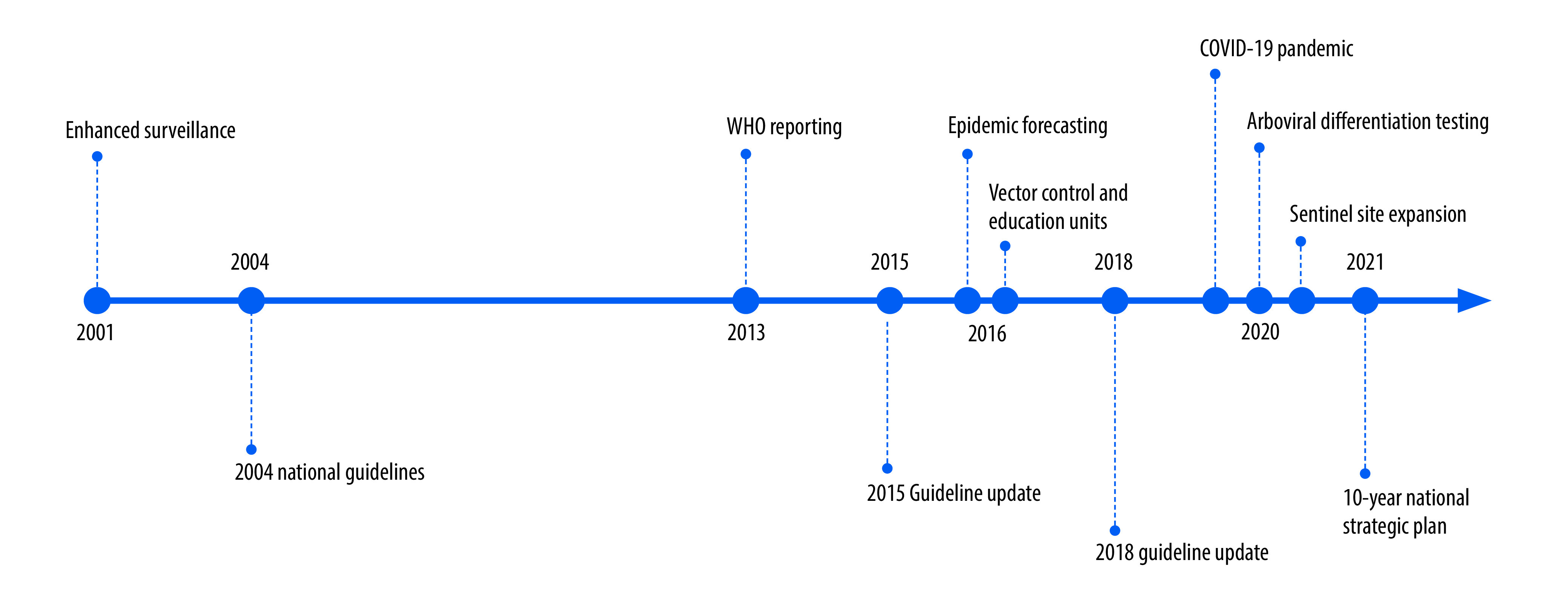
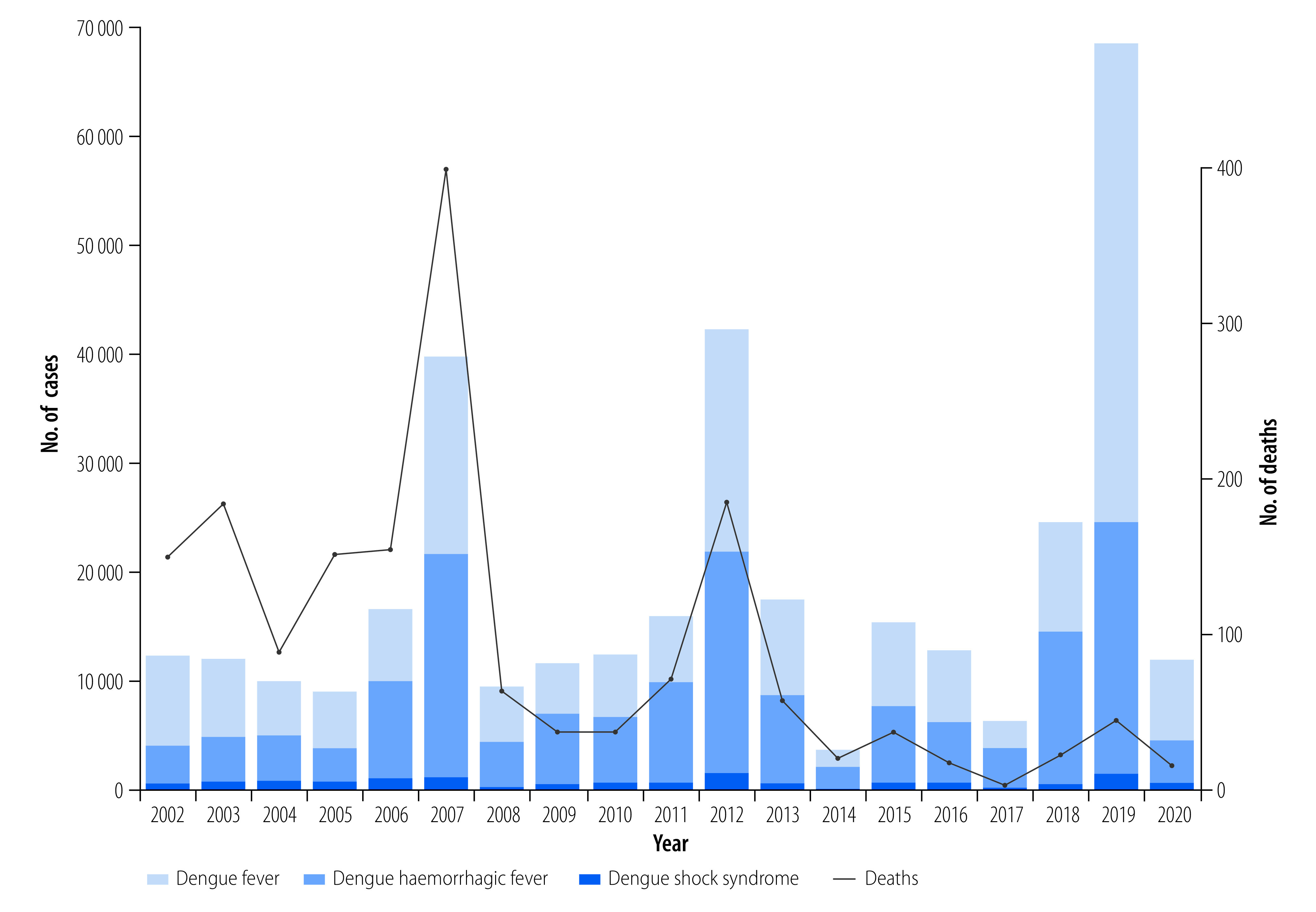
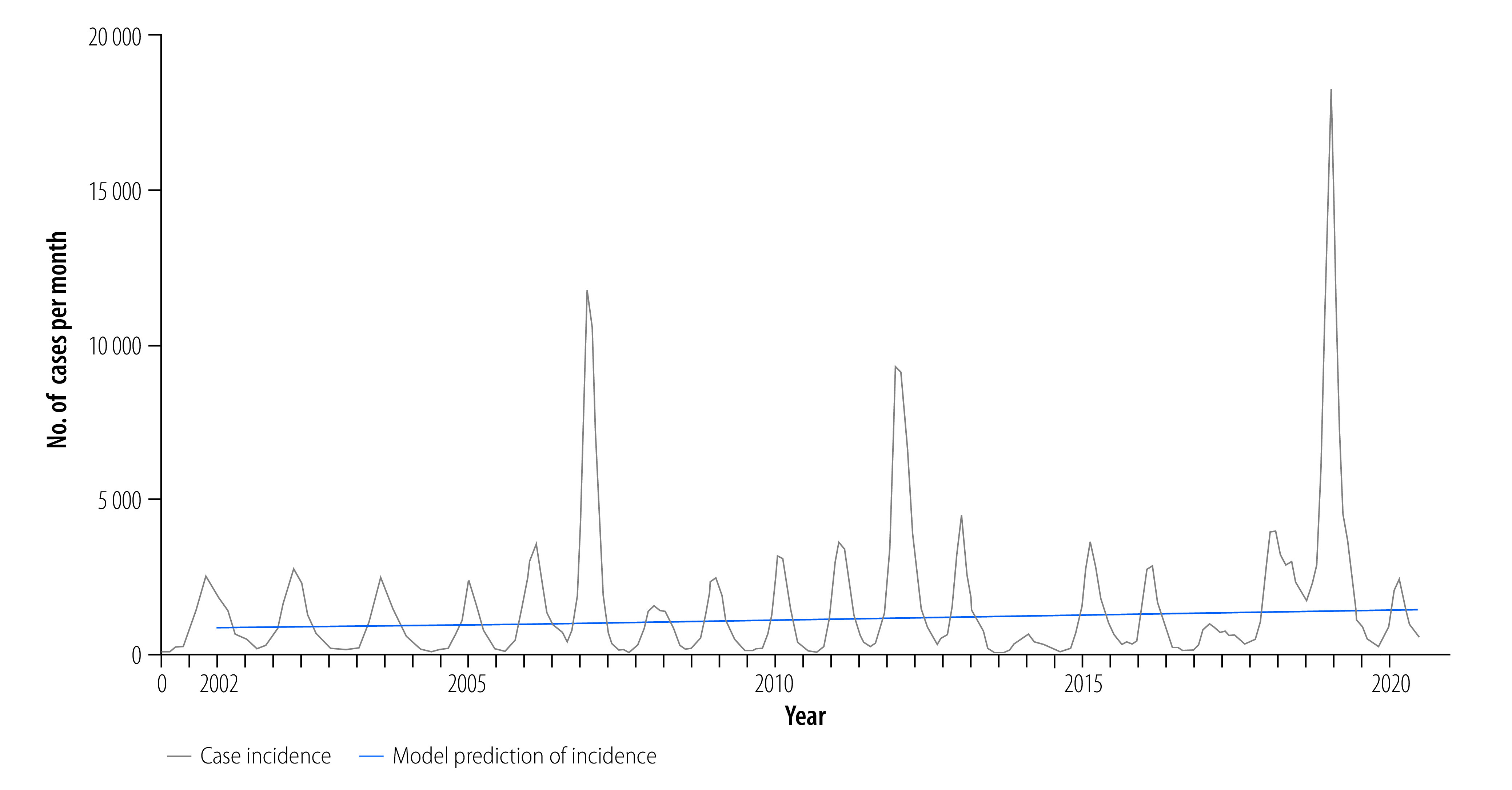
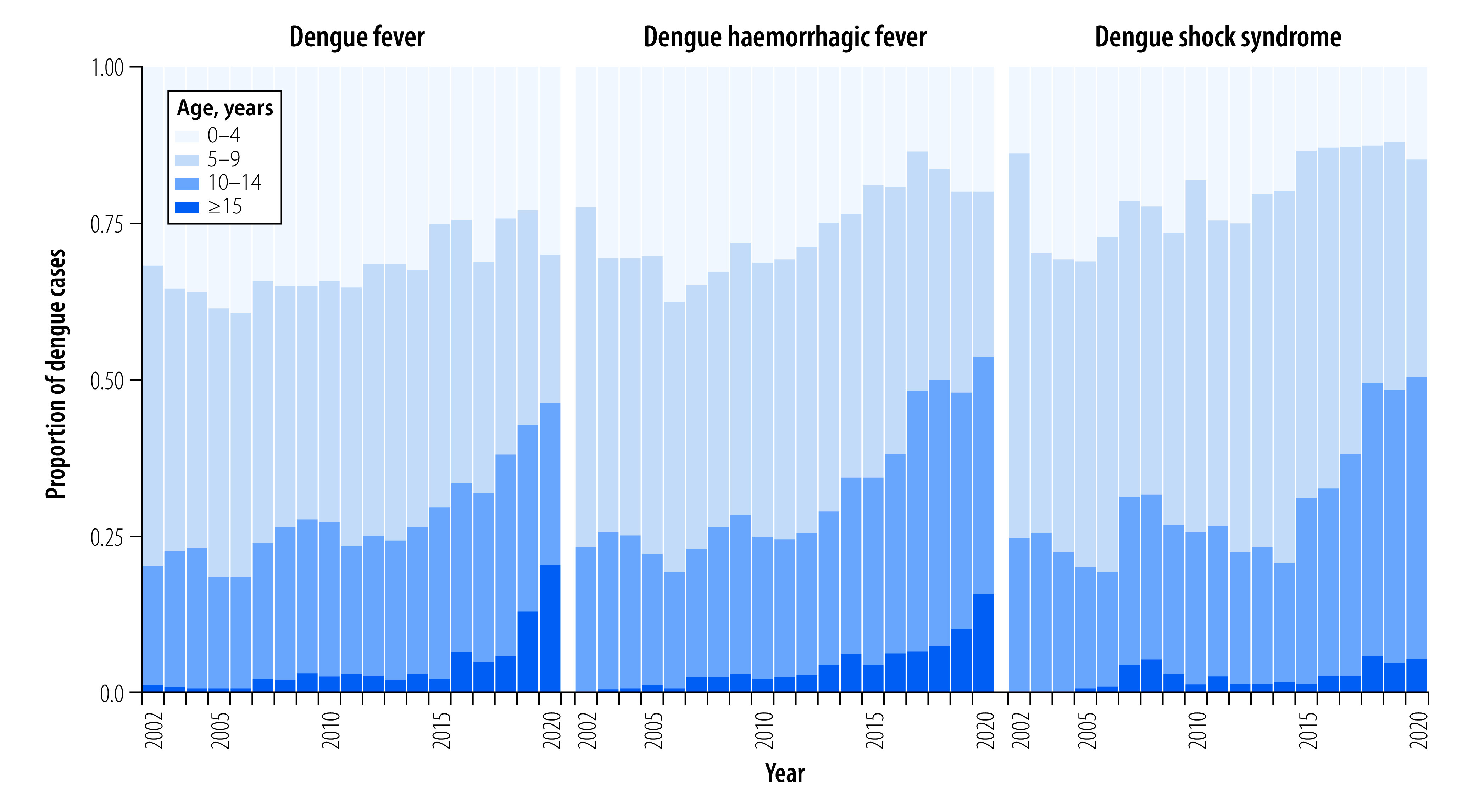
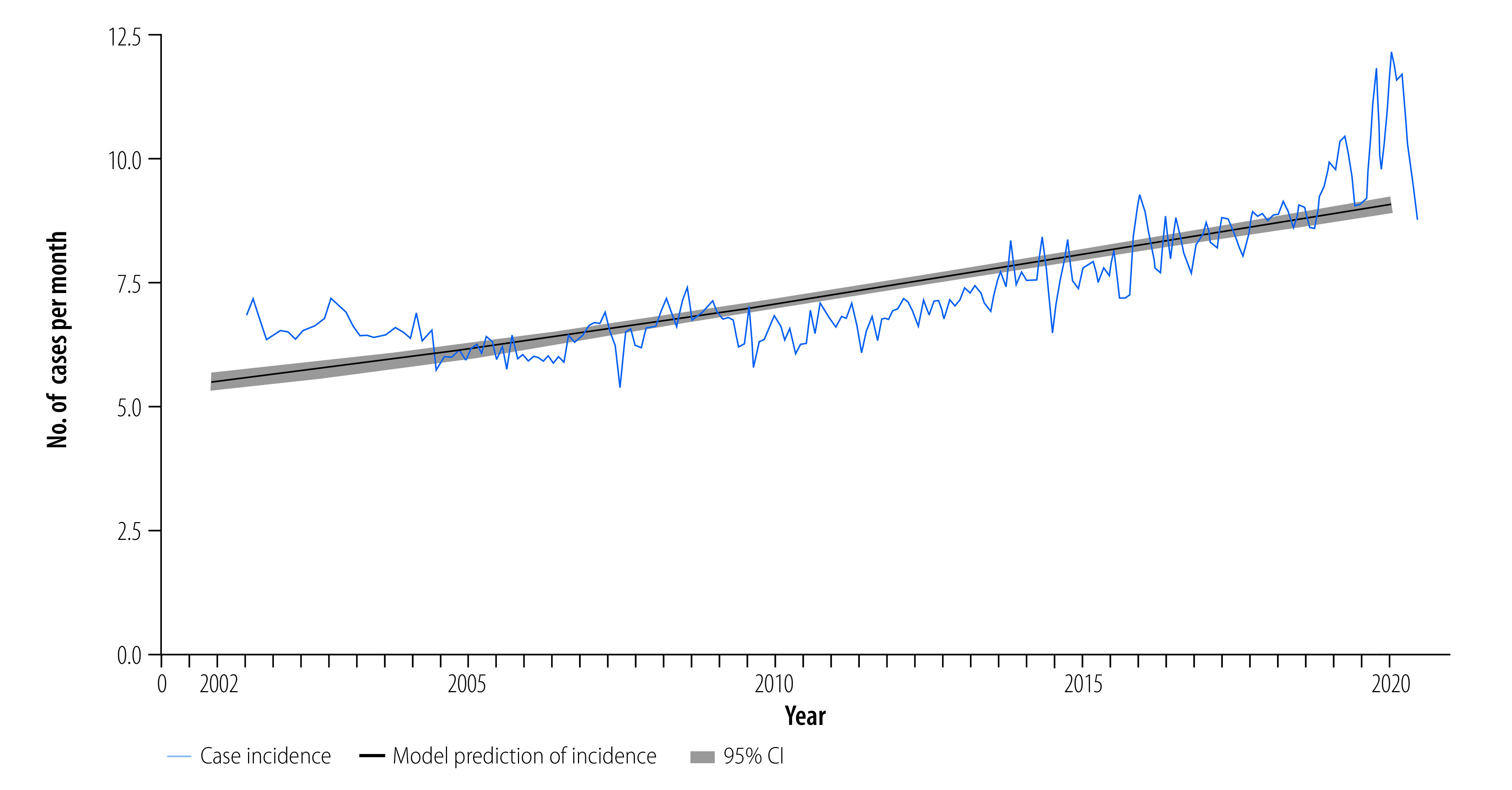
Global dengue incidence has increased dramatically over the past few decades from approximately 500 000 reported cases in 2000 to over 5 million in 2019. This trend has been attributed to population growth in endemic areas, rapid unplanned urbanization, increasing global connectivity, and climate change expanding the geographic range of the . mosquito, among other factors. Reporting dengue surveillance data is key to understanding the scale of the problem, identifying important changes in the landscape of disease, and developing policies for clinical management, vector control and vaccine rollout. However, surveillance practices are not standardized, and data may be difficult to interpret particularly in low- and middle-income countries with fragmented health-care systems. The latest national dengue surveillance data for Cambodia was published in 2010. Since its publication, the country experienced marked changes in health policies, population demographics, climate and urbanization. How these changes affected dengue control remains unknown. In this article, we summarize two decades of policy changes, published literature, country statistics, and dengue case data collected by the Cambodia National Dengue Control Programme to: (i) identify important changes in the disease landscape; and (ii) derive lessons to inform future surveillance and disease control strategies. We report that while dengue case morbidity and mortality rates in Cambodia fell between 2002 and 2020, dengue incidence doubled and age at infection increased. Future national surveillance, disease prevention and treatment, and vector control policies will have to account for these changes to optimize disease control.
在过去的几十年里,全球登革热发病率急剧上升,从 2000 年报告的约 50 万例上升到 2019 年的 500 多万例。这种趋势归因于流行地区的人口增长、快速无计划的城市化、全球连通性的增加以及气候变化扩大了蚊子的地理范围等因素。报告登革热监测数据对于了解问题的严重程度、识别疾病格局的重要变化以及制定临床管理、病媒控制和疫苗推广政策至关重要。然而,监测实践并未标准化,数据可能难以解释,尤其是在卫生保健系统分散的低收入和中等收入国家。柬埔寨最新的国家登革热监测数据于 2010 年发布。自发布以来,该国的卫生政策、人口统计数据、气候和城市化都发生了显著变化。这些变化如何影响登革热控制仍不得而知。在本文中,我们总结了二十年来的政策变化、已发表的文献、国家统计数据以及柬埔寨国家登革热控制计划收集的登革热病例数据,以:(i) 确定疾病格局的重要变化;和 (ii) 汲取经验教训,为未来的监测和疾病控制策略提供信息。我们报告说,尽管柬埔寨的登革热病例发病率和死亡率在 2002 年至 2020 年间有所下降,但登革热发病率翻了一番,感染年龄也增加了。未来的国家监测、疾病预防和治疗以及病媒控制政策将不得不考虑这些变化,以优化疾病控制。