Iqbal Noushina, Umar Shahid, Khan Nafees A, Corpas Francisco J
Department of Botany, School of Chemical and Life Sciences, Jamia Hamdard, New Delhi 110062, India.
Plant Physiology and Biochemistry Laboratory, Department of Botany, Aligarh Muslim University, Aligarh 202002, India.
Antioxidants (Basel). 2021 Jan 14;10(1):108. doi: 10.3390/antiox10010108.
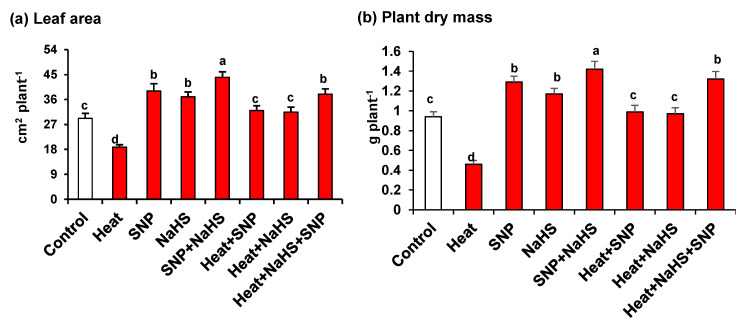
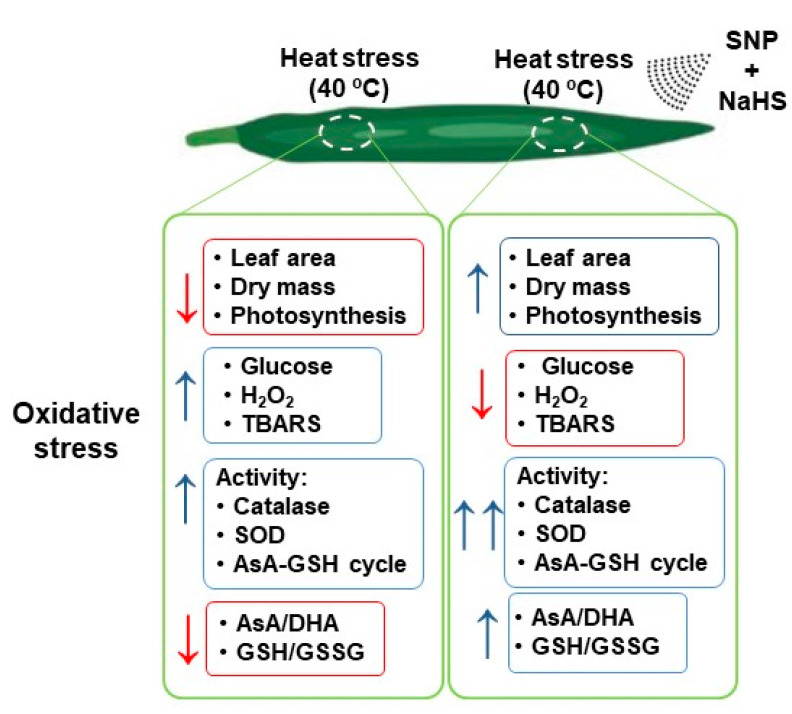
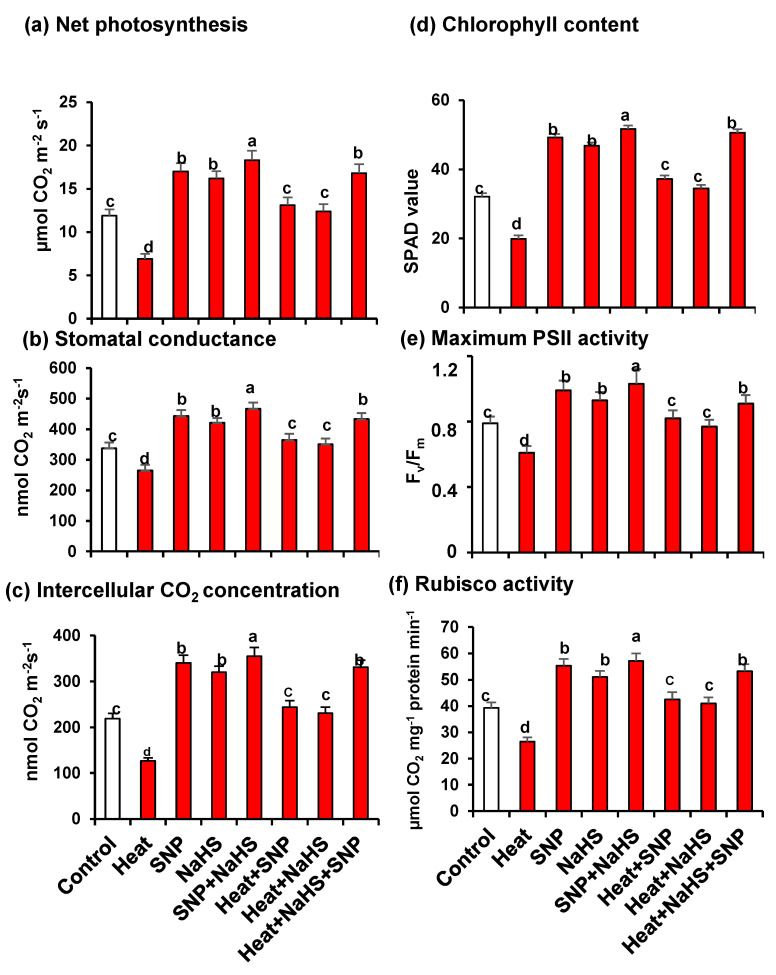
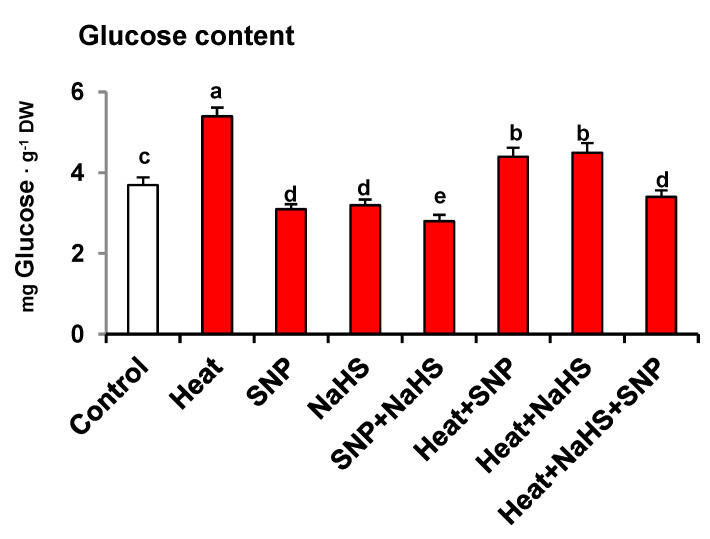
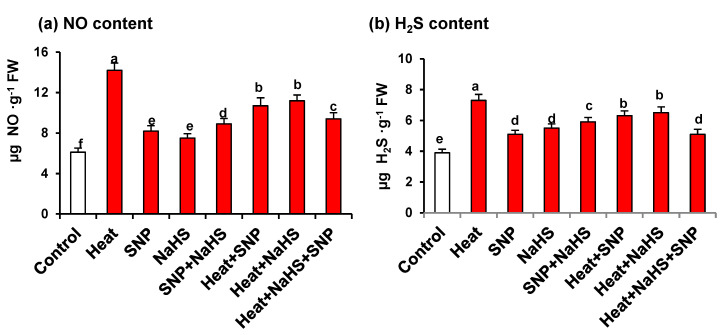
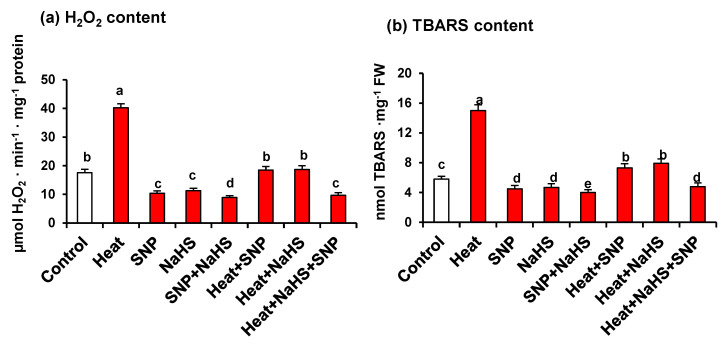
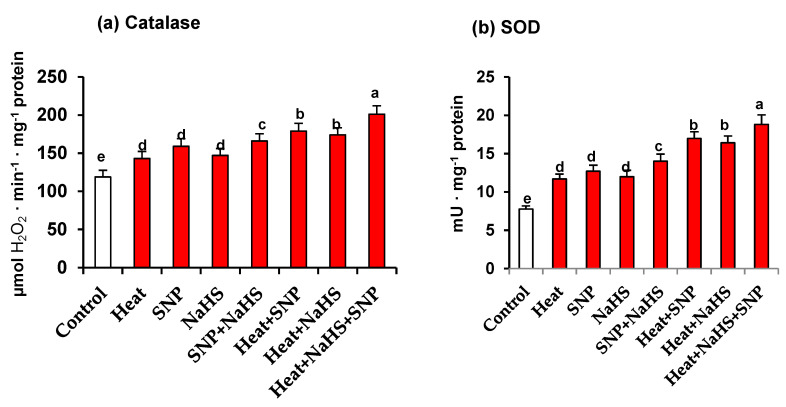
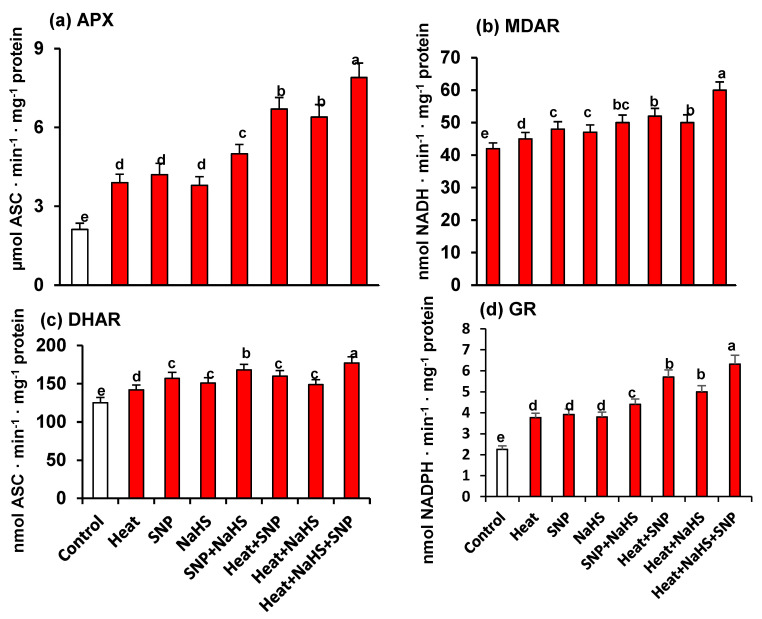
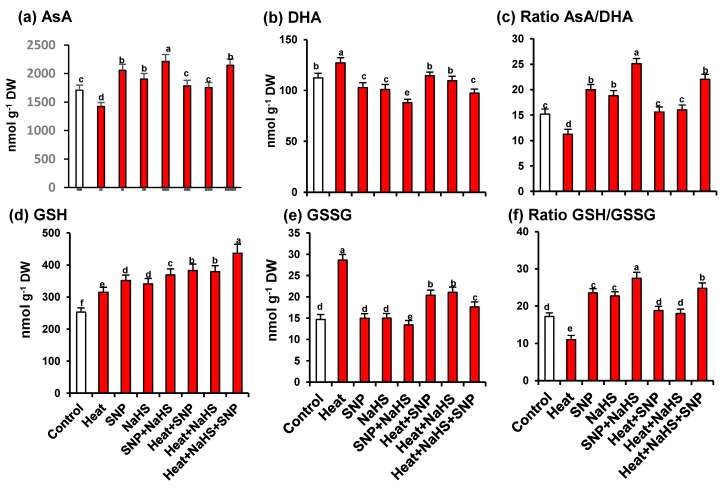
The involvement of nitric oxide (NO) and hydrogen sulfide (HS) in countermanding heat-inhibited photosynthetic features were studied in wheat ( L.). Heat stress (HS) was employed at 40 °C after establishment for 6 h daily, and then plants were allowed to recover at 25 °C and grown for 30 days. Glucose (Glc) content increased under HS and repressed plant photosynthetic ability, but the application of sodium nitroprusside (SNP, as NO donor) either alone or with sodium hydrosulfide (NaHS, as HS donor) reduced Glc-mediated photosynthetic suppression by enhancing ascorbate-glutathione (AsA-GSH) metabolism and antioxidant system, which reduced oxidative stress with decreased HO and TBARS content. Oxidative stress reduction or inhibiting Glc repression was maximum with combined SNP and NaHS treatment, which was substantiated by 2-4-carboxyphenyl-4,4,5,5-tetramethylimidazoline-1-oxyl-3-oxide (cPTIO) and hypotaurine (HT), scavengers for NO and HS, respectively. The scavenge of HS reduced NO-mediated alleviation of HS suggesting of its downstream action in NO-mediated heat-tolerance. However, a simultaneous decrease of both (NO and HS) led to higher Glc-mediated repression of photosynthesis and oxidative stress in terms of increased HO content that was comparable to HS plants. Thus, NO and HS cooperate to enhance photosynthesis under HS by reducing HO-induced oxidative stress and excess Glc-mediated photosynthetic suppression.
研究了一氧化氮(NO)和硫化氢(HS)在对抗热抑制小麦(L.)光合特性中的作用。在植株生长6小时后,于40℃进行热胁迫(HS)处理,每天处理6小时,然后让植株在25℃恢复生长30天。热胁迫下葡萄糖(Glc)含量增加,抑制了植株的光合能力,但单独施用硝普钠(SNP,作为NO供体)或与硫氢化钠(NaHS,作为HS供体)一起施用,通过增强抗坏血酸-谷胱甘肽(AsA-GSH)代谢和抗氧化系统,降低了Glc介导的光合抑制,从而降低了氧化应激,使过氧化氢(HO)和丙二醛(TBARS)含量降低。联合施用SNP和NaHS处理对氧化应激的降低或对Glc抑制的抑制作用最大,这分别通过2-(4-羧基苯基)-4,4,5,5-四甲基咪唑啉-1-氧基-3-氧化物(cPTIO)和次牛磺酸(HT)(分别为NO和HS的清除剂)得到证实。HS的清除降低了NO介导的热胁迫缓解作用,表明其在NO介导的耐热性中起下游作用。然而,同时降低两者(NO和HS)会导致更高的Glc介导的光合作用抑制和氧化应激,表现为HO含量增加,这与热胁迫处理的植株相当。因此,NO和HS通过降低HO诱导的氧化应激和过量Glc介导的光合抑制,协同增强热胁迫下的光合作用。