Division of Nephrology, Endocrinology and Metabolism, Department of Internal Medicine, School of Medicine, Keio University, 35 Shinanomachi, Shinjuku-ku, Tokyo 160-8582, Japan.
Nutrients. 2021 Jan 15;13(1):241. doi: 10.3390/nu13010241.
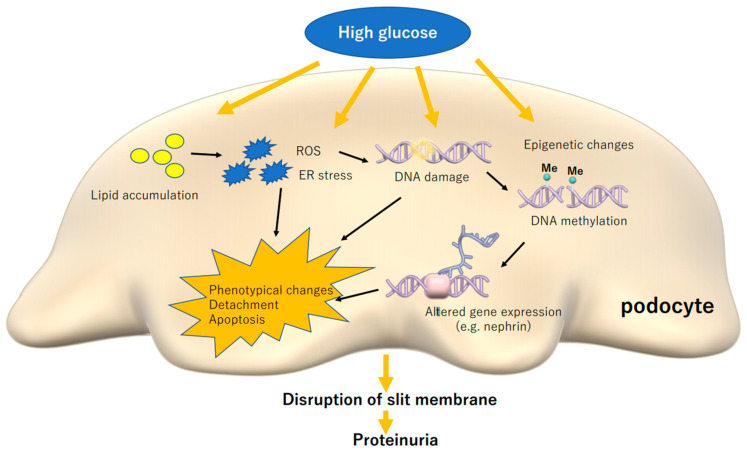
Glomerular podocytes are highly differentiated cells that cover glomerular capillaries from the outside and have a characteristic morphology with numerous foot processes. The formation of slit membranes between the foot processes serves as a final filtration barrier for urine filtration from the blood. Podocyte damage causes disruption of the slit membrane, subsequent proteinuria and finally glomerulosclerosis, which is a common pathway in various types of chronic kidney disease (CKD). In recent years, there has been an increase in diabetes, due to rapid lifestyle changes, which is the main cause of CKD. Therefore, understanding the effect of diabetic status on podocytes is of great importance to establish a strategy for preventing CKD progression. In this review, we summarize altered glucose and lipid metabolism in diabetic podocytes and also discuss the reversibility of the changes in podocyte phenotype.
肾小球足细胞是高度分化的细胞,从外部覆盖肾小球毛细血管,具有特征性的形态,有许多足突。足突之间的裂孔膜的形成是血液滤过尿液的最终滤过屏障。足细胞损伤导致裂孔膜破坏,随后出现蛋白尿,最终导致肾小球硬化,这是各种类型慢性肾脏病(CKD)的共同途径。近年来,由于生活方式的快速改变,糖尿病的发病率有所增加,这是 CKD 的主要病因。因此,了解糖尿病状态对足细胞的影响对于制定预防 CKD 进展的策略非常重要。在这篇综述中,我们总结了糖尿病足细胞中葡萄糖和脂质代谢的改变,并讨论了足细胞表型变化的可逆性。