Ravaut Gaetan, Carneiro Anthony, Mounier Catherine
CERMO-FC Research Center, Molecular Metabolism of Lipids Laboratory, Biological Sciences Department, University of Quebec in Montreal (UQAM), Montreal, QC, Canada.
Front Nutr. 2024 Mar 21;11:1290540. doi: 10.3389/fnut.2024.1290540. eCollection 2024.
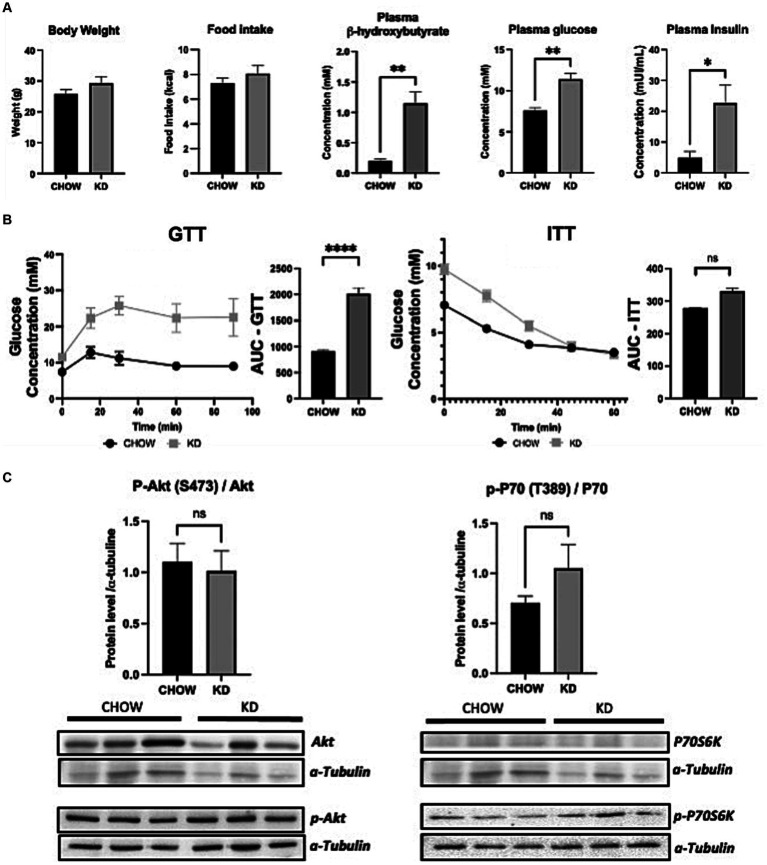
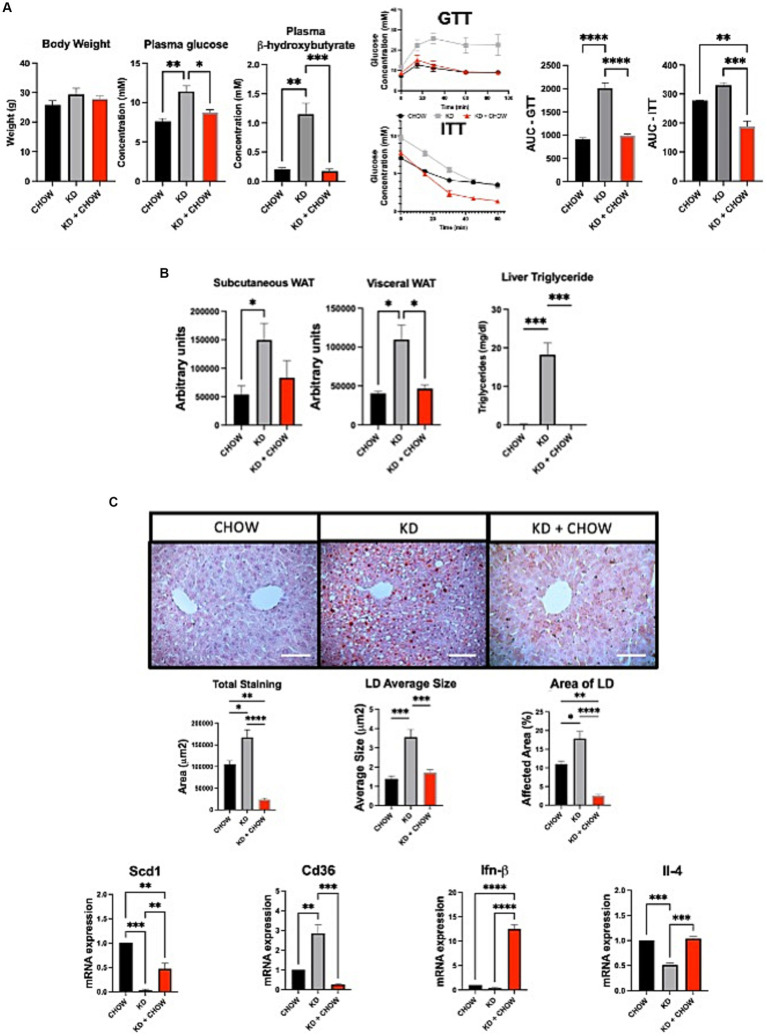
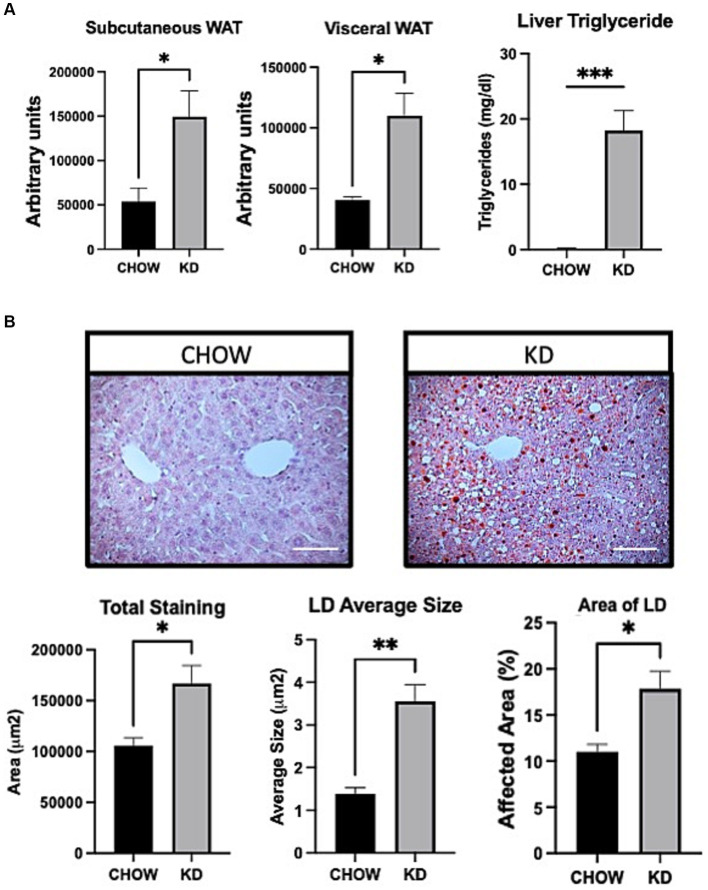
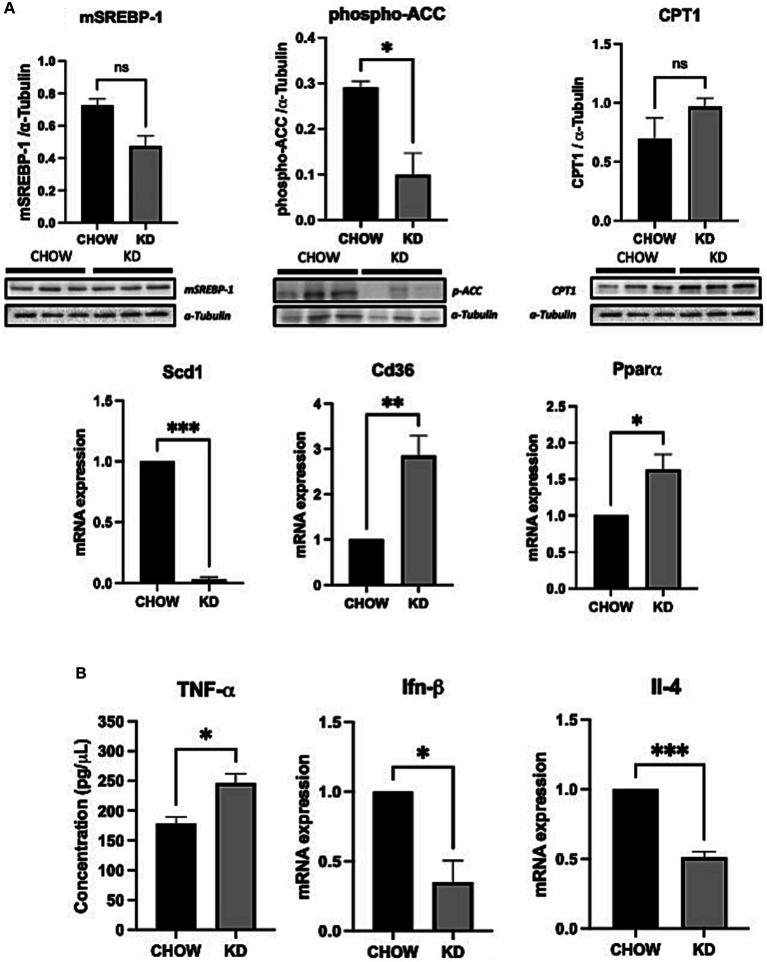
Metabolic dysfunction-associated fatty liver disease (MAFLD) is the most common chronic liver disease. Ketogenic diet (KD), a diet with very low intake in carbohydrates, gained popularity as a weight-loss approach. However, in mice models, it has been reported that an excess exposition of dietary fat induces hepatic insulin resistance and steatosis. However, data published is inconsistent. Herein, we investigated in a mouse model, the metabolic effects of KD and its contribution to the pathogenesis of NALFD. Mice were exposed to KD or CHOW diet for 12 weeks while a third group was exposed to KD for also 12 weeks and then switched to CHOW diet for 4 weeks to determine if we can rescue the phenotype. We evaluated the effects of diet treatments on fat distribution, glucose, and insulin homeostasis as well as hepatic steatosis. Mice fed with KD developed glucose intolerance but not insulin resistance accompanied by an increase of inflammation. KD-fed mice showed an increase of fat accumulation in white adipose tissue and liver. This effect could be explained by an increase in fat uptake by the liver with no changes of catabolism leading to MAFLD. Interestingly, we were able to rescue the phenotype by switching KD-fed mice for 4 weeks on a CHOW diet. Our studies demonstrate that even if mice develop hepatic steatosis and glucose intolerance after 12 weeks of KD, they do not develop insulin resistance and more importantly, the phenotype can be reversed by switching the mice from a KD to a CHOW.
代谢功能障碍相关脂肪性肝病(MAFLD)是最常见的慢性肝病。生酮饮食(KD),即碳水化合物摄入量极低的一种饮食方式,作为一种减肥方法而受到欢迎。然而,在小鼠模型中,有报道称过量摄入膳食脂肪会导致肝脏胰岛素抵抗和脂肪变性。然而,已发表的数据并不一致。在此,我们在小鼠模型中研究了生酮饮食的代谢效应及其对非酒精性脂肪性肝病(NALFD)发病机制的影响。将小鼠分为三组,第一组和第二组分别给予生酮饮食或普通饮食12周,第三组先给予生酮饮食12周,然后改为普通饮食4周,以确定是否可以挽救该表型。我们评估了饮食处理对脂肪分布、葡萄糖和胰岛素稳态以及肝脏脂肪变性的影响。喂食生酮饮食的小鼠出现葡萄糖不耐受,但未出现胰岛素抵抗,同时炎症增加。喂食生酮饮食的小鼠白色脂肪组织和肝脏中的脂肪积累增加。这种效应可以通过肝脏脂肪摄取增加而分解代谢无变化来解释,从而导致MAFLD。有趣的是,我们能够通过将喂食生酮饮食的小鼠改为普通饮食4周来挽救该表型。我们的研究表明,即使小鼠在生酮饮食12周后出现肝脏脂肪变性和葡萄糖不耐受,它们也不会出现胰岛素抵抗,更重要的是,将小鼠从生酮饮食改为普通饮食可以逆转该表型。