Halvey Patrick, Farutin Victor, Koppes Laura, Gunay Nur Sibel, Pappas Dimitrios A, Manning Anthony M, Capila Ishan
Momenta Pharmaceuticals Inc, 301 Binney Street, Cambridge, MA, 02142, USA.
Department of Medicine, Division of Rheumatology, Columbia University School of Medicine, New York, NY, USA.
Clin Proteomics. 2021 Jan 19;18(1):5. doi: 10.1186/s12014-021-09311-3.
Plasma is a potentially rich source of protein biomarkers for disease progression and drug response. Large multi-center studies are often carried out to increase the number of samples analyzed in a given study. This may increase the chances of variation in blood processing and handling, leading to altered proteomic results. This study evaluates the impact of blood processing variation on LC-MS/MS proteomic analysis of plasma.
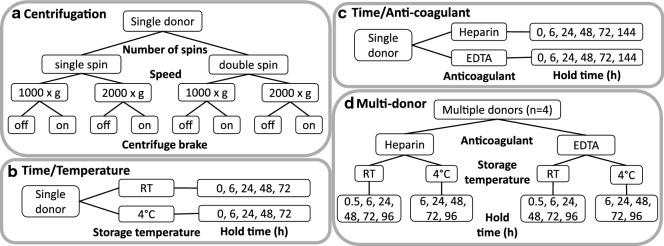
Initially two batches of patient plasma samples (120 and 204 samples, respectively) were analyzed using LC-MS/MS shotgun proteomics. Follow-up experiments were designed and carried out on healthy donor blood in order to examine the effects of different centrifugation conditions, length of delay until first centrifugation, storage temperature and anticoagulant type on results from shotgun proteomics.
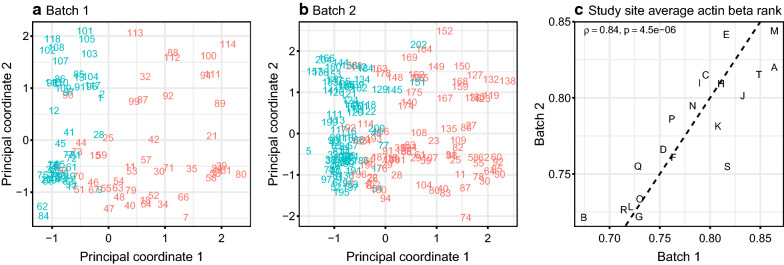
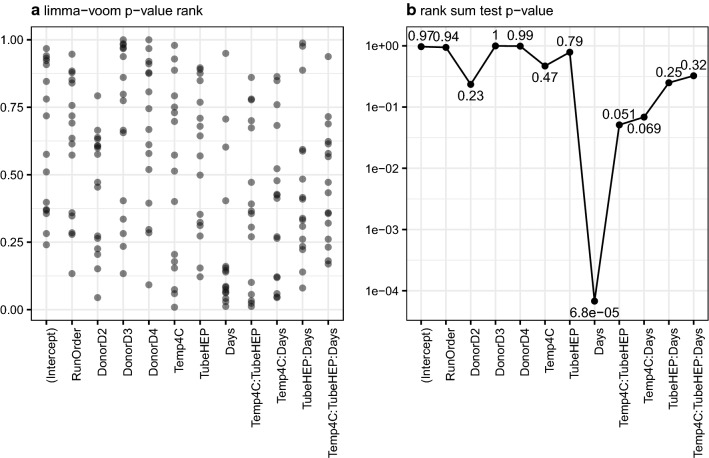
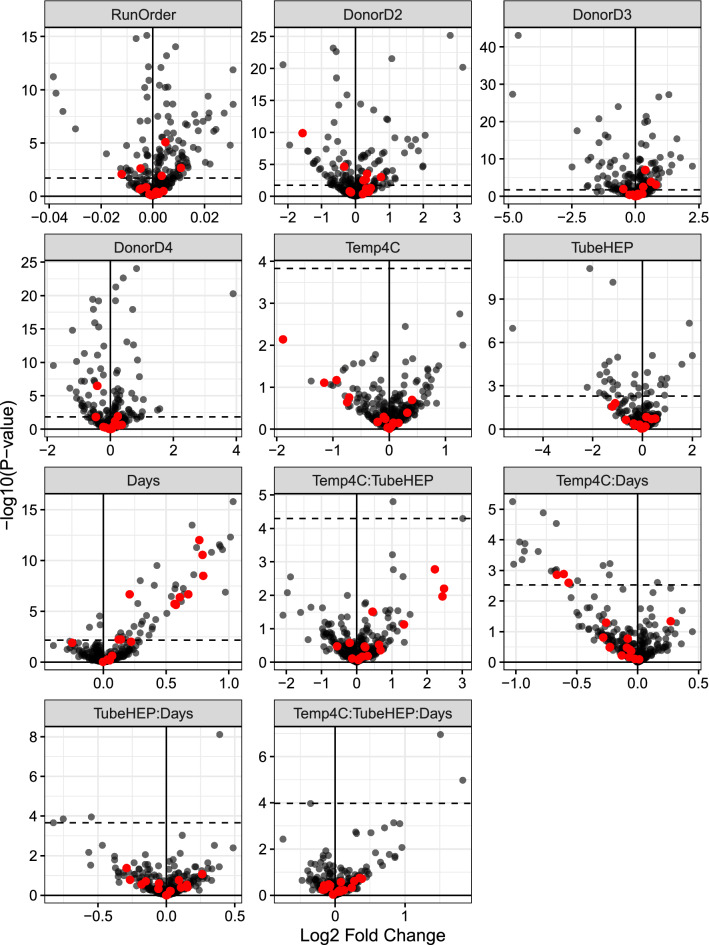
Variable levels of intracellular proteins were observed in subsets of patient plasma samples from the initial batches analyzed. This observation correlated strongly with the site of collection, implicating variability in blood processing procedures. Results from the healthy donor blood analysis did not demonstrate a significant impact of centrifugation conditions to plasma proteome variation. The time delay until first centrifugation had a major impact on variability, while storage temperature and anticoagulant showed less pronounced but still significant effects. The intracellular proteins associated with study site effect in patient plasma samples were significantly altered by delayed processing also.
Variable blood processing procedures contribute significantly to plasma proteomic variation and may give rise to increased intracellular proteins in plasma. Accounting for these effects can be important both at study design and data analysis stages. This understanding will be valuable to incorporate in the planning of protein-based biomarker discovery efforts in the future.
血浆是疾病进展和药物反应中蛋白质生物标志物的潜在丰富来源。通常会开展大型多中心研究以增加给定研究中分析的样本数量。这可能会增加血液处理和处理过程中出现变异的几率,从而导致蛋白质组学结果发生改变。本研究评估了血液处理变异对血浆的液相色谱 - 串联质谱(LC-MS/MS)蛋白质组学分析的影响。
最初使用LC-MS/MS鸟枪法蛋白质组学分析了两批患者血浆样本(分别为120个和204个样本)。为了研究不同离心条件、首次离心前的延迟时间、储存温度和抗凝剂类型对鸟枪法蛋白质组学结果的影响,对健康供体血液进行了后续实验设计和实施。
在分析的初始批次患者血浆样本子集中观察到细胞内蛋白质水平存在差异。这一观察结果与采集地点密切相关,表明血液处理程序存在变异性。健康供体血液分析结果未显示离心条件对血浆蛋白质组变异有显著影响。首次离心前的时间延迟对变异性有重大影响,而储存温度和抗凝剂显示出的影响虽不那么明显,但仍具有显著意义。延迟处理也显著改变了患者血浆样本中与研究地点效应相关的细胞内蛋白质。
可变的血液处理程序对血浆蛋白质组变异有显著影响,并可能导致血浆中细胞内蛋白质增加。在研究设计和数据分析阶段考虑这些影响可能很重要。这种认识对于未来纳入基于蛋白质的生物标志物发现工作的规划将是有价值的。