Xu Zhi-Yi, Xu Yang, Xie Xiao-Fang, Tian Yin, Sui Jun-Hui, Sun Yong, Lin Da-Sheng, Gao Xing, Peng Cheng, Fan Yu-Jiang
National Engineering Research Center for Biomaterials, Sichuan University, 29 Wangjiang Road, Chengdu, 610064, Sichuan, China.
Chengdu Huasun Technology Group Inc., Ltd, Shuxin Avenue No.1168, Western Hi-tech Zone, Chengdu, 611731, Sichuan, China.
Chin Med. 2021 Jan 19;16(1):12. doi: 10.1186/s13020-021-00424-3.
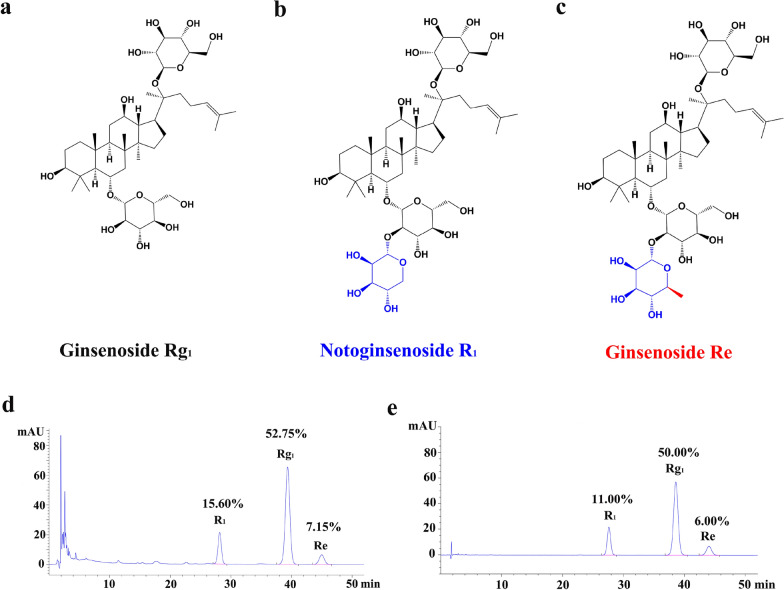
Panax notoginseng triol saponins (PTS) has been used clinically for ischemic stroke therapy (IST) in China for more than 17 years due to its anti-platelet aggregation and neuro-protective effects, but its mechanism of action is not fully understand. In this study, anti-platelet aggregation-related protein analysis and computer simulations of drug-protein binding interactions were performed to explore the mechanism of the effects of PTS against ischemic stroke in an ischemia reperfusion model.
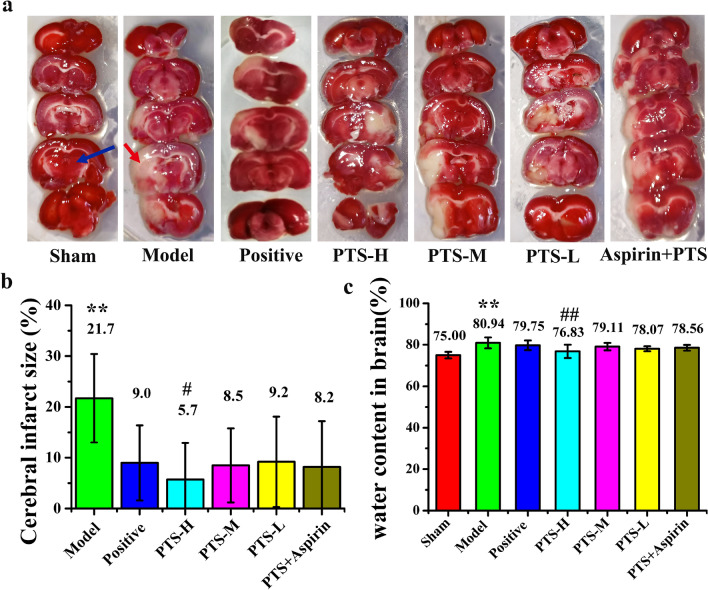
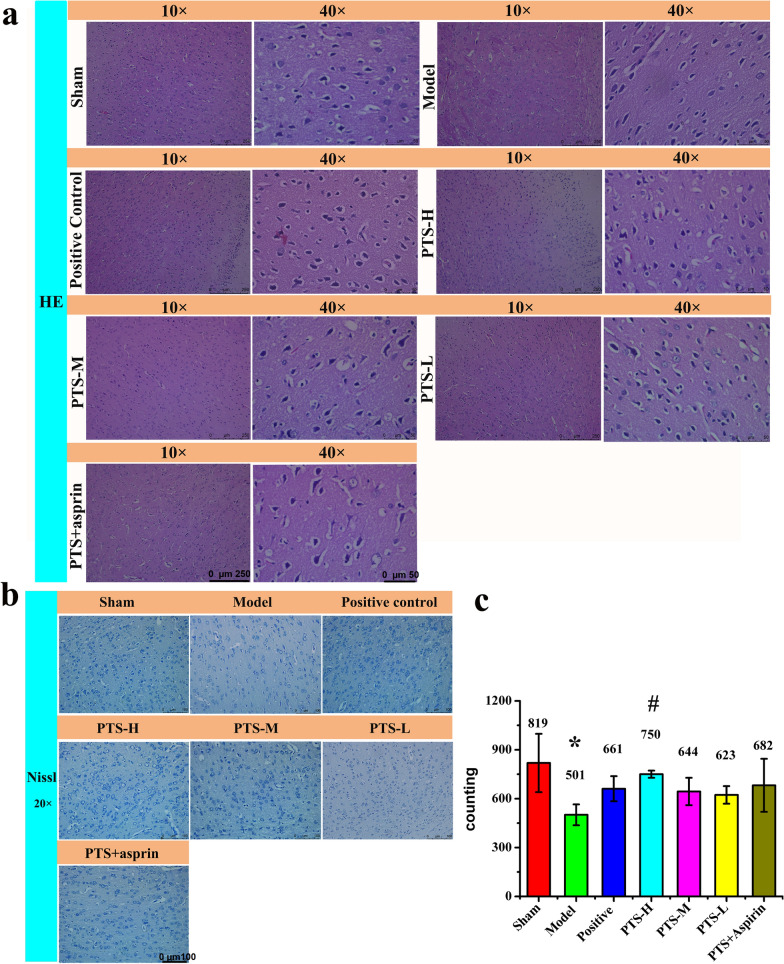
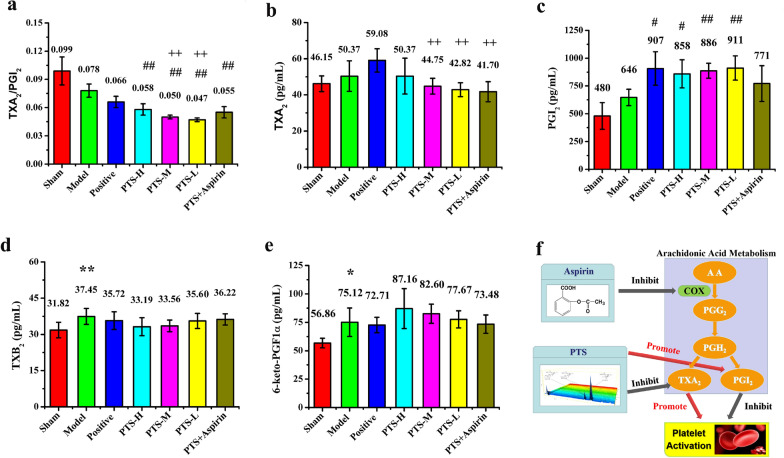
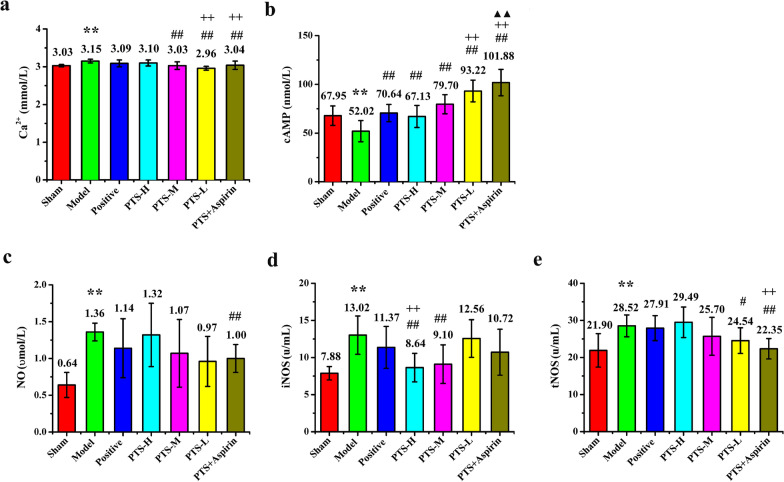
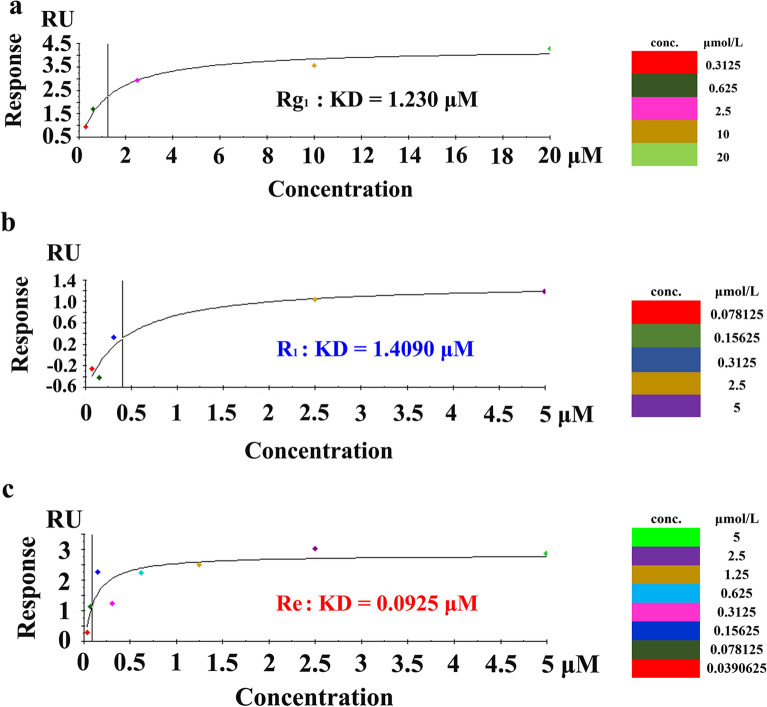
Three oral doses of PTS were administered in a model of middle cerebral artery occlusion (MCAO) in rats. Panax notoginseng total saponins (PNS) and a combination of PTS and aspirin were chosen for comparison. To evaluate therapeutic effects and explore possible mechanisms of anti-platelet aggregation, we measured cerebral infarct size and water content in brain tissue, histomorphological changes, expression of related factors (such as arachidonic acid metabolites) and platelet receptors in serum, as well as the binding affinity of PTS for platelet adhesion receptors.
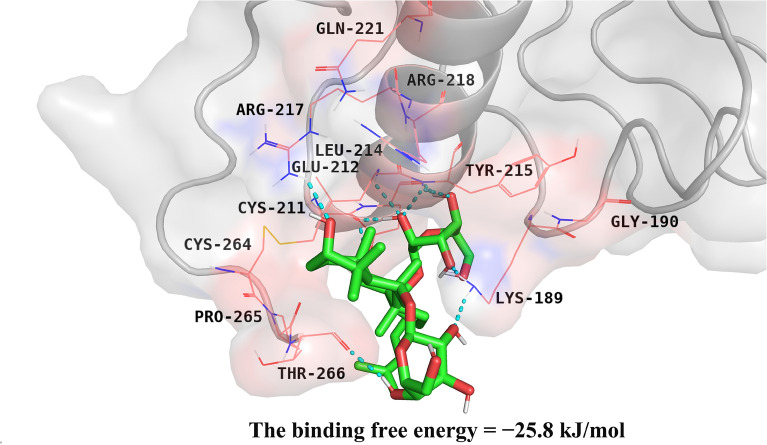
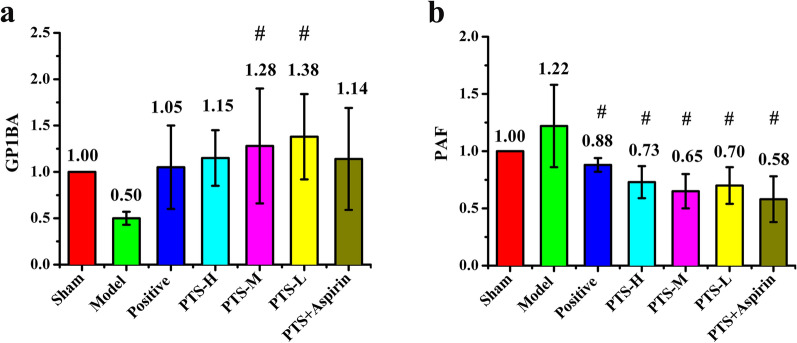
Compared with PNS, PTS showed a stronger and more potent anti-platelet aggregation effect in MCAO model rats. The combination of PTS and aspirin could reduce adverse gastrointestinal effects by regulating the TXA/PGI ratio. We demonstrated for the first time that PTS was able to regulate Glycoprotein Ib-α (GP1BA) in a model animal. The binding of ginsenoside Rg and GP1BA could form a stable structure. Moreover, PTS could reduce von Willebrand factor (VWF)-mediated platelet adhesion to damaged vascular endothelium, and thus enhance the probability of anti-platelet aggregation and anti-thrombosis under pathological conditions.
Our results showed that GP1BA was closely related to the anti-platelet aggregation action of PTS, which provided new scientific and molecular evidence for its clinical application.
三七三醇皂苷(PTS)因其抗血小板聚集和神经保护作用,在中国已临床用于缺血性脑卒中治疗(IST)超过17年,但其作用机制尚未完全明确。本研究通过抗血小板聚集相关蛋白分析及药物 - 蛋白结合相互作用的计算机模拟,在缺血再灌注模型中探讨PTS抗缺血性脑卒中的作用机制。
在大鼠大脑中动脉闭塞(MCAO)模型中给予三种口服剂量的PTS。选取三七总皂苷(PNS)以及PTS与阿司匹林的组合进行对比。为评估治疗效果并探索抗血小板聚集的可能机制,我们测量了脑梗死体积和脑组织含水量、组织形态学变化、血清中相关因子(如花生四烯酸代谢产物)和血小板受体的表达,以及PTS与血小板黏附受体的结合亲和力。
与PNS相比,PTS在MCAO模型大鼠中显示出更强、更有效的抗血小板聚集作用。PTS与阿司匹林联合应用可通过调节TXA/PGI比值降低胃肠道不良反应。我们首次在模型动物中证明PTS能够调节糖蛋白Ib-α(GP1BA)。人参皂苷Rg与GP1BA的结合可形成稳定结构。此外,PTS可减少血管性血友病因子(VWF)介导的血小板与受损血管内皮的黏附,从而提高病理条件下抗血小板聚集和抗血栓形成的可能性。
我们的结果表明,GP1BA与PTS的抗血小板聚集作用密切相关,为其临床应用提供了新的科学和分子证据。