Department of Population Health and Pathobiology, College of Veterinary Medicine, North Carolina State University, 1060 William Moore Drive, Raleigh, NC, 27607, USA.
Department of Pathology and Laboratory Medicine, Lineberger Comprehensive Cancer Center, University of North Carolina School of Medicine, Chapel Hill, NC, USA.
Nat Commun. 2021 Jan 19;12(1):462. doi: 10.1038/s41467-020-20746-4.
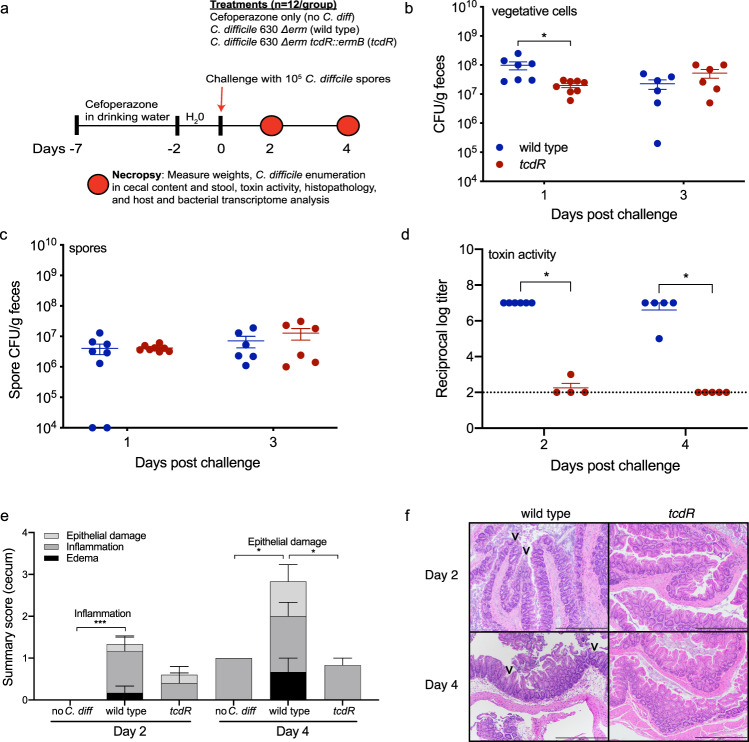
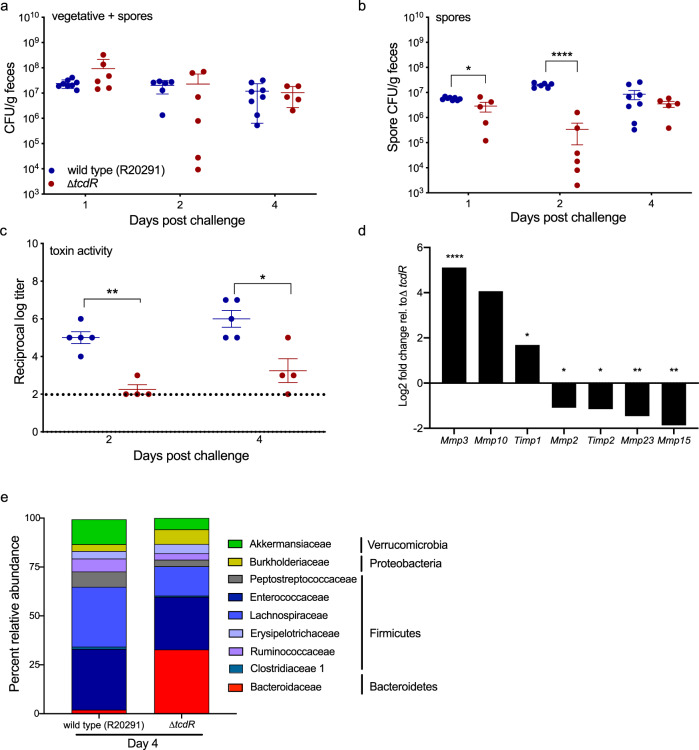
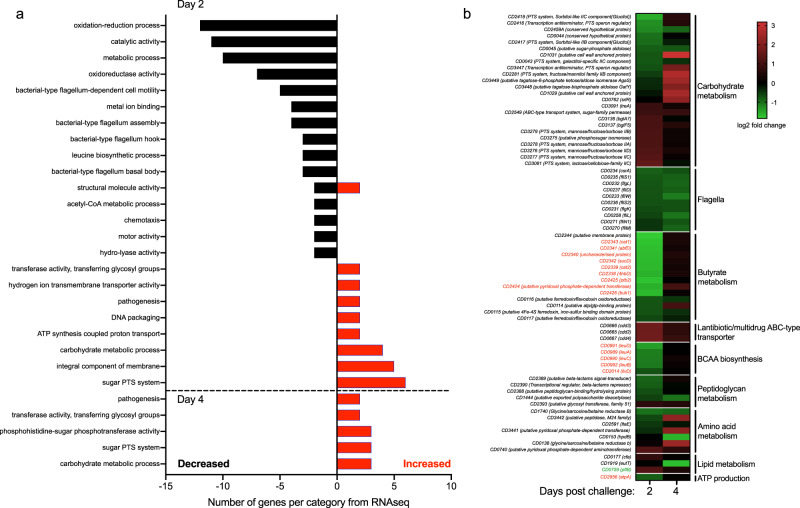
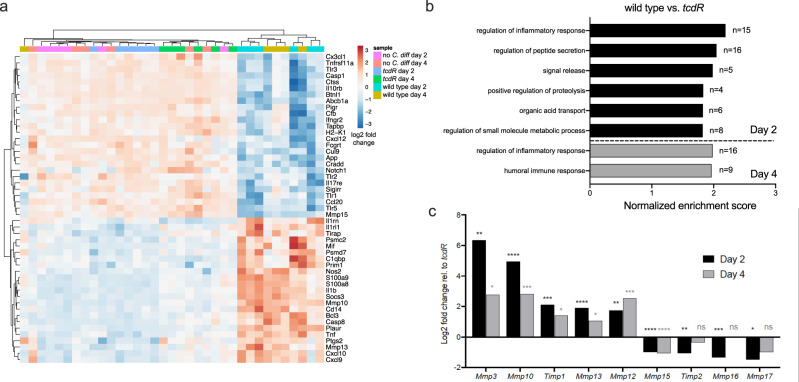
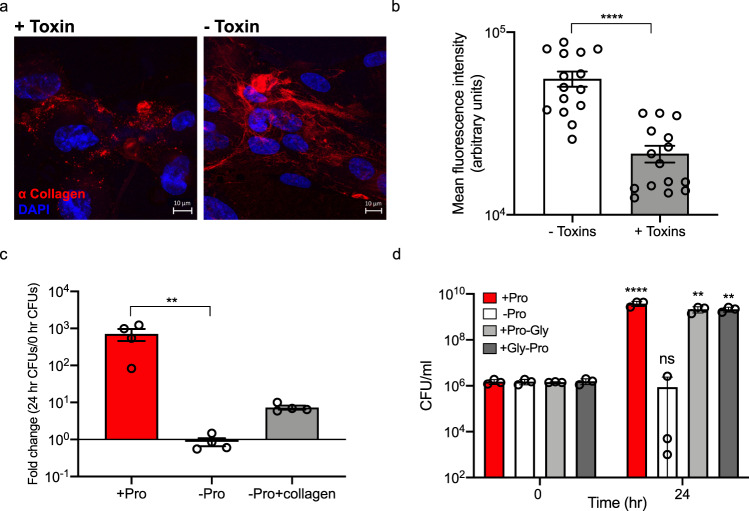
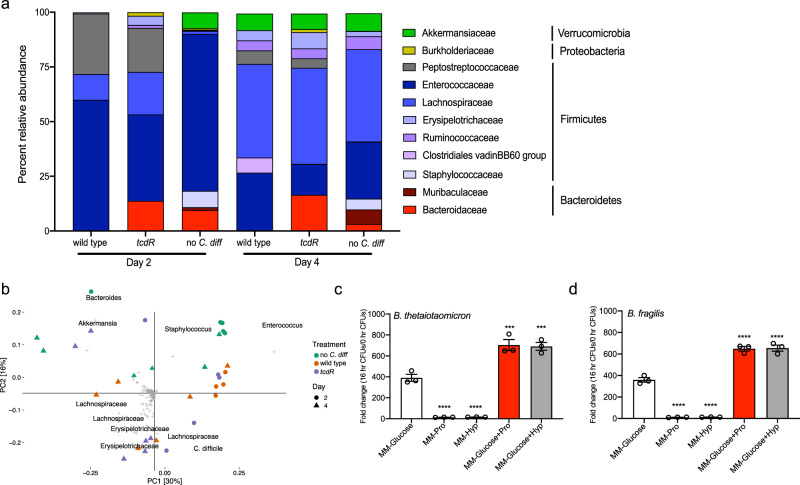
Clostridioides difficile is a bacterial pathogen that causes a range of clinical disease from mild to moderate diarrhea, pseudomembranous colitis, and toxic megacolon. Typically, C. difficile infections (CDIs) occur after antibiotic treatment, which alters the gut microbiota, decreasing colonization resistance against C. difficile. Disease is mediated by two large toxins and the expression of their genes is induced upon nutrient depletion via the alternative sigma factor TcdR. Here, we use tcdR mutants in two strains of C. difficile and omics to investigate how toxin-induced inflammation alters C. difficile metabolism, tissue gene expression and the gut microbiota, and to determine how inflammation by the host may be beneficial to C. difficile. We show that C. difficile metabolism is significantly different in the face of inflammation, with changes in many carbohydrate and amino acid uptake and utilization pathways. Host gene expression signatures suggest that degradation of collagen and other components of the extracellular matrix by matrix metalloproteinases is a major source of peptides and amino acids that supports C. difficile growth in vivo. Lastly, the inflammation induced by C. difficile toxin activity alters the gut microbiota, excluding members from the genus Bacteroides that are able to utilize the same essential nutrients released from collagen degradation.
艰难梭菌是一种细菌病原体,可引起从轻度到中度腹泻、伪膜性结肠炎和中毒性巨结肠等一系列临床疾病。通常,艰难梭菌感染(CDI)发生在抗生素治疗后,抗生素治疗改变了肠道微生物群,降低了艰难梭菌的定植抵抗力。疾病是由两种大毒素介导的,其基因的表达在通过替代 sigma 因子 TcdR 耗尽营养物质时被诱导。在这里,我们使用两种艰难梭菌菌株中的 tcdR 突变体和组学来研究毒素诱导的炎症如何改变艰难梭菌的代谢、组织基因表达和肠道微生物群,并确定宿主的炎症如何有益于艰难梭菌。我们表明,艰难梭菌的代谢在面对炎症时会发生显著变化,许多碳水化合物和氨基酸摄取和利用途径发生变化。宿主基因表达特征表明,基质金属蛋白酶对细胞外基质中胶原蛋白和其他成分的降解是支持艰难梭菌在体内生长的肽和氨基酸的主要来源。最后,艰难梭菌毒素活性诱导的炎症改变了肠道微生物群,排除了能够利用从胶原蛋白降解中释放的相同必需营养素的拟杆菌属成员。