Fu Yufei, Zhu Fanfan, Ma Zhongjun, Lv Bin, Wang Xi, Dai Chunyan, Ma Xiaoqiong, Liu Pei, Lv Hang, Chen Xin, Chen Zhe, Shen Li
Key Laboratory of Digestive Pathophysiology of Zhejiang Province, Insititute of Cancer Research, First Affiliated Hospital, Zhejiang Chinese Medical University, Hangzhou, People's Republic of China.
Institute of Marine Biology and Natural Products, Department of Ocean Science and Engineering, Zhejiang University, Hangzhou, People's Republic of China.
Onco Targets Ther. 2021 Jan 12;14:301-314. doi: 10.2147/OTT.S282334. eCollection 2021.
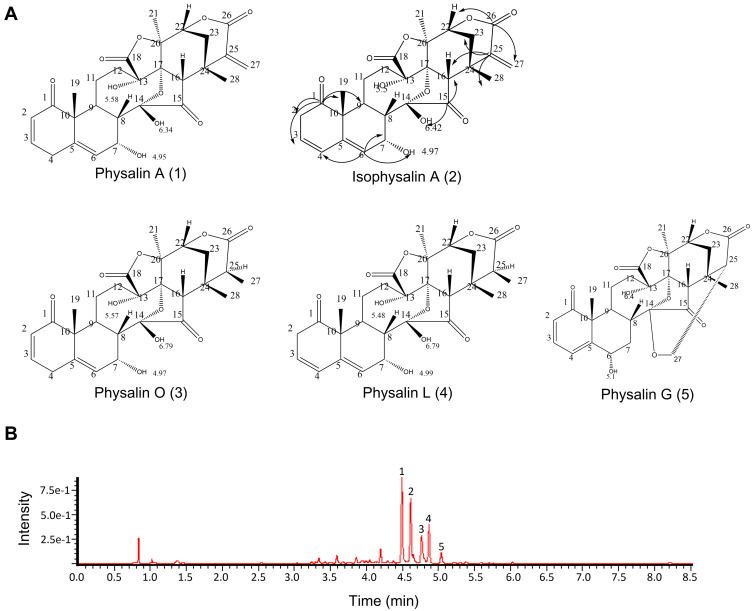
var. is an herb that possesses various ethnopharmacological applications. Herein, our current study focuses on the antitumor effect of a combination of physalins, which are regarded as the most representative secondary metabolites from calyces of var. .
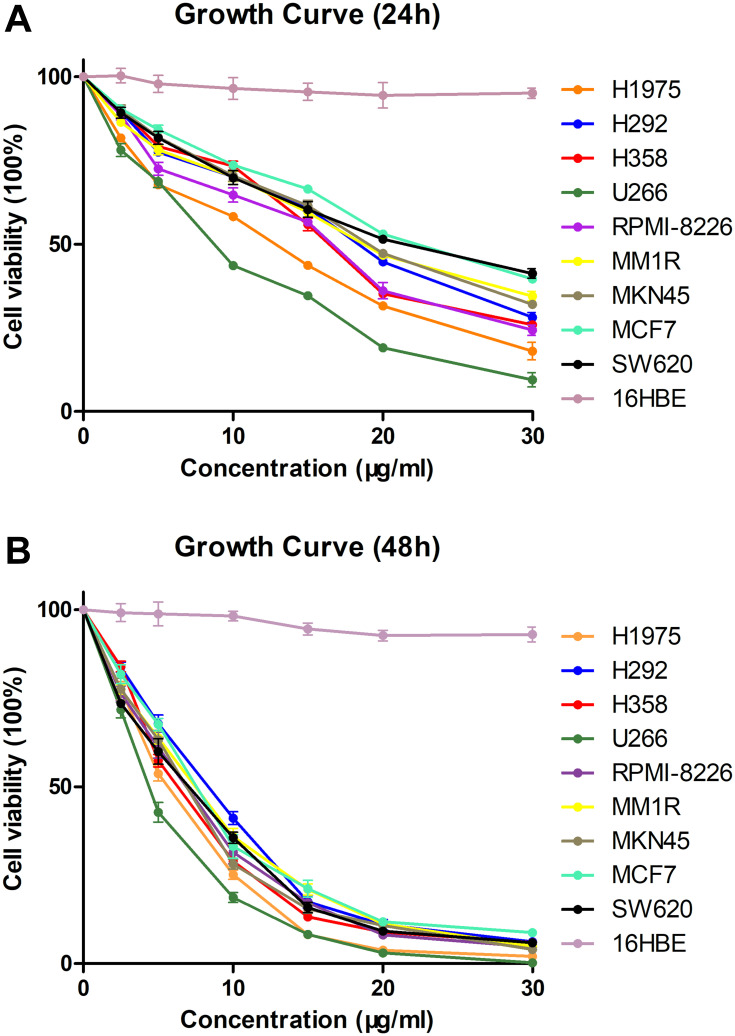
We mainly investigated the antitumor activity of the physalins extracted from var. on both solid and hematologic cancers. The main cells used in this study were NCI-H1975 and U266 cells. The major assays used were the CCK-8 assay, Western blot analyses, immunofluorescence assay and Annexin V assay, and a xenograft mouse model was used.
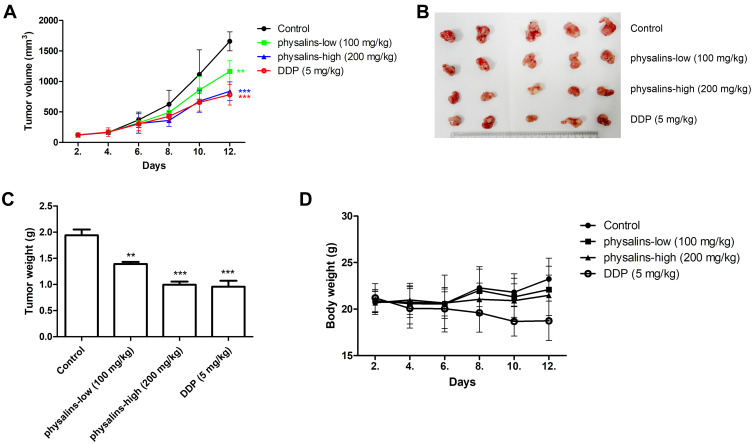
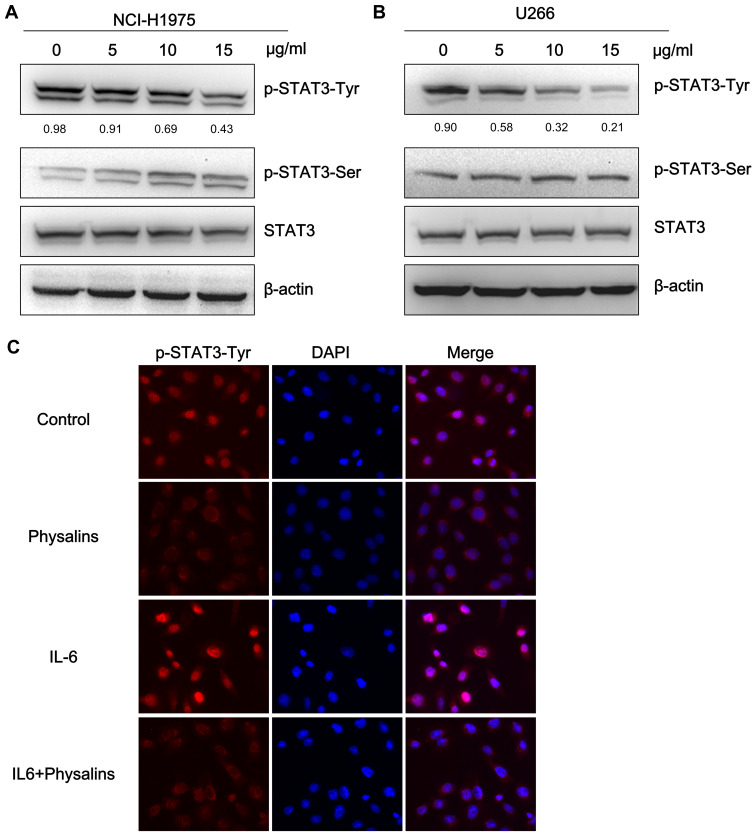
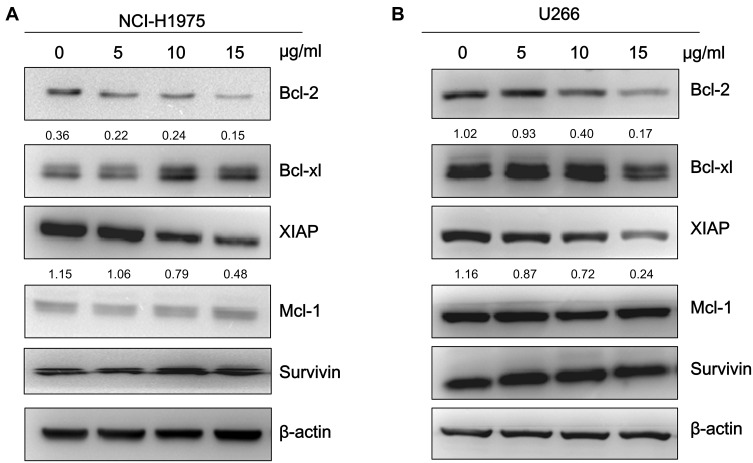
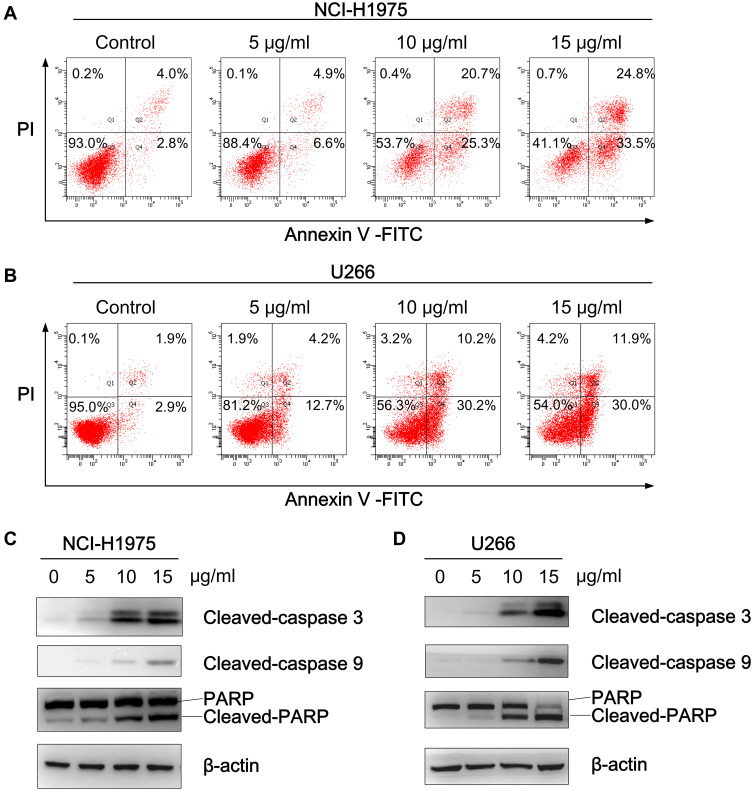
The results showed that physalins exhibited a strong antitumoural effect on both non-small cell lung cancer (NSCLC) and multiple myeloma (MM) cells by suppressing constitutive STAT3 activity and further inhibiting the downstream target gene expression induced by STAT3 signaling, which resulted in the enhanced apoptosis of tumor cells. Moreover, physalins significantly reduced tumor growth in xenograft models of lung cancer.
Collectively, these findings demonstrated that the physalins from var. may potentially act as cancer preventive or chemotherapeutic agents for NSCLC and MM by inhibiting the STAT3 signaling pathway. The present study served as a promising guide to further explore the precise mechanism of var. in cancer treatment.
酸浆属植物是一种具有多种民族药理学应用的草药。在此,我们当前的研究聚焦于酸浆属植物花萼中最具代表性的次生代谢产物酸浆苦素组合的抗肿瘤作用。
我们主要研究了从酸浆属植物中提取的酸浆苦素对实体癌和血液系统癌症的抗肿瘤活性。本研究中使用的主要细胞是NCI-H1975和U266细胞。使用的主要检测方法有CCK-8检测、蛋白质免疫印迹分析、免疫荧光检测和膜联蛋白V检测,并使用了异种移植小鼠模型。
结果表明,酸浆苦素通过抑制组成型STAT3活性并进一步抑制STAT3信号传导诱导的下游靶基因表达,对非小细胞肺癌(NSCLC)和多发性骨髓瘤(MM)细胞均表现出强大的抗肿瘤作用,从而导致肿瘤细胞凋亡增加。此外,酸浆苦素在肺癌异种移植模型中显著降低了肿瘤生长。
总体而言,这些发现表明,酸浆属植物中的酸浆苦素可能通过抑制STAT3信号通路,潜在地作为NSCLC和MM的癌症预防或化疗药物。本研究为进一步探索酸浆属植物在癌症治疗中的精确机制提供了有前景的指导。