Laboratory of Tumor Angiogenesis, Georgia Cancer Center, Department of Biochemistry and Molecular Biology, Augusta University, Augusta, GA 30912, USA.
Cancer Animal Models Shared Resource, Winship Cancer Institute, Emory University, Atlanta, GA 30322, USA.
Oncol Rep. 2021 Mar;45(3):1171-1181. doi: 10.3892/or.2021.7936. Epub 2021 Jan 14.
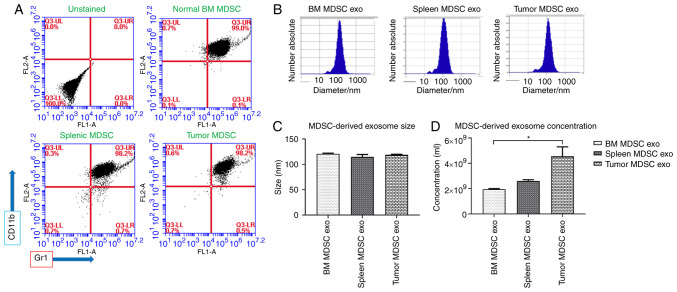
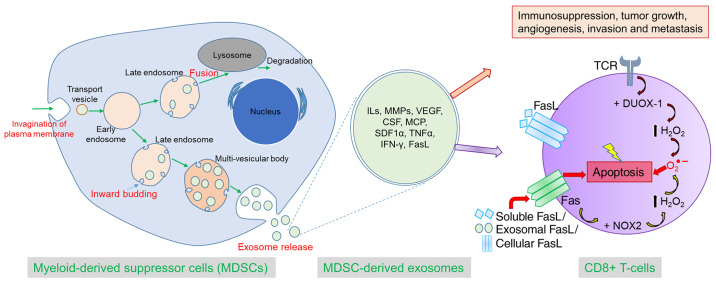
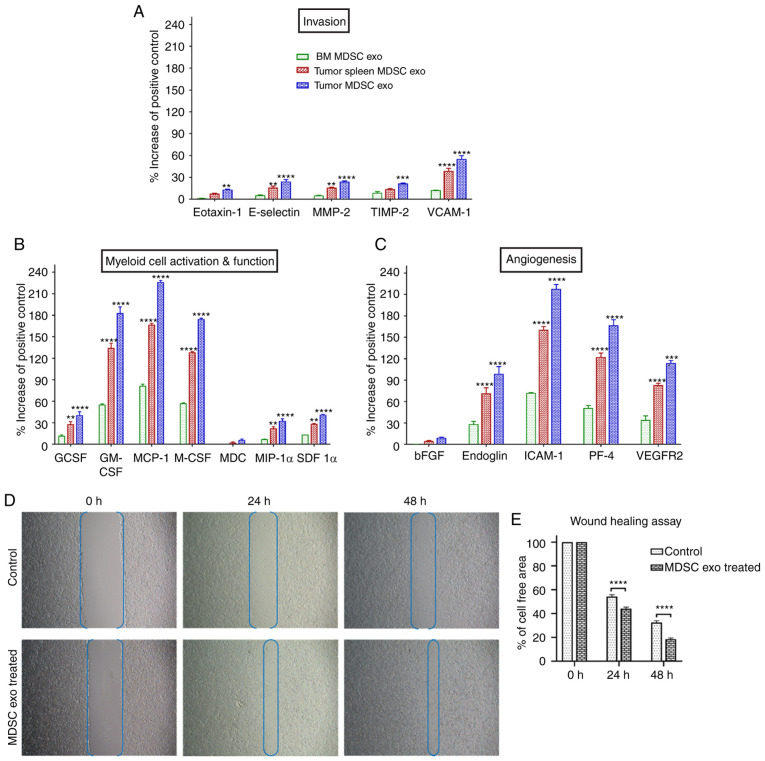
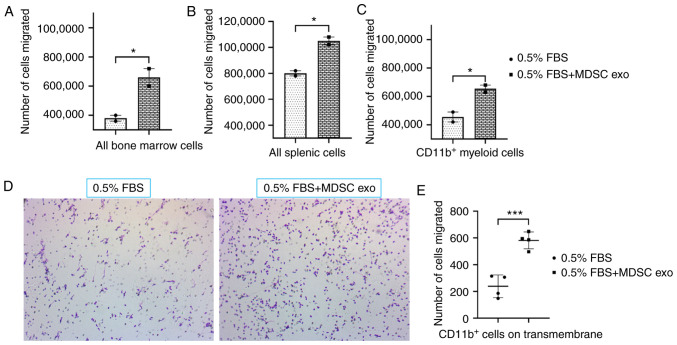
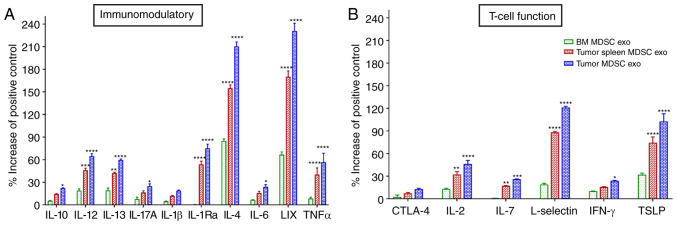
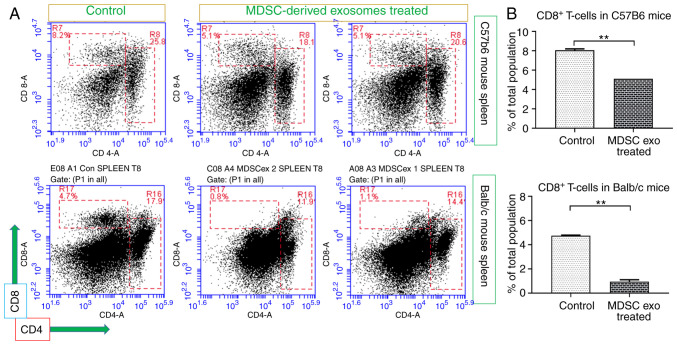
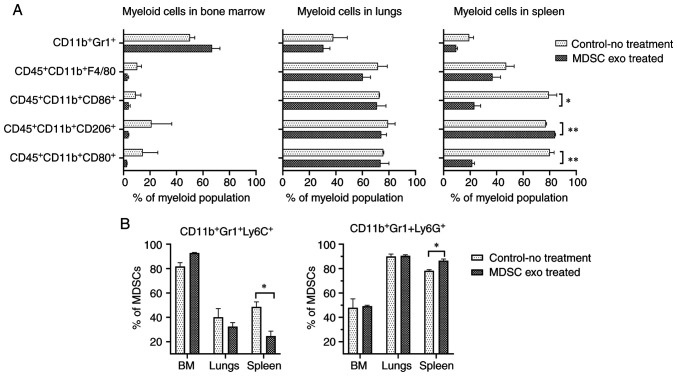
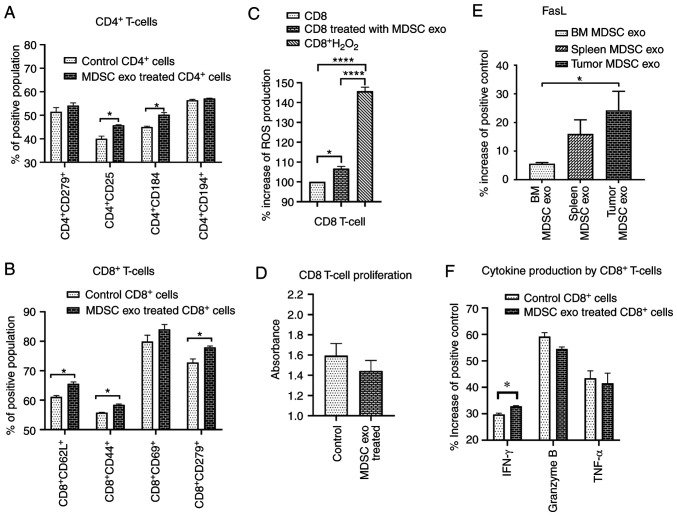
Myeloid‑derived suppressor cells (MDSCs) are an indispensable component of the tumor microenvironment (TME). Along with the role of MDSC immunosuppression and antitumor immunity, MDSCs facilitate tumor growth, differentiation, and metastasis in several ways that are yet to be explored. Like any other cell type, MDSCs also release a tremendous number of exosomes, or nanovesicles of endosomal origin, that participate in intercellular communications by dispatching biological macromolecules. There have been no investigational studies conducted to characterize the role of MDSC‑derived exosomes (MDSC exo) in modulating the TME. In this study, we isolated MDSC exo and demonstrated that they carry a significant level of proteins that play an indispensable role in tumor growth, invasion, angiogenesis, and immunomodulation. We observed a higher yield and more substantial immunosuppressive potential of exosomes isolated from MDSCs in the primary tumor area than those in the spleen or bone marrow. Our in vitro data suggest that MDSC exo are capable of hyper‑activating or exhausting CD8 T‑cells and induce reactive oxygen species production that elicits activation‑induced cell death. We confirmed the depletion of CD8 T‑cells in vivo by treating mice with MDSC exo. We also observed a reduction in pro‑inflammatory M1‑macrophages in the spleen of those animals. Our results indicate that the immunosuppressive and tumor‑promoting functions of MDSCs are also implemented by MDSC‑derived exosomes which would open up a new avenue of MDSC research and MDSC‑targeted therapy.
髓系来源的抑制性细胞(MDSCs)是肿瘤微环境(TME)中不可或缺的组成部分。MDSC 除了具有免疫抑制和抗肿瘤免疫作用外,还通过多种尚未探索的方式促进肿瘤生长、分化和转移。与任何其他细胞类型一样,MDSC 还会释放大量外泌体或内体起源的纳米囊泡,通过派遣生物大分子参与细胞间通讯。目前还没有研究来描述 MDSC 衍生的外泌体(MDSC exo)在调节 TME 中的作用。在这项研究中,我们分离了 MDSC exo,并证明它们携带了大量在肿瘤生长、侵袭、血管生成和免疫调节中发挥不可或缺作用的蛋白质。我们观察到,与来自脾脏或骨髓的 MDSC 相比,来自原发性肿瘤区域的 MDSC 分离的外泌体具有更高的产量和更强的免疫抑制潜力。我们的体外数据表明,MDSC exo 能够超激活或耗尽 CD8 T 细胞,并诱导产生活性氧物种,引发细胞凋亡。我们通过用 MDSC exo 处理小鼠,在体内证实了 CD8 T 细胞的耗竭。我们还观察到,这些动物脾脏中促炎 M1 巨噬细胞减少。我们的结果表明,MDSC 的免疫抑制和促进肿瘤的功能也是通过 MDSC 衍生的外泌体来实现的,这将为 MDSC 研究和 MDSC 靶向治疗开辟新的途径。