Department of Sociology and Criminology, University of Arkansas, 1 University of Arkansas, Fayetteville, AR, 72701, USA.
J Racial Ethn Health Disparities. 2022 Feb;9(1):176-183. doi: 10.1007/s40615-020-00941-1. Epub 2021 Jan 19.
Mask wearing has been shown to be an effective strategy for slowing the spread of COVID-19. While early studies have uncovered some evidence of racial and ethnic differences in mask-wearing behavior, critical gaps remain. We begin to address these gaps by (1) more comprehensively investigating the role of race and ethnicity on mask wearing during the COVID-19 pandemic and (2) examining whether gender intersects with race and ethnicity to differently influence mask-wearing patterns.
Data were drawn from the COVID-19 Impact Survey, a cross-sectional, nationally representative survey of adults living in the U.S. Data were pooled from three time points that ranged from late April 2020 to early June 2020. The final analytic sample consisted of 4688 non-institutionalized adults living in the U.S. A series of logistic regression models with robust standard errors were used to estimate differences in mask-wearing patterns.
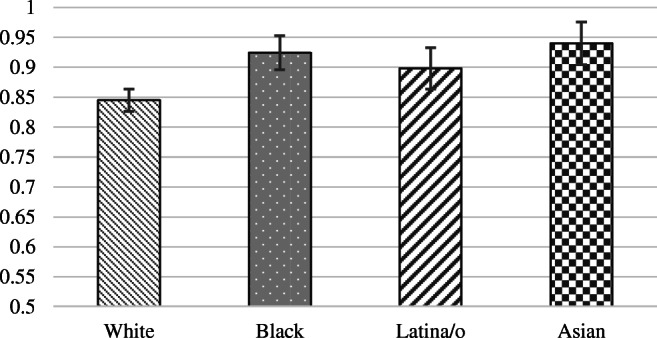
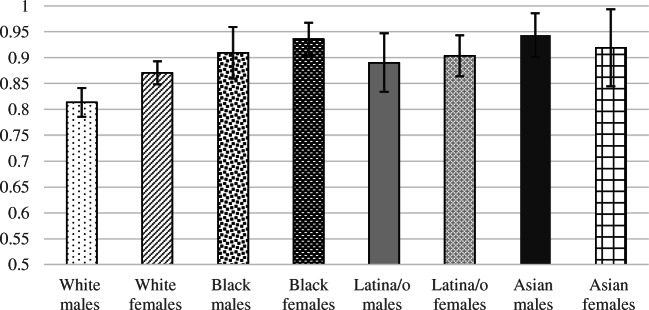
Compared with White respondents, results revealed Black, Latina/o, and Asian respondents were more likely to report wearing a mask in response to the coronavirus. Moreover, results show White men were least likely to wear a mask from late April 2020 to early June 2020.
Overall, findings demonstrate mask-wearing patterns during the COVID-19 pandemic are differently shaped by racial and ethnic background and gender. Findings from this study can inform targeted strategies designed to increase mask-wearing adherence among U.S. adults.
佩戴口罩已被证明是减缓 COVID-19 传播的有效策略。虽然早期的研究已经发现了一些关于种族和民族在戴口罩行为上差异的证据,但仍存在关键差距。我们通过以下两种方式来解决这些差距:(1)更全面地调查种族和民族在 COVID-19 大流行期间戴口罩的作用;(2)研究性别是否与种族和民族交叉,从而以不同的方式影响戴口罩的模式。
数据来自 COVID-19 影响调查,这是一项针对居住在美国的成年人的横断面、全国代表性调查。数据来自 2020 年 4 月下旬至 6 月初的三个时间点。最终的分析样本包括 4688 名居住在美国的非机构成年人。使用具有稳健标准误差的一系列逻辑回归模型来估计戴口罩模式的差异。
与白人受访者相比,研究结果显示黑人、拉丁裔/美洲原住民和亚裔受访者更有可能因冠状病毒而报告戴口罩。此外,结果表明,从 2020 年 4 月下旬到 6 月初,白人男性最不可能戴口罩。
总体而言,研究结果表明,在 COVID-19 大流行期间,口罩佩戴模式受到种族和民族背景以及性别的不同影响。本研究的结果可以为旨在提高美国成年人戴口罩依从性的有针对性策略提供信息。