Department of Molecular Medicine, University of Pavia, Pavia.
Department of Molecular Medicine, University of Pavia, Pavia, Italy; Department of Chemistry, Materials and Chemical Engineering G. Natta, Politecnico di Milano, Milano.
Haematologica. 2021 Apr 1;106(4):947-957. doi: 10.3324/haematol.2020.262485.
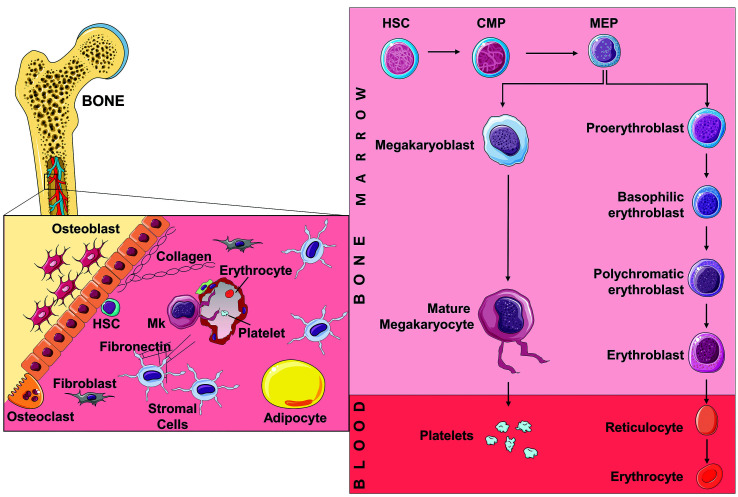
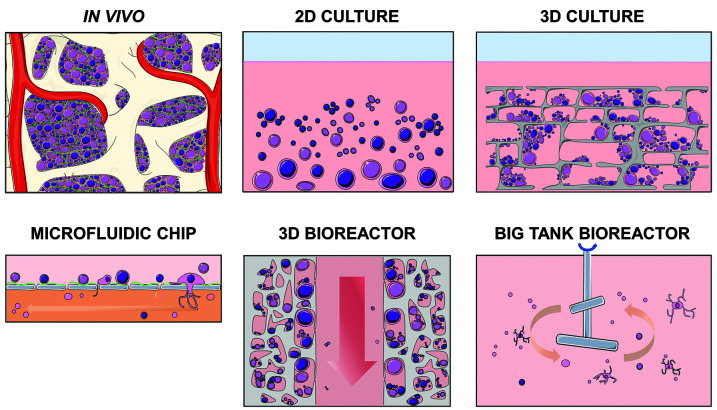
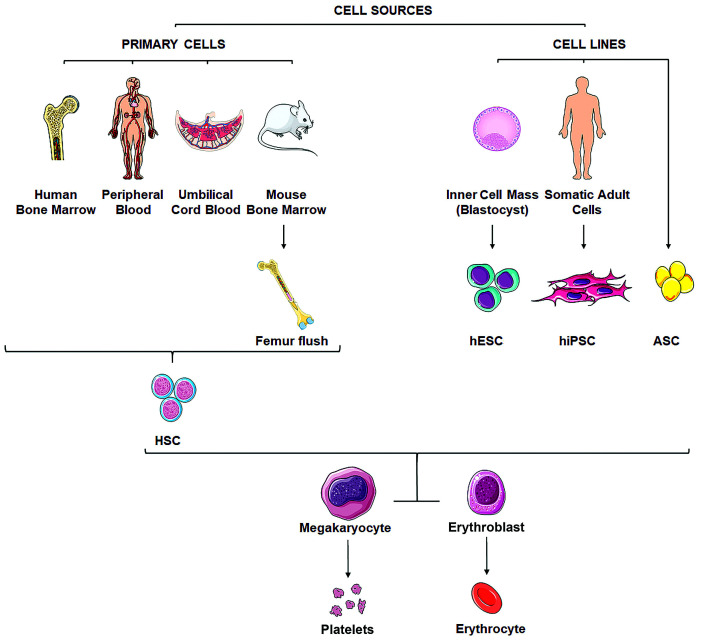
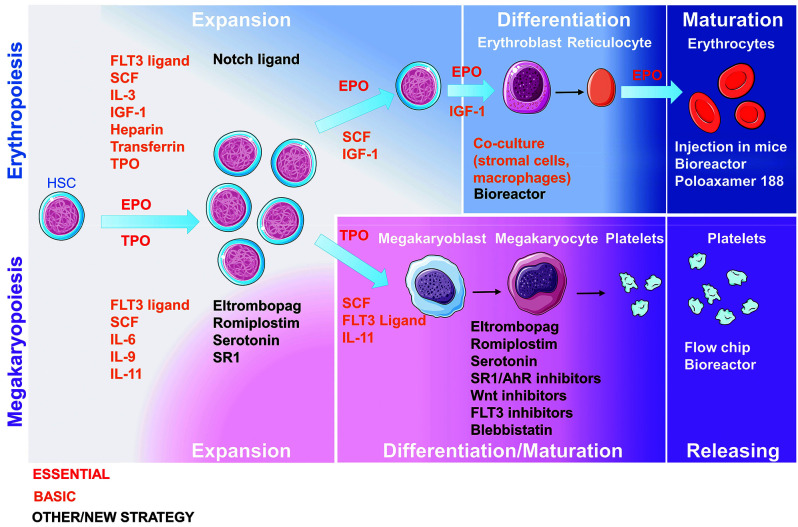
Since the dawn of medicine, scientists have carefully observed, modeled and interpreted the human body to improve healthcare. At the beginning there were drawings and paintings, now there is three-dimensional modeling. Moving from two-dimensional cultures and towards complex and relevant biomaterials, tissue-engineering approaches have been developed in order to create three-dimensional functional mimics of native organs. The bone marrow represents a challenging organ to reproduce because of its structure and composition that confer it unique biochemical and mechanical features to control hematopoiesis. Reproducing the human bone marrow niche is instrumental to answer the growing demand for human erythrocytes and platelets for fundamental studies and clinical applications in transfusion medicine. In this review, we discuss the latest culture techniques and technological approaches to obtain functional platelets and erythrocytes ex vivo. This is a rapidly evolving field that will define the future of targeted therapies for thrombocytopenia and anemia, but also a long-term promise for new approaches to the understanding and cure of hematologic diseases.
自医学诞生以来,科学家们一直在仔细观察、建模和解释人体,以改善医疗保健。最初有绘画,现在有三维建模。为了创造具有天然器官三维功能的仿生物,科学家们从二维文化转向复杂相关的生物材料,开发了组织工程方法。由于骨髓的结构和组成赋予其独特的生化和机械特性来控制造血,因此骨髓是一个具有挑战性的再生器官。复制人类骨髓龛对于满足日益增长的基础研究和输血医学临床应用中对人类红细胞和血小板的需求至关重要。在这篇综述中,我们讨论了获得功能血小板和红细胞的最新培养技术和技术方法。这是一个快速发展的领域,将定义针对血小板减少症和贫血的靶向治疗的未来,但也是理解和治疗血液疾病的新方法的长期承诺。