Research Institute for Equitable Development EQUIDE, Universidad Iberoamericana, Prolongación Paseo de Reforma 880, Lomas de Santa Fé, 01219, Mexico City, Mexico.
Yale School of Public Health, 60 College Street, New Haven, CT, 06510, USA.
Int J Equity Health. 2021 Jan 20;20(1):40. doi: 10.1186/s12939-020-01330-0.
There is an increasing global trend towards urbanization. In general, there are less food access issues in urban than rural areas, but this "urban advantage" does not benefit the poorest who face disproportionate barriers to accessing healthy food and have an increased risk of malnutrition.
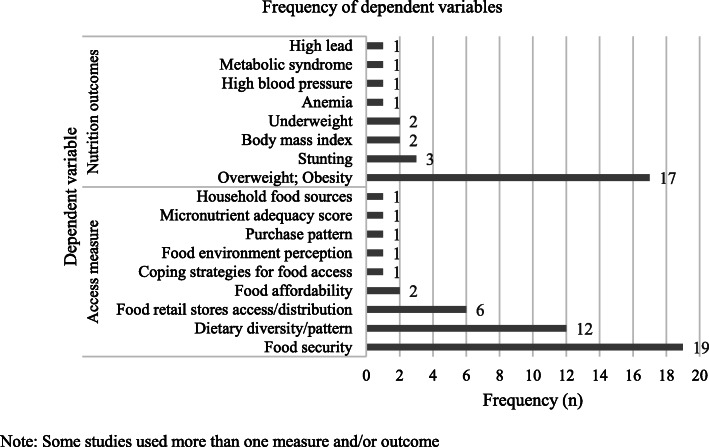
This systematic literature review aimed to assess urban poverty as a determinant of access to a healthy diet, and to examine the contribution of urban poverty to the nutritional status of individuals.
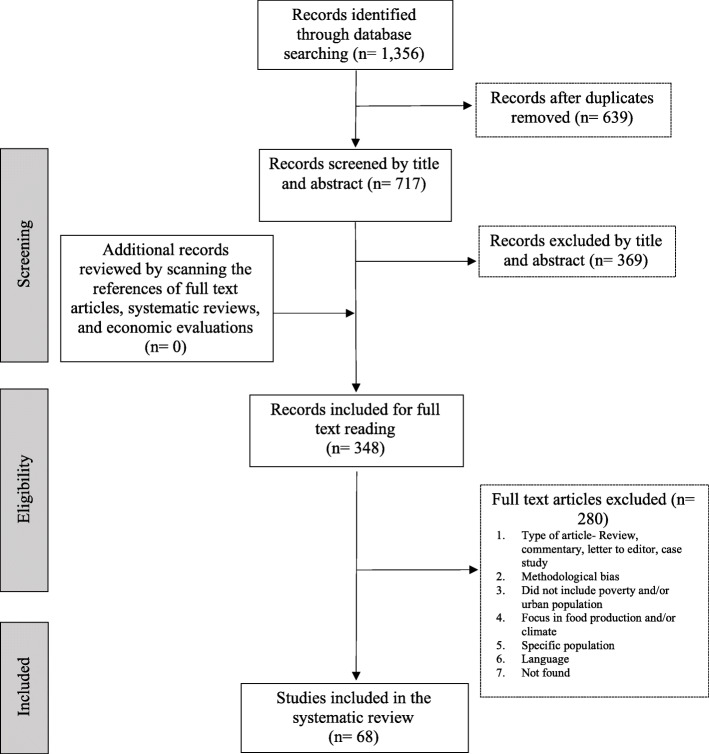
Following the Preferred Reporting Items for Systematic Reviews and Meta-Analysis (PRISMA) methodology, our review included quantitative and qualitative studies published in English or in Spanish between 2000 and 2019. The articles were eligible if they focused on nutrition access (i.e. access to a healthy diet) or nutrition outcomes (i.e., anemia, overweight and obesity, micronutrient deficiency, micronutrient malnutrition) among urban poor populations. Articles were excluded if they did not meet pre-established criteria. The quality of the quantitative studies was assessed by applying Khan et al.'s methodology. Similarly, we assessed the quality of qualitative articles through an adapted version of the National Institute for Health and Care Excellence (NICE) methodology checklist. Finally, we systematically analyzed all papers that met the inclusion criteria based on a qualitative content and thematic analysis.
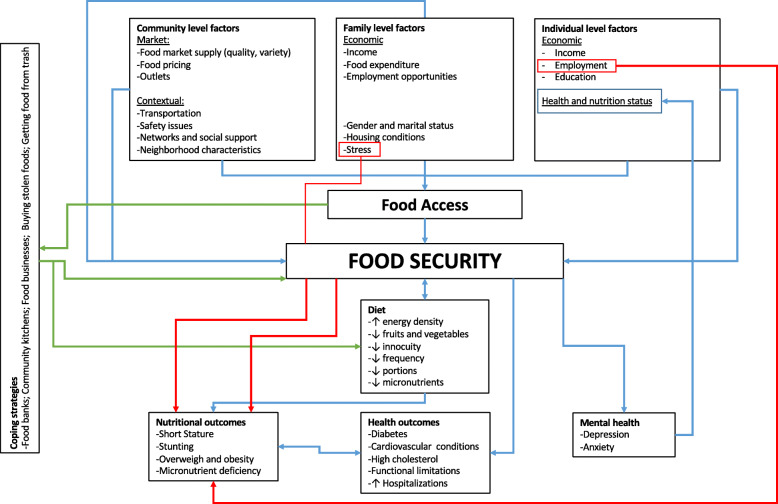
Of the 68 papers included in the systematic review, 55 used quantitative and 13 used qualitative methods. Through the analysis of the literature we found four key themes: (i) elements that affect access to healthy eating in individuals in urban poverty, (ii) food insecurity and urban poverty, (iii) risk factors for the nutritional status of urban poor and (iv) coping strategies to limited access to food. Based on the systematization of the literature on these themes, we then proposed a conceptual framework of urban poverty and nutrition.
This systematic review identified distinct barriers posed by urban poverty in accessing healthy diets and its association with poorer nutrition outcomes, hence, questioning the "urban advantage". A conceptual framework emerging from the existing literature is proposed to guide future studies and policies.
PROSPERO Registration number: CRD42018089788 .
全球城市化趋势日益增强。一般来说,城市的食物获取问题比农村少,但这种“城市优势”并不能使最贫困的人群受益,他们面临着获取健康食品的不成比例的障碍,营养不良的风险更高。
本系统文献综述旨在评估城市贫困作为获得健康饮食的决定因素,并研究城市贫困对个人营养状况的影响。
根据系统评价和荟萃分析的首选报告项目(PRISMA)方法,我们的综述包括 2000 年至 2019 年期间以英文或西班牙文发表的定量和定性研究。如果研究集中于城市贫困人口的营养获取(即获得健康饮食)或营养结果(即贫血、超重和肥胖、微量营养素缺乏、微量营养素营养不良),则符合条件。如果不符合预先确定的标准,则排除文章。通过应用 Khan 等人的方法评估定量研究的质量。同样,我们通过国家卫生与保健卓越研究所(NICE)方法检查表的改编版本评估定性文章的质量。最后,我们根据定性内容和主题分析系统地分析了所有符合纳入标准的论文。
在系统综述中包括的 68 篇论文中,55 篇使用了定量方法,13 篇使用了定性方法。通过对文献的分析,我们发现了四个关键主题:(i)影响城市贫困人口健康饮食获取的因素,(ii)食物不安全与城市贫困,(iii)城市贫困人口营养状况的危险因素,以及(iv)获取食物有限的应对策略。基于对这些主题的文献系统化,我们提出了一个城市贫困与营养的概念框架。
本系统综述确定了城市贫困在获得健康饮食方面存在的明显障碍及其与较差营养结果的关联,从而对“城市优势”提出了质疑。提出了一个从现有文献中出现的概念框架,以指导未来的研究和政策。
PROSPERO 注册号:CRD42018089788。