Department of Nutrition, Harvard University T H Chan School of Public Health, Boston, Massachusetts, USA
Department of Nutrition, Harvard University T H Chan School of Public Health, Boston, Massachusetts, USA.
BMJ Glob Health. 2021 Jan;6(1). doi: 10.1136/bmjgh-2020-003176.
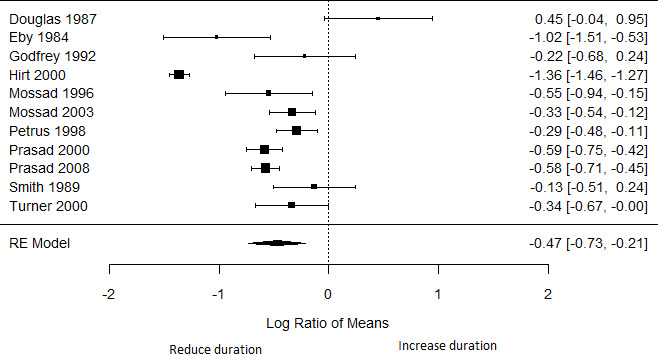
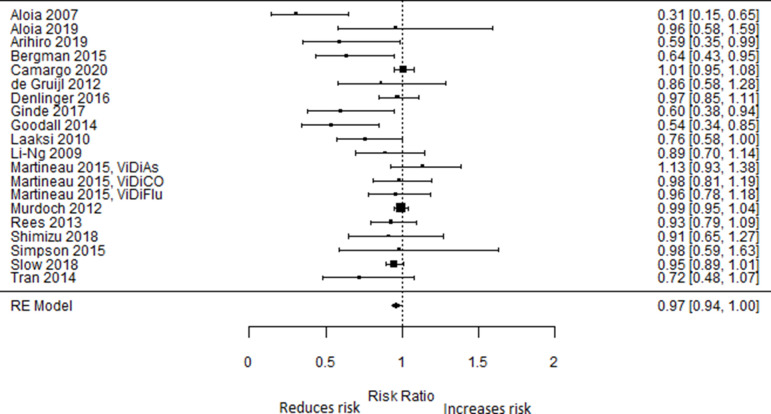
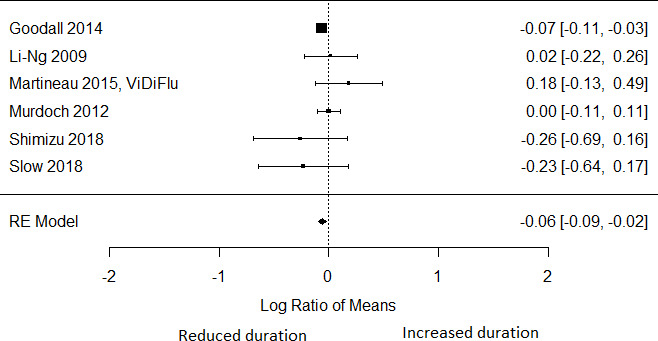
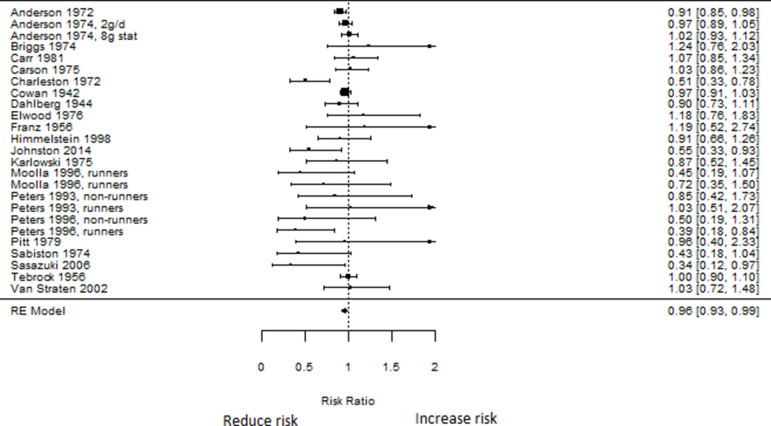
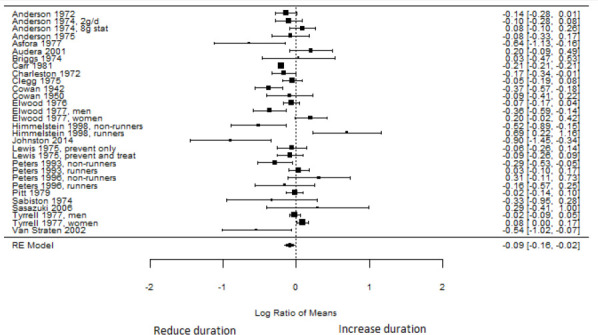
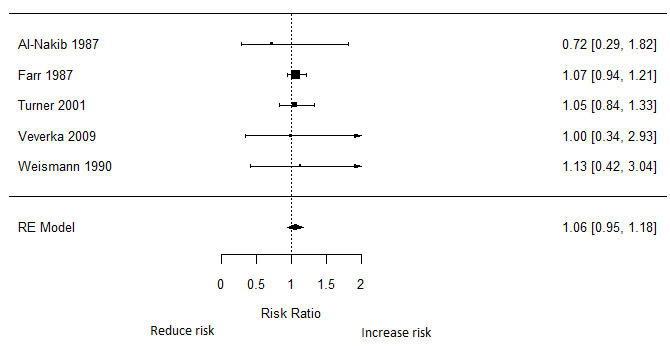
Acute respiratory tract infections (ARIs) are a leading cause of ill-health and death globally. Individual or multiple micronutrients have been shown to modulate immune function and affect the risk and severity of a number of infectious diseases. We systematically reviewed the evidence on the impact of micronutrient supplements to reduce the occurrence of ARIs and shorten the duration of ARI symptoms among adults. Random effects meta-analyses were conducted to estimate the pooled effects of vitamin D, vitamin C, zinc and multiple micronutrient supplementation (MMS) on the occurrence of ARIs and the duration of ARI symptoms. Vitamin D supplementation reduced the risk of ARI (risk ratio (RR)=0.97; 95% CI 0.94 to 1.00; p=0.028) and shortened the duration of symptoms (per cent difference: -6% (95% CI -9% to -2%; p=0.003)). The RR of vitamin D to prevent ARI was farther from the null when diagnosis was based on clinical diagnosis or laboratory testing, compared with self-report and when the loading dose was <60 000 IU. Vitamin C supplementation reduced the risk of ARIs (RR=0.96; 95% CI 0.93 to 0.99; p=0.01) and shortened the duration of symptoms (per cent difference: -9% (95% CI -16% to -2%; p=0.014)). The effect of vitamin C on preventing ARI was stronger among men and in middle-income countries, compared with women and high-income countries, respectively. Zinc supplementation did not reduce the risk of ARIs but shortened the duration of symptoms substantially (per cent difference: -47% (95% CI -73% to -21%; 0.0004)). Our synthesis of global evidence from randomised controlled trials indicates that micronutrient supplements including zinc, vitamins C and D, and multiple micronutrient supplements may be modestly effective in preventing ARIs and improving their clinical course. Further research is warranted to better understand the effectiveness that individual or multiple micronutrients have on SARS-CoV-2 infection and treatment outcomes.
急性呼吸道感染(ARI)是全球范围内导致健康不良和死亡的主要原因。已经表明,个体或多种微量营养素可以调节免疫功能,并影响多种传染病的风险和严重程度。我们系统地回顾了关于微量营养素补充剂减少成人急性呼吸道感染发生率和缩短急性呼吸道感染症状持续时间的证据。采用随机效应荟萃分析来估计维生素 D、维生素 C、锌和多种微量营养素补充剂(MMS)对急性呼吸道感染发生率和症状持续时间的综合影响。维生素 D 补充剂降低了急性呼吸道感染的风险(风险比(RR)=0.97;95%置信区间 0.94 至 1.00;p=0.028),并缩短了症状持续时间(百分比差异:-6%(95%置信区间 -9%至-2%;p=0.003))。与基于自我报告的诊断和 60000IU 以下的负荷剂量相比,基于临床诊断或实验室检测的诊断时,维生素 D 预防急性呼吸道感染的 RR 更接近零。维生素 C 补充剂降低了急性呼吸道感染的风险(RR=0.96;95%置信区间 0.93 至 0.99;p=0.01),并缩短了症状持续时间(百分比差异:-9%(95%置信区间 -16%至-2%;p=0.014))。与女性和高收入国家相比,维生素 C 对急性呼吸道感染的预防作用在男性和中等收入国家中更强。锌补充剂并未降低急性呼吸道感染的风险,但大大缩短了症状持续时间(百分比差异:-47%(95%置信区间 -73%至-21%;0.0004))。我们对来自随机对照试验的全球证据进行综合分析表明,包括锌、维生素 C 和 D 以及多种微量营养素补充剂在内的微量营养素补充剂可能在预防急性呼吸道感染和改善其临床病程方面具有适度效果。需要进一步研究以更好地了解个体或多种微量营养素对严重急性呼吸综合征冠状病毒 2 感染和治疗结果的有效性。