Department of Emergency Medicine, College of Medicine, National Taiwan University, Taipei, Taiwan.
Department of Emergency Medicine, Zhongzheng Dist, National Taiwan University Hospital, No.7, Zhongshan S. Rd, Taipei City 100, Taiwan, ROC.
Nutr J. 2024 Aug 14;23(1):92. doi: 10.1186/s12937-024-00990-w.
Vitamin D supplementation may prevent acute respiratory infections (ARIs). This study aimed to identify the optimal methods of vitamin D supplementation.
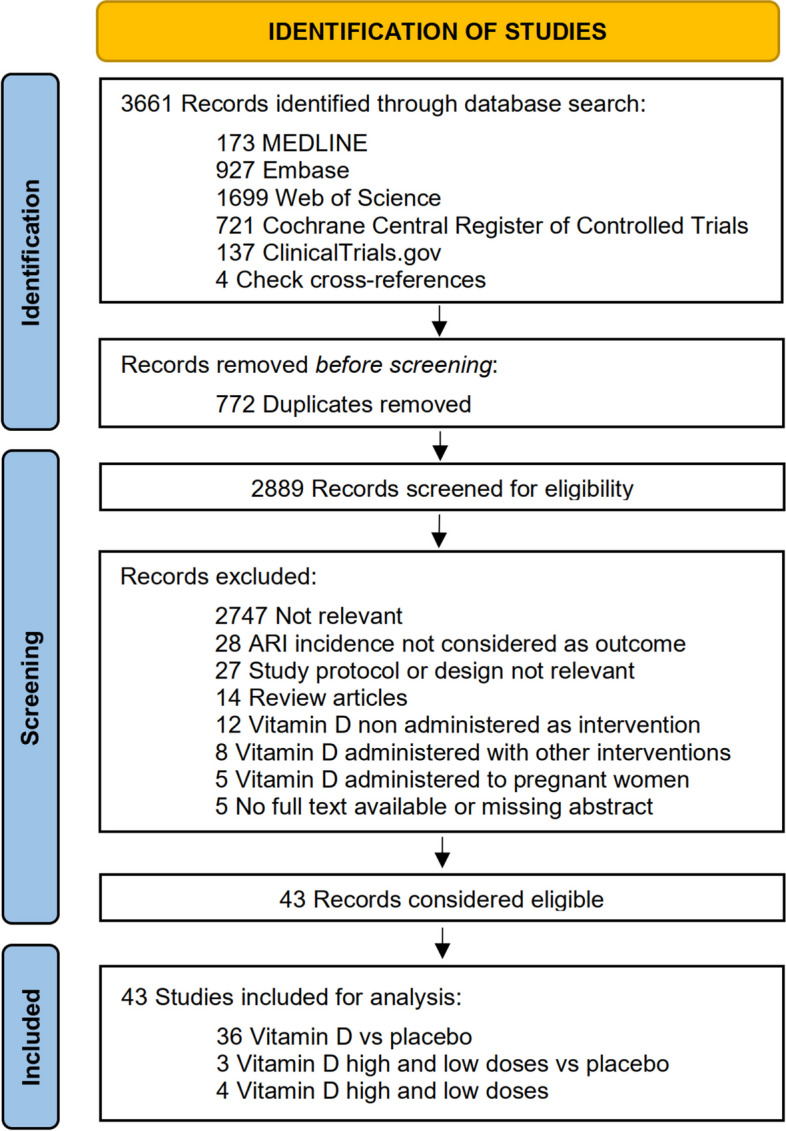
PubMed, Embase, Cochrane Central Register of Controlled Trials, Web of Science, and the ClinicalTrials.gov registry were searched from database inception through July 13, 2023. Randomized-controlled trials (RCTs) were included. Data were pooled using random-effects model. The primary outcome was the proportion of participants with one or more ARIs.
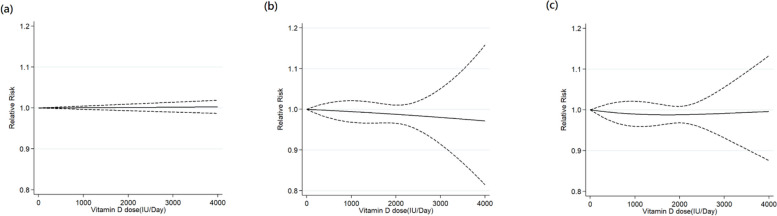
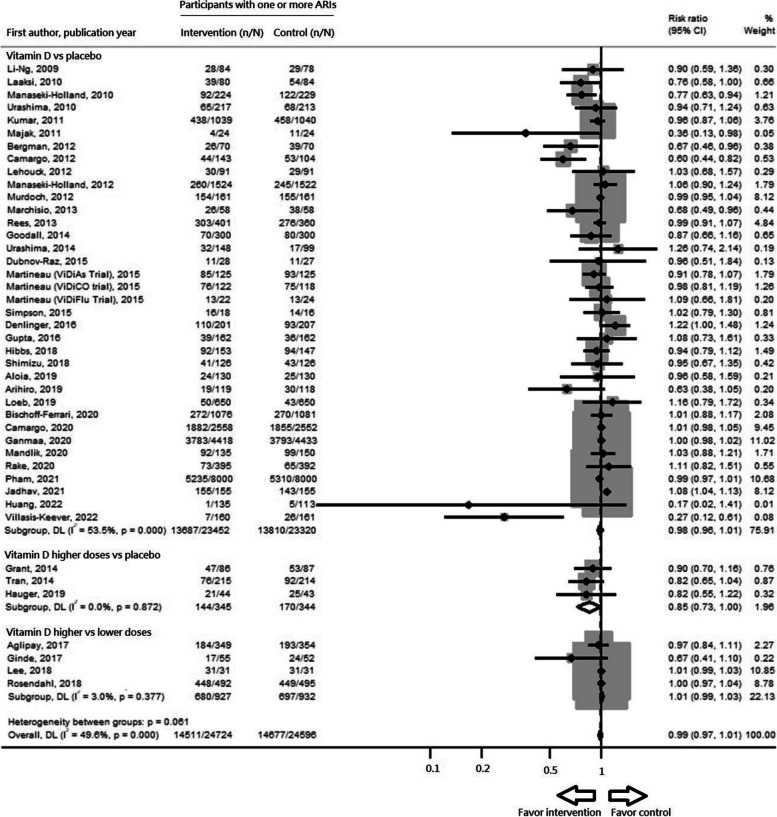
The analysis included 43 RCTs with 49320 participants. Forty RCTs were considered to be at low risk for bias. The main pairwise meta-analysis indicated there were no significant preventive effects of vitamin D supplementation against ARIs (risk ratio [RR]: 0.99, 95% confidence interval [CI]: 0.97 to 1.01, I = 49.6%). The subgroup dose-response meta-analysis indicated that the optimal vitamin D supplementation doses ranged between 400-1200 IU/day for both summer-sparing and winter-dominant subgroups. The subgroup pairwise meta-analysis also revealed significant preventive effects of vitamin D supplementation in subgroups of daily dosing (RR: 0.92, 95% CI: 0.85 to 0.99, I = 55.7%, number needed to treat [NNT]: 36), trials duration < 4 months (RR: 0.81, 95% CI: 0.67 to 0.97, I = 48.8%, NNT: 16), summer-sparing seasons (RR: 0.85, 95% CI: 0.74 to 0.98, I = 55.8%, NNT: 26), and winter-dominant seasons (RR: 0.79, 95% CI: 0.71 to 0.89, I = 9.7%, NNT: 10).
Vitamin D supplementation may slightly prevent ARIs when taken daily at doses between 400 and 1200 IU/d during spring, autumn, or winter, which should be further examined in future clinical trials.
维生素 D 补充剂可能预防急性呼吸道感染(ARI)。本研究旨在确定维生素 D 补充的最佳方法。
从数据库建立到 2023 年 7 月 13 日,检索了 PubMed、Embase、Cochrane 中央对照试验注册库、Web of Science 和 ClinicalTrials.gov 登记处。纳入了随机对照试验(RCT)。使用随机效应模型对数据进行合并。主要结局是参与者中出现一次或多次 ARI 的比例。
分析纳入了 43 项 RCT 共计 49320 名参与者。40 项 RCT 被认为偏倚风险较低。主要的成对荟萃分析表明,维生素 D 补充剂对 ARI 没有显著的预防作用(风险比 [RR]:0.99,95%置信区间 [CI]:0.97 至 1.01,I=49.6%)。亚组剂量反应荟萃分析表明,夏季节约型和冬季主导型亚组的最佳维生素 D 补充剂量范围在 400-1200 IU/天之间。亚组成对荟萃分析还显示,在每日剂量亚组(RR:0.92,95%CI:0.85 至 0.99,I=55.7%,需要治疗的人数 [NNT]:36)、试验持续时间<4 个月(RR:0.81,95%CI:0.67 至 0.97,I=48.8%,NNT:16)、夏季节约型季节(RR:0.85,95%CI:0.74 至 0.98,I=55.8%,NNT:26)和冬季主导型季节(RR:0.79,95%CI:0.71 至 0.89,I=9.7%,NNT:10)中,维生素 D 补充剂有显著的预防作用。
在春季、秋季或冬季,每天服用 400-1200 IU/d 的剂量,维生素 D 补充剂可能会轻微预防 ARI,但这需要在未来的临床试验中进一步证实。