Department of Microbiology, Immunology, and Cell Biology, West Virginia University, Morgantown, West Virginia, USA.
Vaccine Development Center at West Virginia University Health Sciences Center, Morgantown, West Virginia, USA.
mSphere. 2021 Jan 20;6(1):e01324-20. doi: 10.1128/mSphere.01324-20.
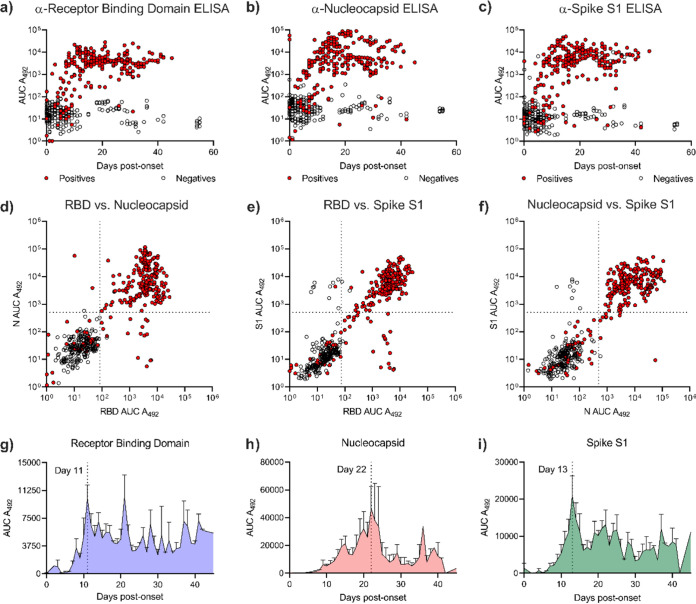
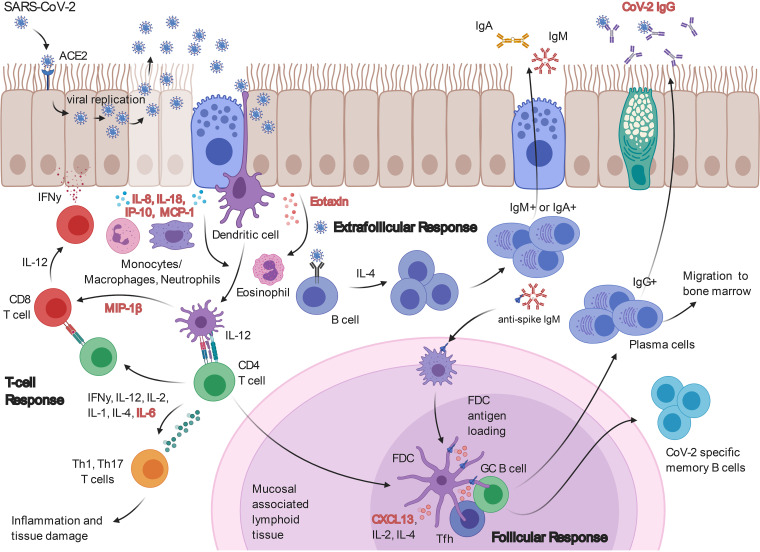
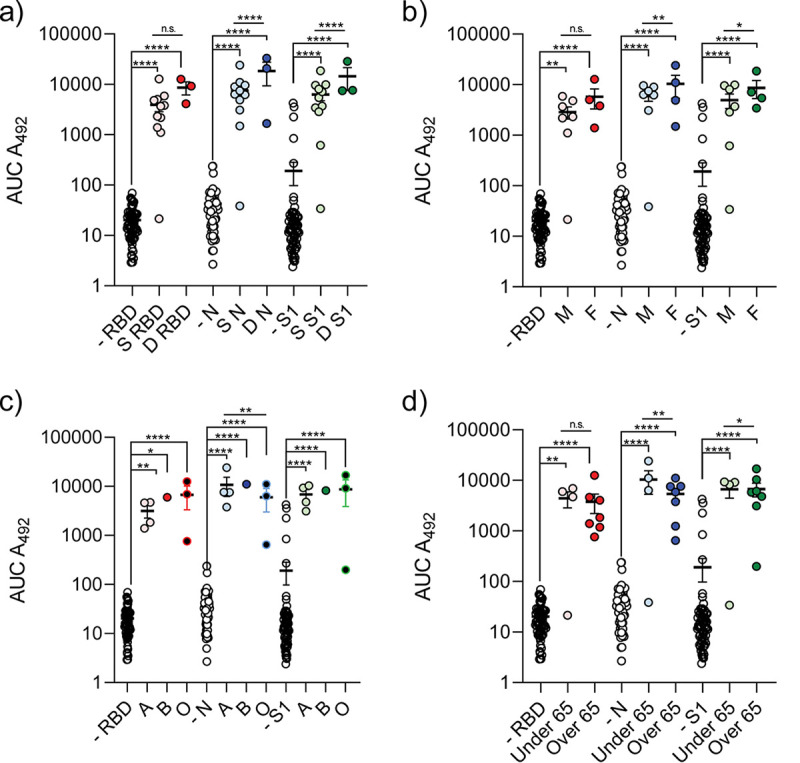
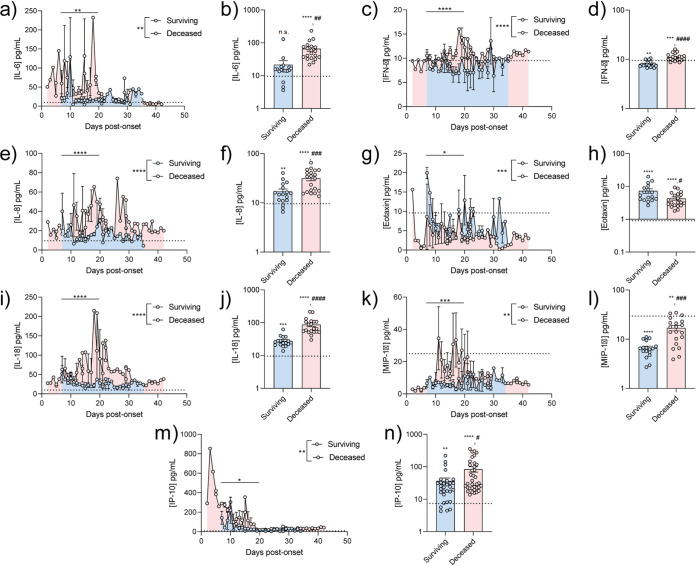
The SARS-CoV-2 pandemic is impacting the global population. This study was designed to assess the interplay of antibodies with the cytokine response in SARS-CoV-2 patients. We demonstrate that significant levels of anti-SARS-CoV-2 antibody to receptor binding domain (RBD), nucleocapsid, and spike S1 subunit of SARS-CoV-2 develop over the first 10 to 20 days of infection. The majority of patients produced antibodies against all three antigens (219/255 SARS-CoV-2 patient specimens, 86%), suggesting a broad response to viral proteins. Antibody levels to SARS-CoV-2 antigens were different based on patient mortality, sex, blood type, and age. Analyses of these findings may help explain variation in immunity between these populations. To better understand the systemic immune response, we analyzed the levels of 20 cytokines by SARS-CoV-2 patients throughout infection. Cytokine analysis of SARS-CoV-2 patients exhibited increases in proinflammatory markers (interleukin 6 [IL-6], IL-8, IL-18, and gamma interferon [IFN-γ]) and chemotactic markers (IP-10 and eotaxin) relative to healthy individuals. Patients who succumbed to infection produced decreased IL-2, IL-4, IL-12, RANTES, tumor necrosis factor alpha (TNF-α), GRO-α, and MIP-1α relative to patients who survived infection. We also observed that the chemokine CXCL13 was particularly elevated in patients who succumbed to infection. CXCL13 is involved in B cell activation, germinal center development, and antibody maturation, and we observed that CXCL13 levels in blood trended with anti-SARS-CoV-2 antibody levels. Furthermore, patients who succumbed to infection produced high CXCL13 and had a higher ratio of nucleocapsid to RBD antibodies. This study provides insights into SARS-CoV-2 immunity implicating the magnitude and specificity of response in relation to patient outcomes. The SARS-CoV-2 pandemic is continuing to impact the global population, and knowledge of the immune response to COVID-19 is still developing. This study assesses the interplay of different parts of the immune system during COVID-19 disease. We demonstrate that COVID-19 patients produce antibodies to three proteins of the COVID-19 virus (SARS-CoV-2) and identify many other immunological proteins that are involved during infection. The data suggest that one of these proteins (CXCL13) may be a novel biomarker for severe COVID-19 that can be readily measured in blood. This information combined with our broad-scale analysis of immune activity during COVID-19 provides new information on the immunological response throughout the course of disease and identifies a novel potential marker for assessing disease severity.
新型冠状病毒(SARS-CoV-2)大流行正在影响全球人口。本研究旨在评估 SARS-CoV-2 患者体内抗体与细胞因子反应的相互作用。我们证明,在感染后的 10 到 20 天内,针对 SARS-CoV-2 受体结合域(RBD)、核衣壳和刺突 S1 亚单位的 SARS-CoV-2 抗体水平显著升高。大多数患者产生针对所有三种抗原的抗体(255 例 SARS-CoV-2 患者标本中的 219 例,占 86%),这表明对病毒蛋白存在广泛的反应。抗体水平因患者死亡率、性别、血型和年龄而异。对这些发现的分析可能有助于解释这些人群之间免疫的差异。为了更好地了解系统性免疫反应,我们分析了 SARS-CoV-2 患者在整个感染过程中 20 种细胞因子的水平。与健康个体相比,SARS-CoV-2 患者的细胞因子分析显示促炎标志物(白细胞介素 6 [IL-6]、白细胞介素 8 [IL-8]、白细胞介素 18 [IL-18]和γ干扰素 [IFN-γ])和趋化因子(IP-10 和 eotaxin)水平升高。与感染后幸存的患者相比,死于感染的患者产生的 IL-2、IL-4、IL-12、RANTES、肿瘤坏死因子 alpha(TNF-α)、GRO-α 和 MIP-1α 减少。我们还观察到,趋化因子 CXCL13 在死于感染的患者中特别升高。CXCL13 参与 B 细胞激活、生发中心发育和抗体成熟,我们观察到血液中的 CXCL13 水平与抗 SARS-CoV-2 抗体水平呈趋势。此外,死于感染的患者产生高水平的 CXCL13,并且核衣壳与 RBD 抗体的比值较高。本研究提供了有关 SARS-CoV-2 免疫的见解,表明与患者结局相关的反应的幅度和特异性。新型冠状病毒(SARS-CoV-2)大流行仍在继续影响全球人口,对 COVID-19 免疫反应的了解仍在不断发展。本研究评估了 COVID-19 疾病期间免疫系统不同部分的相互作用。我们证明 COVID-19 患者产生针对 COVID-19 病毒(SARS-CoV-2)三种蛋白的抗体,并鉴定出感染过程中涉及的许多其他免疫蛋白。数据表明,其中一种蛋白(CXCL13)可能是一种新的严重 COVID-19 的生物标志物,可以在血液中轻易测量。这些信息结合我们对 COVID-19 期间免疫活性的广泛分析,提供了疾病过程中免疫反应的新信息,并确定了评估疾病严重程度的一个新的潜在标志物。