Laboratory of Respiratory Diseases and Thoracic Surgery (BREATHE), Department of Chronic Diseases and Metabolism, KU Leuven, Leuven, Belgium.
Department of Pneumology, University Hospitals Leuven, Leuven, Belgium.
Cell Res. 2021 Mar;31(3):272-290. doi: 10.1038/s41422-020-00455-9. Epub 2021 Jan 21.
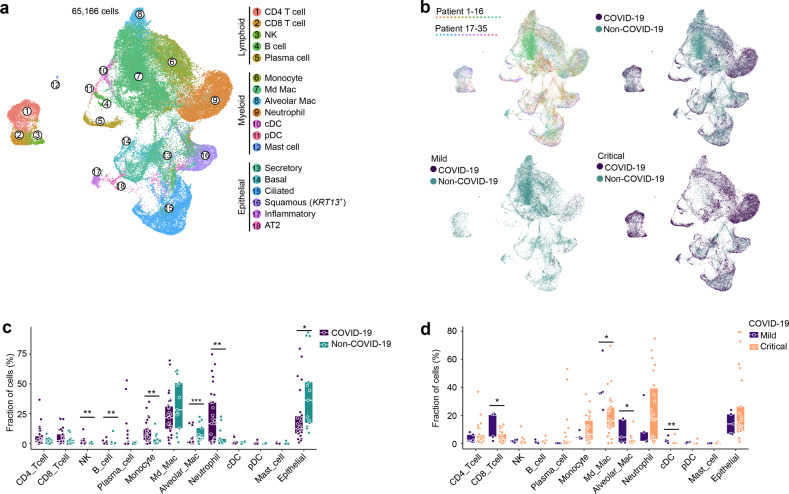
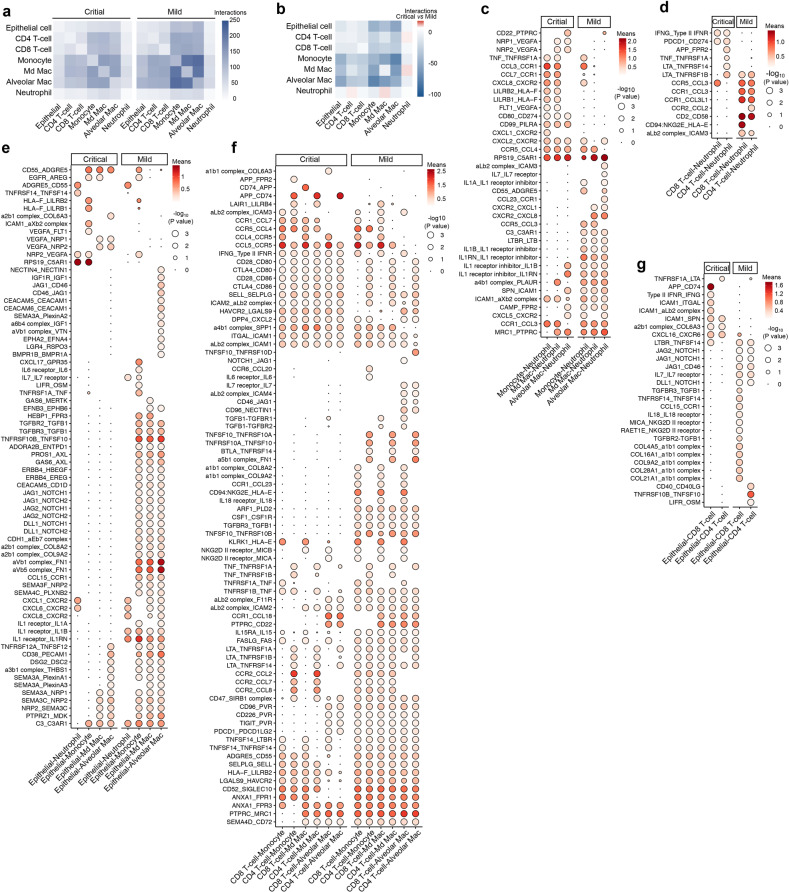
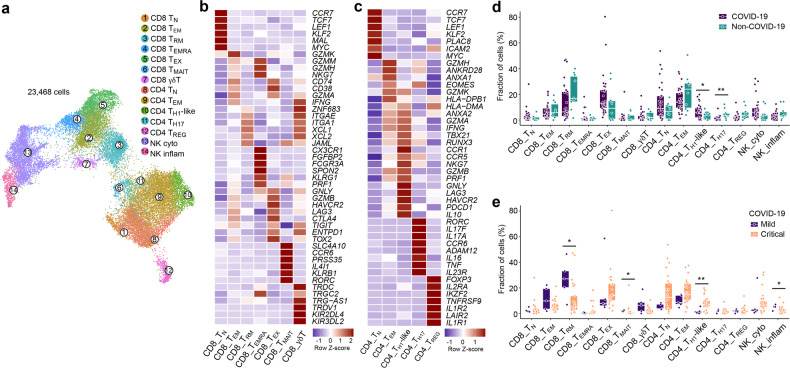
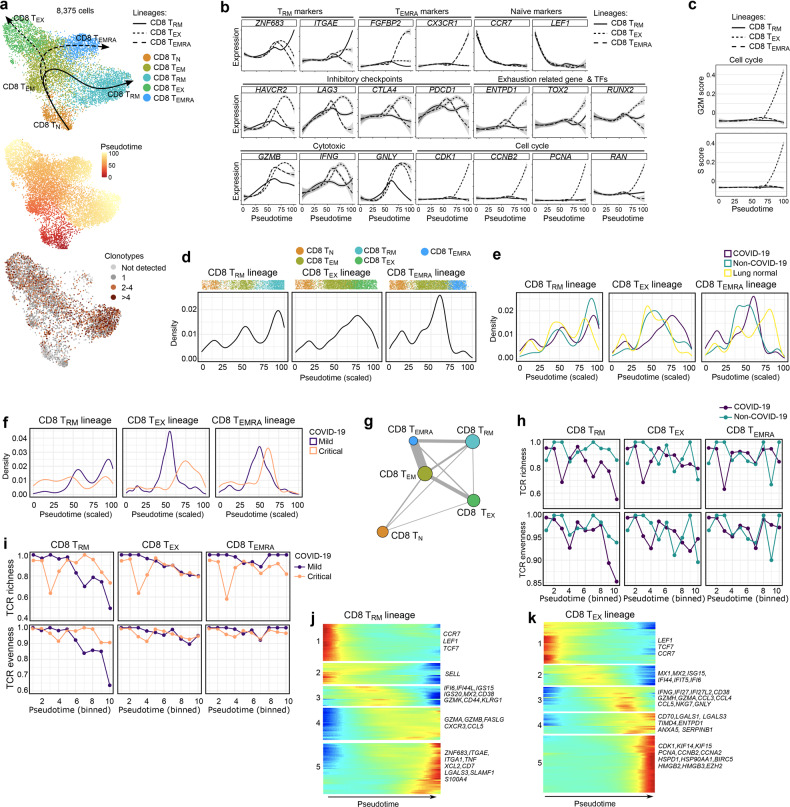
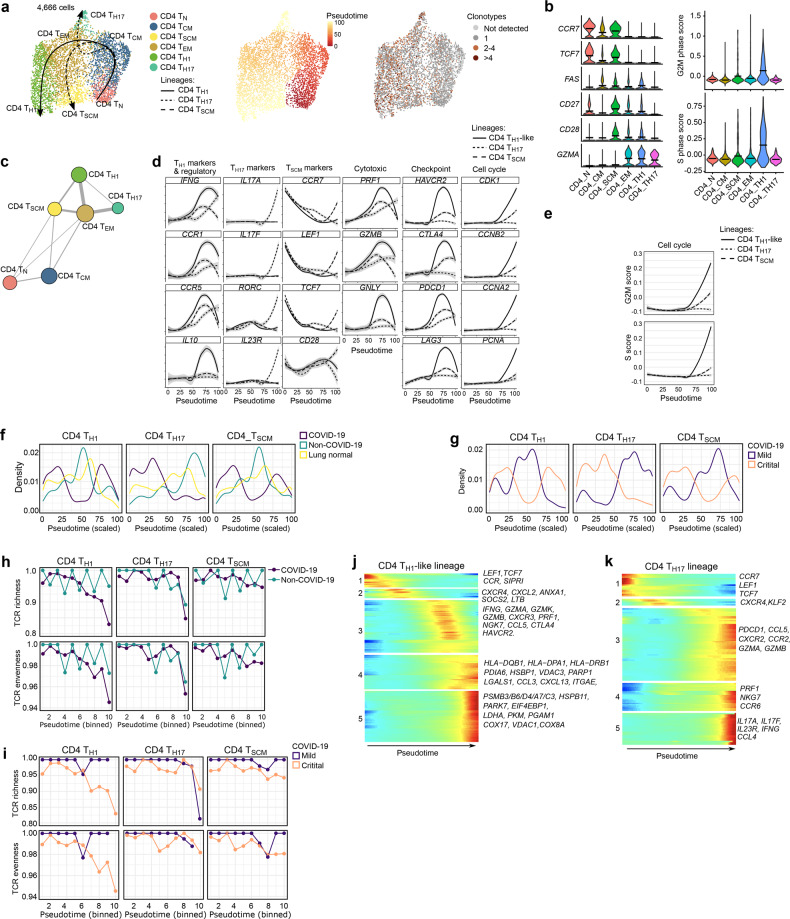
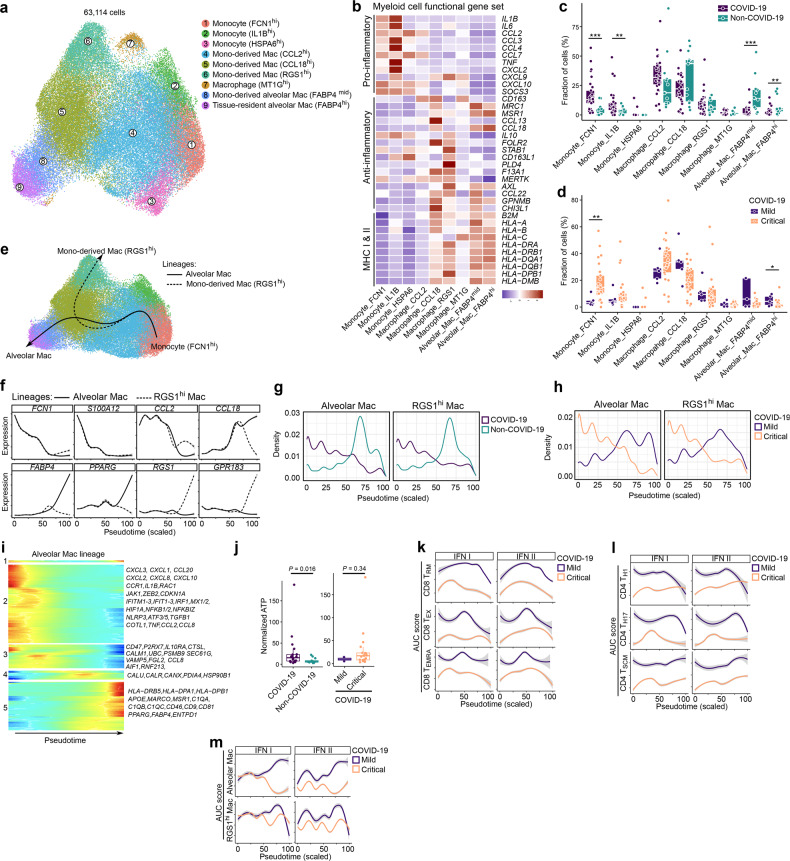
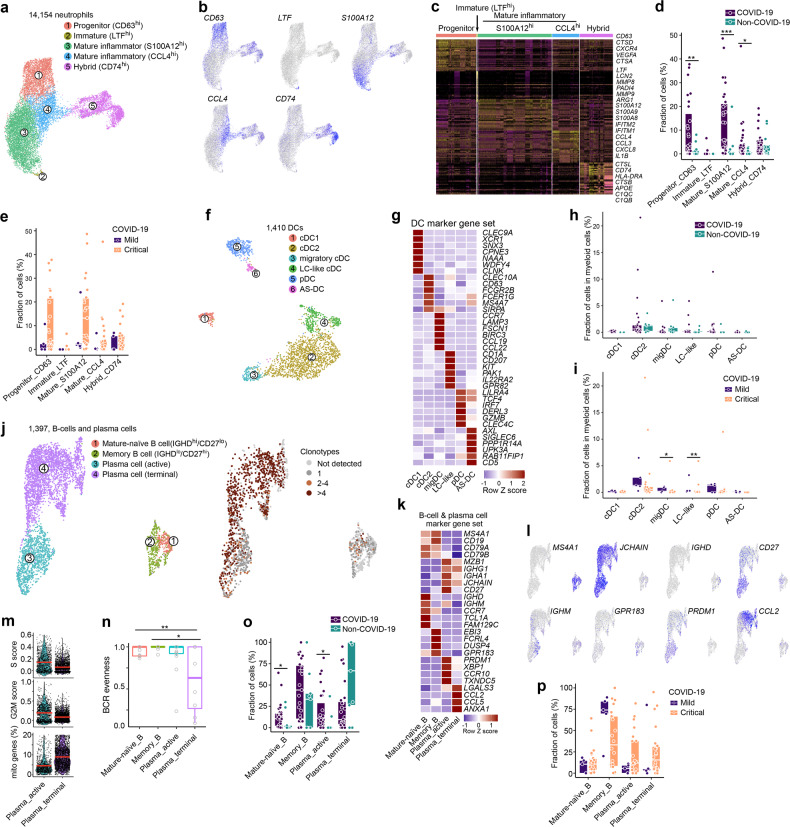
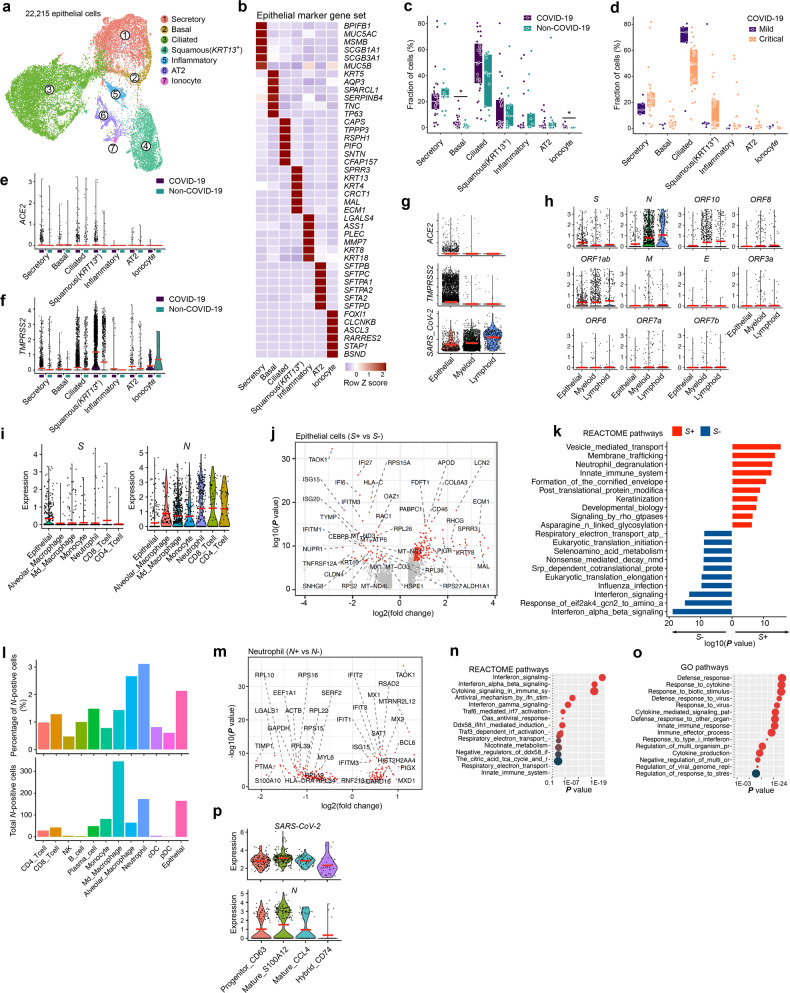
How the innate and adaptive host immune system miscommunicate to worsen COVID-19 immunopathology has not been fully elucidated. Here, we perform single-cell deep-immune profiling of bronchoalveolar lavage (BAL) samples from 5 patients with mild and 26 with critical COVID-19 in comparison to BALs from non-COVID-19 pneumonia and normal lung. We use pseudotime inference to build T-cell and monocyte-to-macrophage trajectories and model gene expression changes along them. In mild COVID-19, CD8 resident-memory (T) and CD4 T-helper-17 (T) cells undergo active (presumably antigen-driven) expansion towards the end of the trajectory, and are characterized by good effector functions, while in critical COVID-19 they remain more naïve. Vice versa, CD4 T-cells with T-helper-1 characteristics (T-like) and CD8 T-cells expressing exhaustion markers (T-like) are enriched halfway their trajectories in mild COVID-19, where they also exhibit good effector functions, while in critical COVID-19 they show evidence of inflammation-associated stress at the end of their trajectories. Monocyte-to-macrophage trajectories show that chronic hyperinflammatory monocytes are enriched in critical COVID-19, while alveolar macrophages, otherwise characterized by anti-inflammatory and antigen-presenting characteristics, are depleted. In critical COVID-19, monocytes contribute to an ATP-purinergic signaling-inflammasome footprint that could enable COVID-19 associated fibrosis and worsen disease-severity. Finally, viral RNA-tracking reveals infected lung epithelial cells, and a significant proportion of neutrophils and macrophages that are involved in viral clearance.
先天和适应性宿主免疫系统如何错误沟通导致 COVID-19 免疫病理学恶化尚未完全阐明。在这里,我们对 5 例轻度 COVID-19 和 26 例重症 COVID-19 患者的支气管肺泡灌洗液 (BAL) 样本与非 COVID-19 肺炎和正常肺的 BAL 样本进行单细胞深度免疫分析。我们使用拟时推断来构建 T 细胞和单核细胞-巨噬细胞轨迹,并对它们进行基因表达变化建模。在轻度 COVID-19 中,CD8 固有记忆 (T) 和 CD4 T 辅助 17 (T) 细胞在轨迹的末端经历积极的 (推测是抗原驱动的) 扩增,并且具有良好的效应功能,而在重症 COVID-19 中它们仍然更加幼稚。相反,在轻度 COVID-19 中,具有 T 辅助 1 特征 (T 样) 和表达衰竭标志物的 CD8 T 细胞 (T 样) 的 CD4 T 细胞在轨迹的中途富集,它们也表现出良好的效应功能,而在重症 COVID-19 中,它们在轨迹的末端表现出与炎症相关的应激迹象。单核细胞-巨噬细胞轨迹表明,慢性过度炎症性单核细胞在重症 COVID-19 中富集,而肺泡巨噬细胞,其特征是抗炎和抗原呈递特征,被耗尽。在重症 COVID-19 中,单核细胞有助于形成 ATP 嘌呤能信号-炎症小体特征,这可能导致 COVID-19 相关纤维化并使疾病严重程度恶化。最后,病毒 RNA 追踪揭示了受感染的肺上皮细胞以及参与病毒清除的大量中性粒细胞和巨噬细胞。