School of Mathematics and Physics The University of Queensland St Lucia Queensland Australia.
LBCAM Department of Clinical Medicine Trinity Translational Medicine Institute Trinity College Dublin Dublin Ireland.
J Extracell Vesicles. 2021 Jan;10(3):e12052. doi: 10.1002/jev2.12052. Epub 2021 Jan 12.
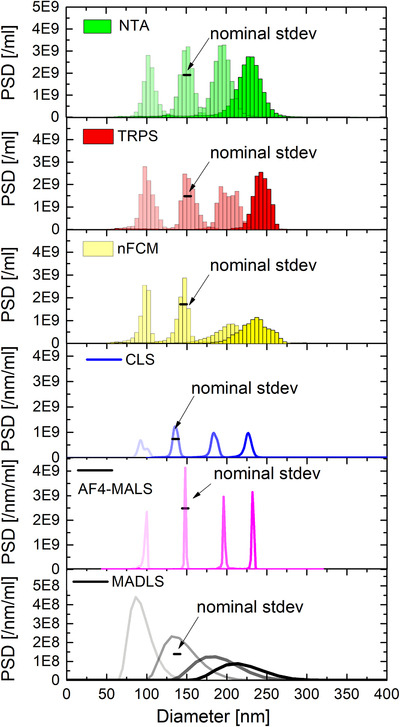
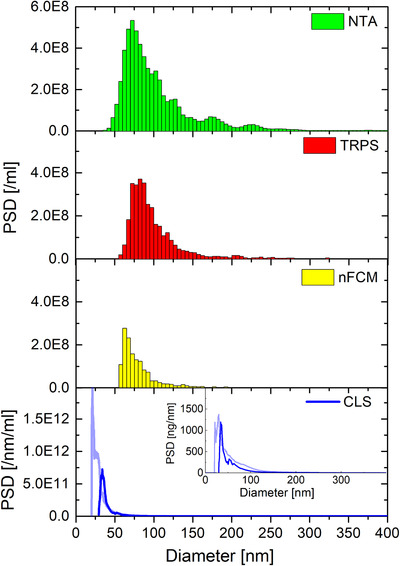
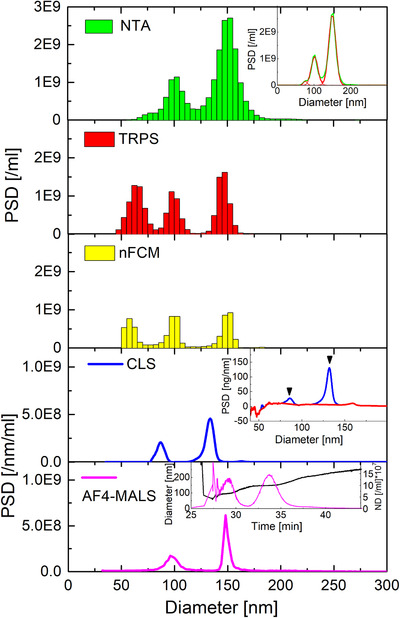
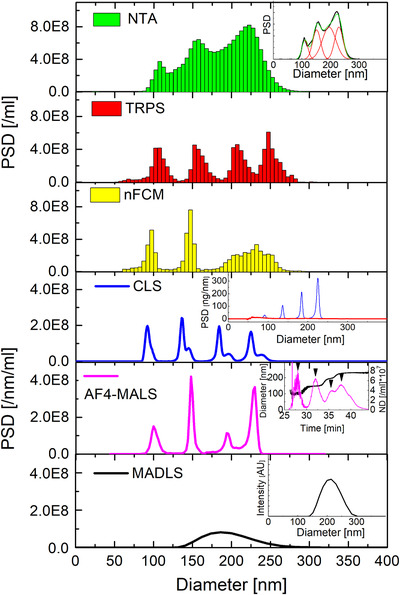
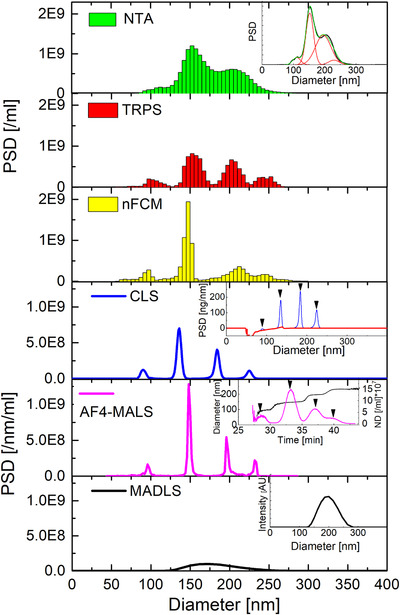
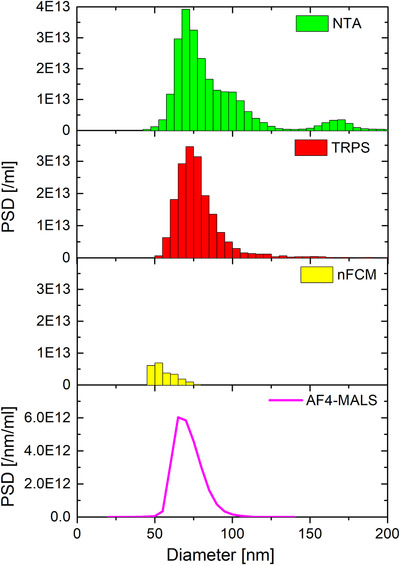
The measurement of physicochemical properties of polydisperse complex biological samples, for example, extracellular vesicles, is critical to assess their quality, for example, resulting from their production and isolation methods. The community is gradually becoming aware of the need to combine multiple orthogonal techniques to perform a robust characterization of complex biological samples. Three pillars of critical quality attribute characterization of EVs are sizing, concentration measurement and phenotyping. The repeatable measurement of vesicle concentration is one of the key-challenges that requires further efforts, in order to obtain comparable results by using different techniques and assure reproducibility. In this study, the performance of measuring the concentration of particles in the size range of 50-300 nm with complementary techniques is thoroughly investigated in a step-by step approach of incremental complexity. The six applied techniques include multi-angle dynamic light scattering (MADLS), asymmetric flow field flow fractionation coupled with multi-angle light scattering (AF4-MALS), centrifugal liquid sedimentation (CLS), nanoparticle tracking analysis (NTA), tunable resistive pulse sensing (TRPS), and high-sensitivity nano flow cytometry (nFCM). To achieve comparability, monomodal samples and complex polystyrene mixtures were used as particles of metrological interest, in order to check the suitability of each technique in the size and concentration range of interest, and to develop reliable post-processing data protocols for the analysis. Subsequent complexity was introduced by testing liposomes as validation of the developed approaches with a known sample of physicochemical properties closer to EVs. Finally, the vesicles in EV containing plasma samples were analysed with all the tested techniques. The results presented here aim to shed some light into the requirements for the complex characterization of biological samples, as this is a critical need for quality assurance by the EV and regulatory community. Such efforts go with the view to contribute to both, set-up reproducible and reliable characterization protocols, and comply with the Minimal Information for Studies of Extracellular Vesicles (MISEV) requirements.
多分散复杂生物样品(例如细胞外囊泡)理化性质的测量对于评估其质量至关重要,例如,可根据其生产和分离方法进行评估。研究界逐渐认识到需要结合多种正交技术来对复杂生物样品进行稳健的表征。EV 关键质量属性特征描述的三个支柱是粒径、浓度测量和表型。可重复性的囊泡浓度测量是关键挑战之一,需要进一步努力,以便使用不同的技术获得可比的结果,并保证重现性。在这项研究中,采用逐步增加复杂性的方法,彻底研究了互补技术测量 50-300nm 粒径范围内颗粒浓度的性能。应用的六种技术包括多角度动态光散射(MADLS)、不对称流场流分离与多角度光散射联用(AF4-MALS)、离心液体沉降(CLS)、纳米颗粒跟踪分析(NTA)、可调电阻脉冲感应(TRPS)和高灵敏度纳米流式细胞术(nFCM)。为了实现可比性,使用单分散样品和复杂聚苯乙烯混合物作为计量学感兴趣的颗粒,以检查每种技术在感兴趣的尺寸和浓度范围内的适用性,并为分析开发可靠的后处理数据协议。随后,通过测试脂质体作为具有更接近 EV 的已知物理化学性质的已知样品,引入了后续的复杂性,以验证所开发方法的适用性。最后,用所有测试技术分析了含有 EV 的血浆样品中的囊泡。本文的研究结果旨在阐明对生物样品复杂特征描述的要求,因为这是 EV 和监管界进行质量保证的关键需求。这些努力旨在建立可重复和可靠的特征描述协议,并符合细胞外囊泡研究的最低信息要求(MISEV)。