Hanumantha Rao Kongara, Paul Soumita, Ghosh Swagata
National Institute of Plant Genome Research, Jawaharlal Nehru University Campus, New Delhi 110067, India.
Central Instrumentation Facility, Division of Research and Development, Lovely Professional University, Phagwara, Punjab 144411, India.
J Fungi (Basel). 2021 Jan 19;7(1):65. doi: 10.3390/jof7010065.
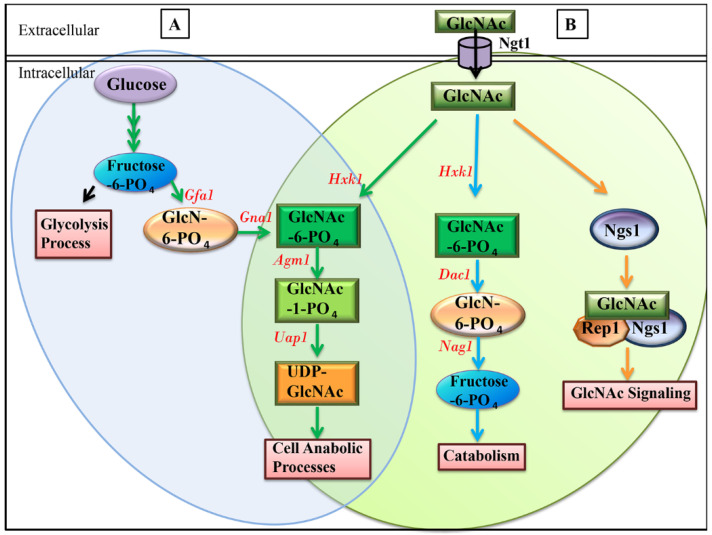
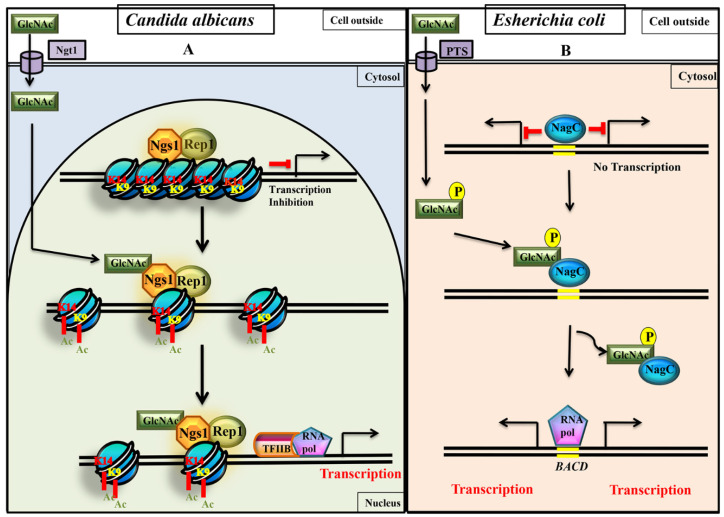
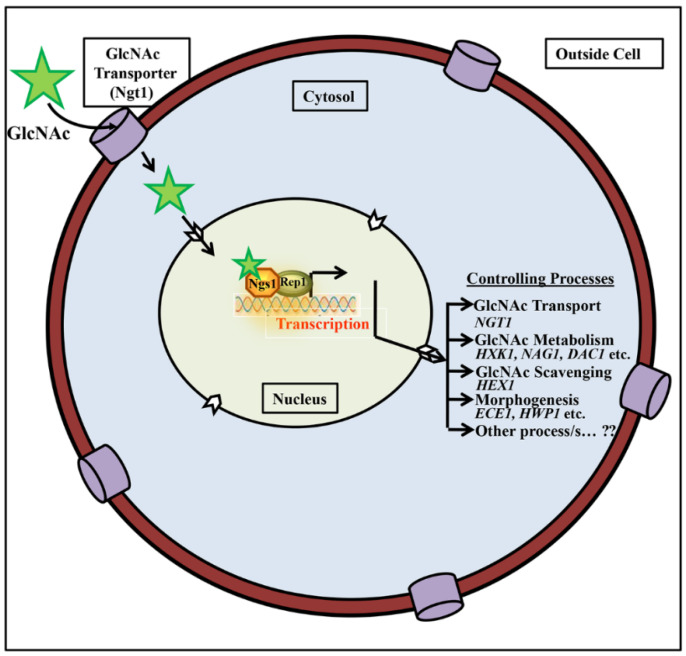
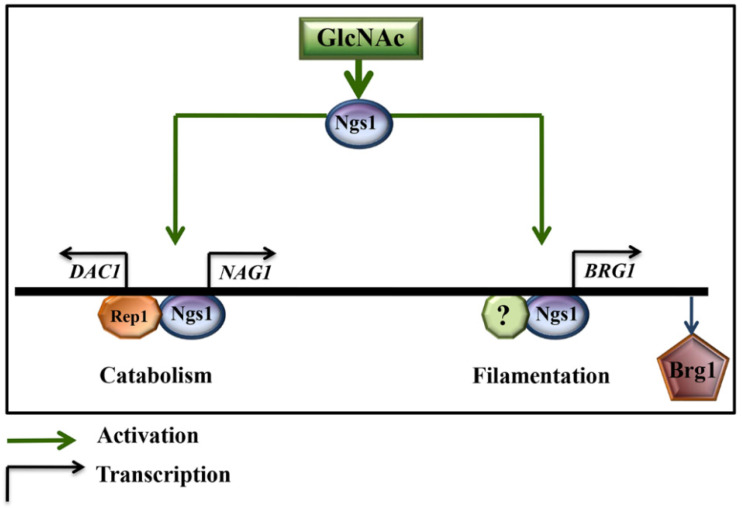
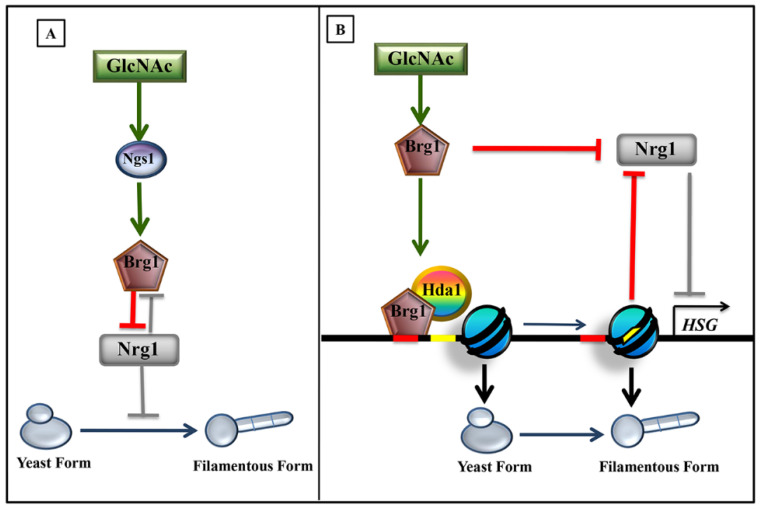
The amino sugar, N-acetylglucosamine (GlcNAc), has emerged as an attractive messenger of signaling in the pathogenic yeast , given its multifaceted role in cellular processes, including GlcNAc scavenging, import and metabolism, morphogenesis (yeast to hyphae and white to opaque switch), virulence, GlcNAc induced cell death (GICD), etc. During signaling, the exogenous GlcNAc appears to adopt a simple mechanism of gene regulation by directly activating Ngs1, a novel GlcNAc sensor and transducer, at the chromatin level, to activate transcriptional response through the promoter acetylation. Ngs1 acts as a master regulator in GlcNAc signaling by regulating GlcNAc catabolic gene expression and filamentation. Ndt80-family transcriptional factor Rep1 appears to be involved in the recruitment of Ngs1 to GlcNAc catabolic gene promoters. For promoting filamentation, GlcNAc adopts a little modified strategy by utilizing a recently evolved transcriptional loop. Here, Biofilm regulator Brg1 takes up the key role, getting up-regulated by Ngs1, and simultaneously induces Hyphal Specific Genes (HSGs) expression by down-regulating expression. GlcNAc kinase Hxk1 appears to play a prominent role in signaling. Recent developments in GlcNAc signaling have made a model system to understand its role in other eukaryotes as well. The knowledge thus gained would assist in designing therapeutic interventions for the control of candidiasis and other fungal diseases.
氨基糖N - 乙酰葡糖胺(GlcNAc)已成为致病性酵母中一种引人注目的信号传导信使,鉴于其在细胞过程中的多方面作用,包括GlcNAc清除、导入和代谢、形态发生(酵母到菌丝以及白色到不透明转变)、毒力、GlcNAc诱导的细胞死亡(GICD)等。在信号传导过程中,外源性GlcNAc似乎通过在染色质水平直接激活新型GlcNAc传感器和转导器Ngs1,采用一种简单的基因调控机制,通过启动子乙酰化来激活转录反应。Ngs1通过调节GlcNAc分解代谢基因表达和丝状化,在GlcNAc信号传导中起主要调节作用。Ndt80家族转录因子Rep1似乎参与将Ngs1招募到GlcNAc分解代谢基因启动子。为促进丝状化,GlcNAc通过利用最近进化出的转录环采用了略有不同的策略。在这里,生物膜调节因子Brg1起关键作用,被Ngs1上调,同时通过下调表达来诱导菌丝特异性基因(HSGs)表达。GlcNAc激酶Hxk1似乎在信号传导中起重要作用。GlcNAc信号传导的最新进展也使其成为理解其在其他真核生物中作用的模型系统。由此获得的知识将有助于设计控制念珠菌病和其他真菌疾病的治疗干预措施。