Werner Siemens-Chair of Synthetic Biotechnology (WSSB), Technical University of Munich, Lichtenbergstraße 4, 85748, Garching, Germany.
Microb Cell Fact. 2021 Dec 7;20(1):220. doi: 10.1186/s12934-021-01710-3.
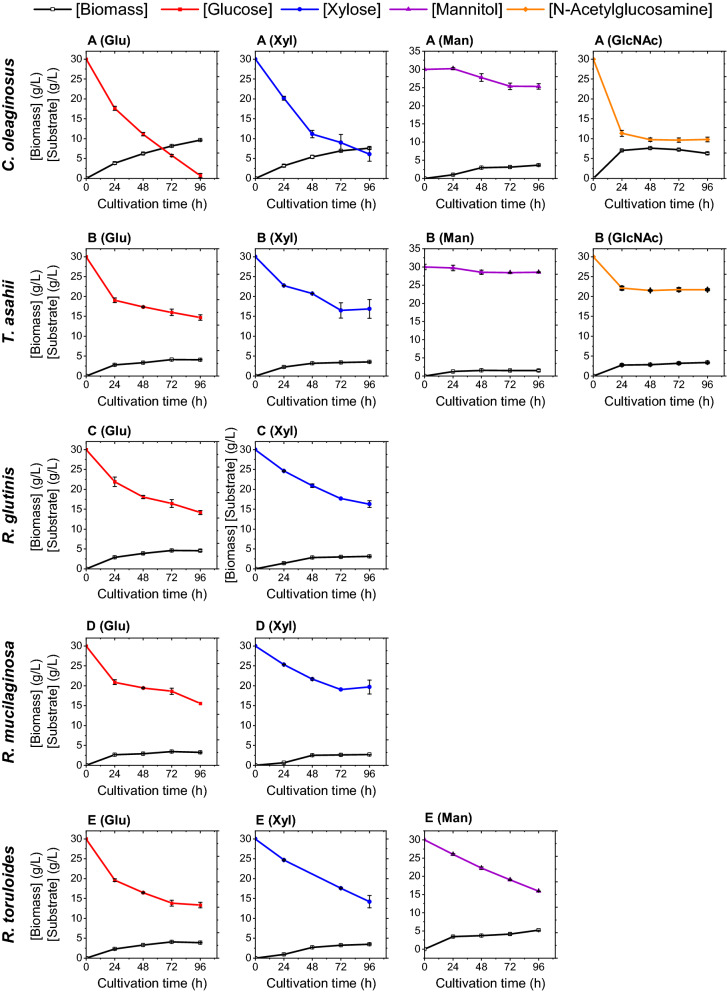
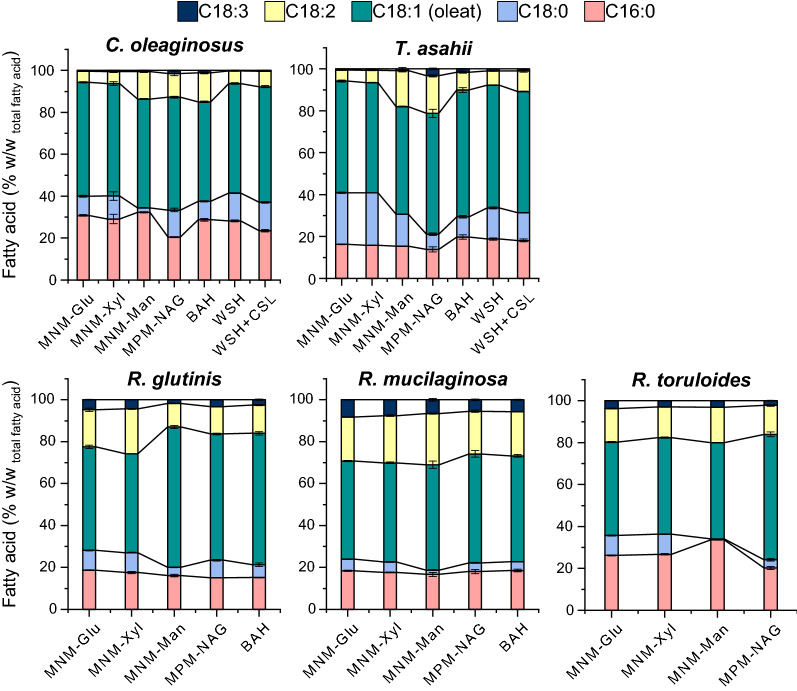
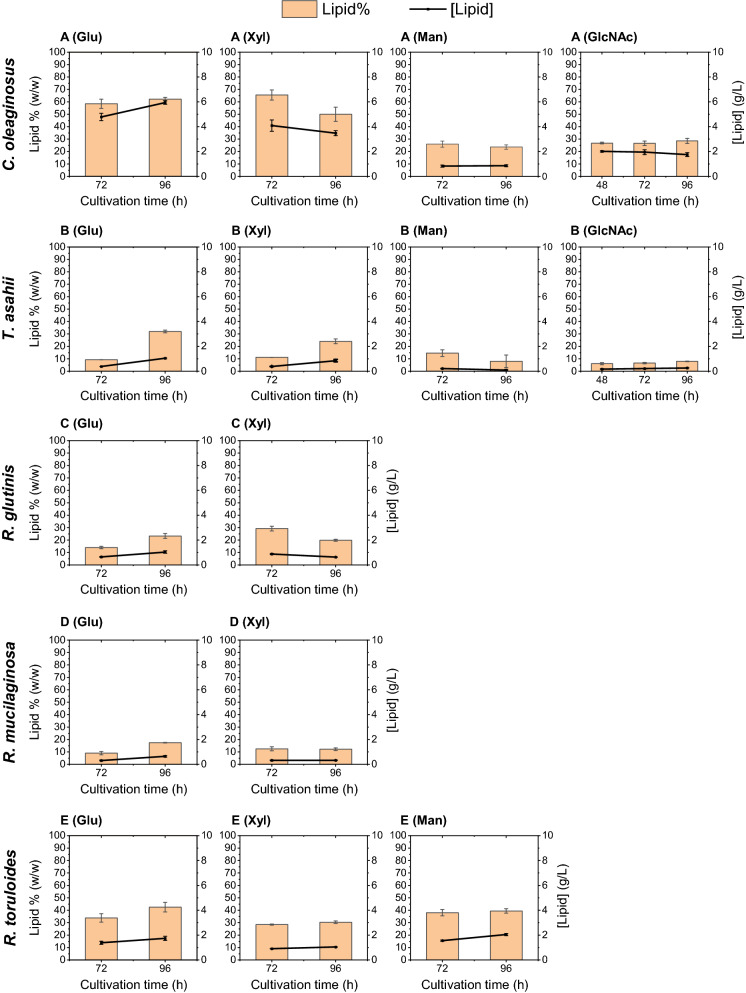
Oleaginous yeasts are promising microbial platforms for sustainable, bio-based production of biofuels and oleochemical building blocks. Bio-based residues provide sustainable and cost-effective carbon sources for fermentative yeast oil production without land-use change. Considering the regional abundancy of different waste streams, we chose complex biomass residue streams of marine origin; macroalgae hydrolysate, and terrestrial origin; wheat straw hydrolysate in the presence, and absence of corn steep liquor as a complex nitrogen source. We investigated the biomass and lipid yields of an array of well-described oleaginous yeasts; R. glutinis, T. asahii, R. mucilaginosa, R. toruloides, C. oleaginosus growing on these hydrolysates. Furthermore, their sugar utilization, fatty acid profile, and inhibitory effect of the hydrolysates on yeast growth were compared. For correlative reference, we initially performed comparative growth experiments for the strains on individual monomeric sugars separately. Each of these monomeric sugars was a dominant carbon source in the complex biomass hydrolysates evaluated in this study. In addition, we evaluated N-acetylglucosamine, the monomeric building block of chitin, as a low-cost nitrogen and carbon source in yeast fermentation.
C. oleaginosus provided the highest biomass and lipid yields. In the wheat straw and brown algae hydrolysates, this yeast strain gained 7.5 g/L and 3.8 g/L lipids, respectively. Cultivation in algae hydrolysate resulted in a higher level of unsaturated fatty acids in the lipids accumulated by all yeast strains. R. toruloides and C. oleaginosus were able to effectively co-utilize mannitol, glucose, and xylose. Growth rates on wheat straw hydrolysate were enhanced in presence of corn steep liquor.
Among the yeast strains investigated in this study, C. oleaginosus proved to be the most versatile strain in terms of substrate utilization, productivity, and tolerance in the complex media. Various fatty acid profiles obtained on each substrate encourage the manipulation of culture conditions to achieve the desired fatty acid composition for each application. This could be accomplished by combining the element of carbon source with other formerly studied factors such as temperature and oxygen. Moreover, corn steep liquor showed promise for enhancement of growth in the oleaginous strains provided that carbon substrate is available.
产油酵母是可持续生物基生物燃料和油脂化学品构建块生产的有前途的微生物平台。生物基残渣为发酵酵母油生产提供了可持续且具有成本效益的碳源,而不会改变土地用途。考虑到不同废物流的区域性丰富程度,我们选择了海洋来源的复杂生物质残渣流;海藻水解物和陆地来源;小麦秸秆水解物,存在和不存在玉米浆作为复杂氮源。我们研究了一系列描述良好的产油酵母的生物质和油脂产量;R. glutinis、T. asahii、R. mucilaginosa、R. toruloides、C. oleaginosus 在这些水解物上生长。此外,还比较了它们的糖利用率、脂肪酸谱以及水解物对酵母生长的抑制作用。为了进行相关参考,我们最初在单独的单体糖上分别对菌株进行了比较生长实验。在本研究中评估的复杂生物质水解物中,每种单体糖都是主要的碳源。此外,我们还评估了 N-乙酰葡萄糖胺,一种甲壳素的单体构建块,作为酵母发酵中的低成本氮源和碳源。
C. oleaginosus 提供了最高的生物质和油脂产量。在小麦秸秆和褐藻水解物中,该酵母菌株分别获得了 7.5 g/L 和 3.8 g/L 的油脂。在藻类水解物中培养导致所有酵母菌株积累的脂质中不饱和脂肪酸水平更高。R. toruloides 和 C. oleaginosus 能够有效地共同利用甘露醇、葡萄糖和木糖。在存在玉米浆的情况下,小麦秸秆水解物上的生长速率得到提高。
在所研究的酵母菌株中,C. oleaginosus 在复杂培养基中的基质利用、生产力和耐受性方面被证明是最通用的菌株。在每种基质上获得的各种脂肪酸谱鼓励通过组合碳源与其他以前研究过的因素(如温度和氧气)来操纵培养条件,以达到每种应用所需的理想脂肪酸组成。通过这种方式,可以实现更高的油脂产量和更好的生物质利用效率。此外,玉米浆在存在碳底物的情况下有望增强产油菌株的生长。