Nordström Rickard, Zhu Lin, Härmark Johan, Levi-Kalisman Yael, Koren Erez, Barenholz Yechezkel, Levinton Genia, Shamrakov Dima
Vironova AB, Gävlegatan 22, 113 30 Stockholm, Sweden.
Institute for Life Sciences and The Center for Nanoscience and Nanotechnology, The Hebrew University of Jerusalem, Jerusalem 9190401, Israel.
Pharmaceutics. 2021 Jan 19;13(1):123. doi: 10.3390/pharmaceutics13010123.
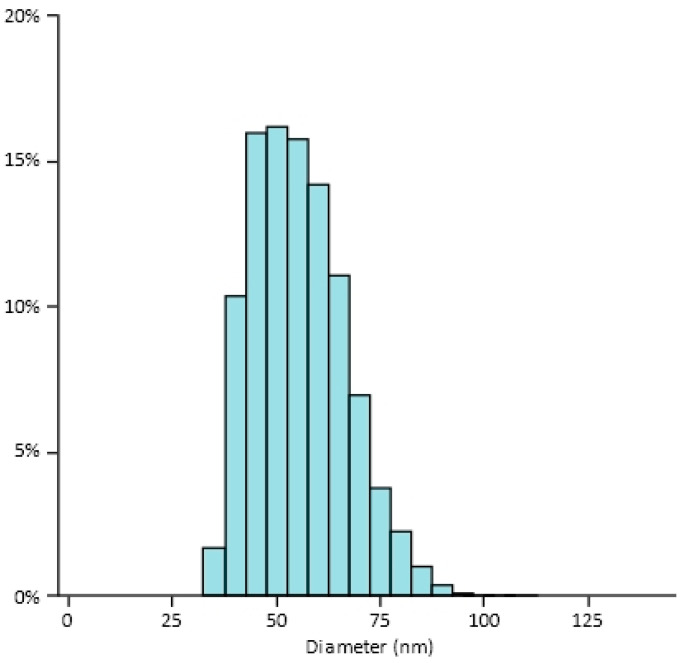
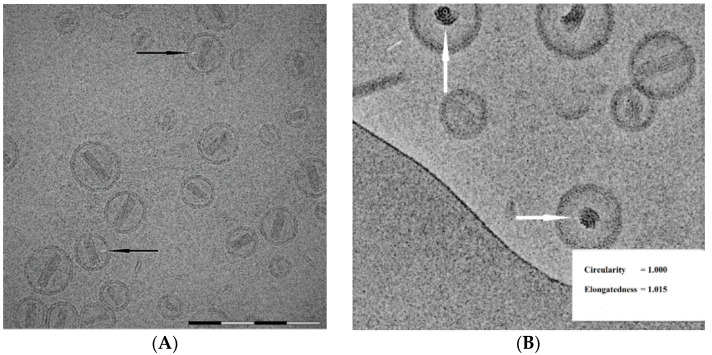
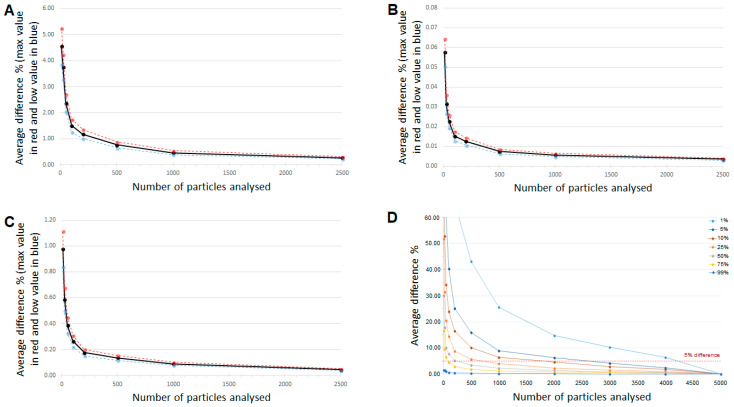
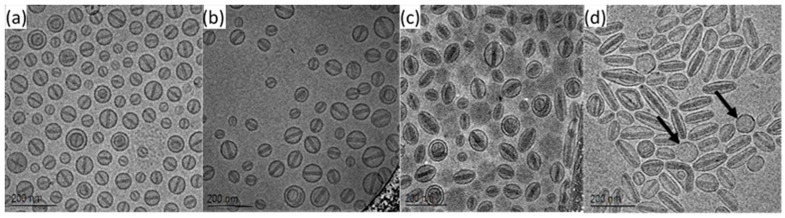
Nano-drugs based on nanoparticles (NP) or on nano-assemblies as carriers of the active pharmaceutical ingredient (API) are often expected to perform better compared to conventional dosage forms. Maximum realization of this potential though requires optimization of multiple physico-chemical, including structural and morphological, parameters. Meaningful distributions of these parameters derived from sufficient populations of individual NPs rather than ensemble distributions are desirable for this task, provided that relevant high-resolution data is available. In this study we demonstrate powerful capabilities of the up-to-date cryogenic transmission electron-microscopy (cryo-TEM) as well as correlations with other techniques abundant in the nano-research milieu. We explored Doxil-like (an anticancer drug and the first FDA-approved nano-drug) (75-100 nm) PEGylated liposomes encapsulating single doxorubicin-sulfate nano-rod-crystals (PLD). These crystals induce liposome sphere-to-ellipsoid deformation. Doxil was characterized by a multitude of physicochemical methods. We demonstrate, that accompanied by advanced image-analysis means, cryo-TEM can successfully enable the determination of multiple structural parameters of such complex liposomal nano-drugs with an added value of statistically-sound distributions. The latter could not be achieved by most other physicochemical approaches. It seems that cryo-TEM is capable of quantitative description of individual liposome morphological features, including meaningful distributions of all structural elements, with averages that correlate with other physical methods. Here it is demonstrated that such quantitative cryo-TEM analysis is a powerful tool in determining what is the optimal drug to lipid ratio in PLD, which is found to be the drug to lipid ratio existing in Doxil.
基于纳米颗粒(NP)或纳米组装体作为活性药物成分(API)载体的纳米药物,通常被期望比传统剂型表现得更好。然而,要充分实现这种潜力,需要优化多个物理化学参数,包括结构和形态参数。为了完成这项任务,从足够数量的单个NP中得出这些参数的有意义分布,而不是总体分布,是很有必要的,前提是有相关的高分辨率数据。在本研究中,我们展示了最新的低温透射电子显微镜(cryo-TEM)的强大功能,以及与纳米研究环境中丰富的其他技术的相关性。我们研究了类似多柔比星脂质体(Doxil,一种抗癌药物,也是首个获得美国食品药品监督管理局批准的纳米药物)(75 - 100纳米)的聚乙二醇化脂质体,其包裹着单个硫酸多柔比星纳米棒晶体(PLD)。这些晶体会导致脂质体从球形变形为椭圆形。多柔比星脂质体通过多种物理化学方法进行了表征。我们证明,伴随着先进的图像分析手段,低温透射电子显微镜能够成功地确定此类复杂脂质体纳米药物的多个结构参数,并给出具有统计学意义分布的附加值。而大多数其他物理化学方法无法做到这一点。似乎低温透射电子显微镜能够定量描述单个脂质体的形态特征,包括所有结构元素的有意义分布,并得出与其他物理方法相关的平均值。在此证明了这种定量低温透射电子显微镜分析是确定PLD中最佳药物与脂质比例的有力工具,发现该比例与多柔比星脂质体中的药物与脂质比例相同。