Indiana University School of Medicine-South Bend Center, South Bend, IN 46617, USA.
Department of Biological Sciences, University of Notre Dame, Notre Dame, IN 46556, USA.
Int J Mol Sci. 2021 Jan 19;22(2):961. doi: 10.3390/ijms22020961.
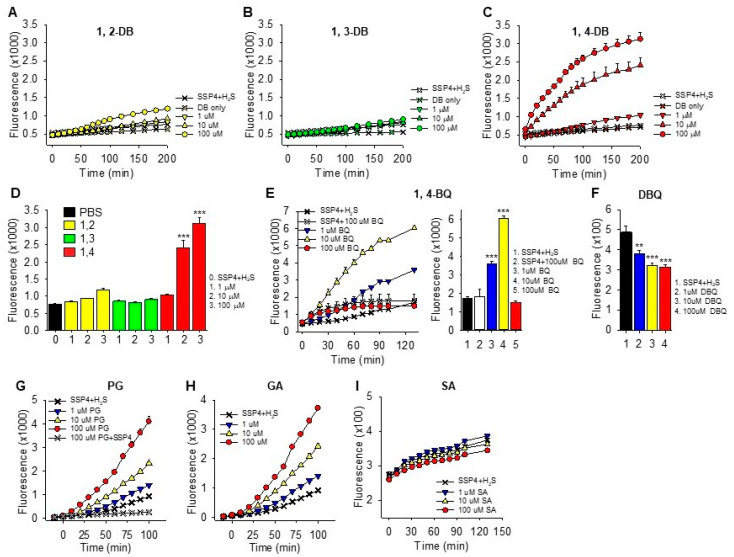
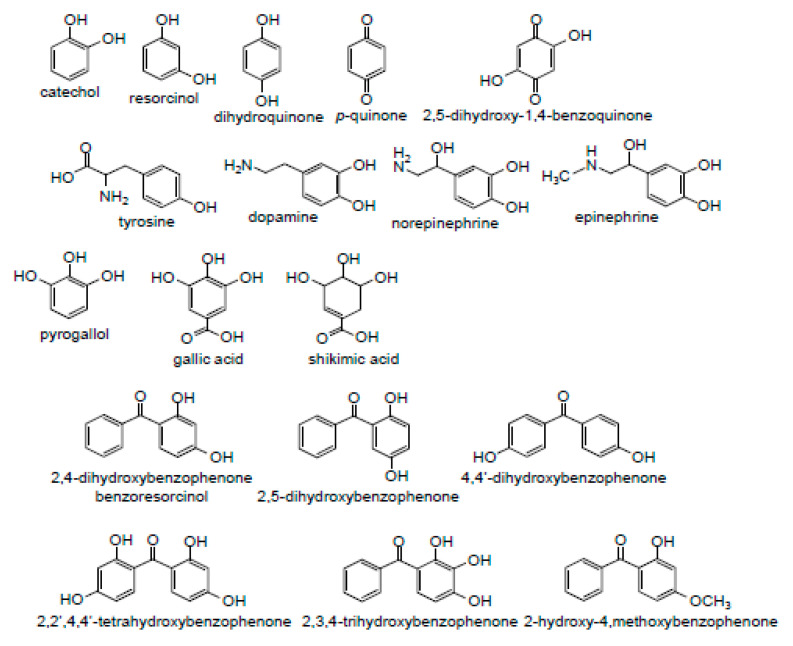
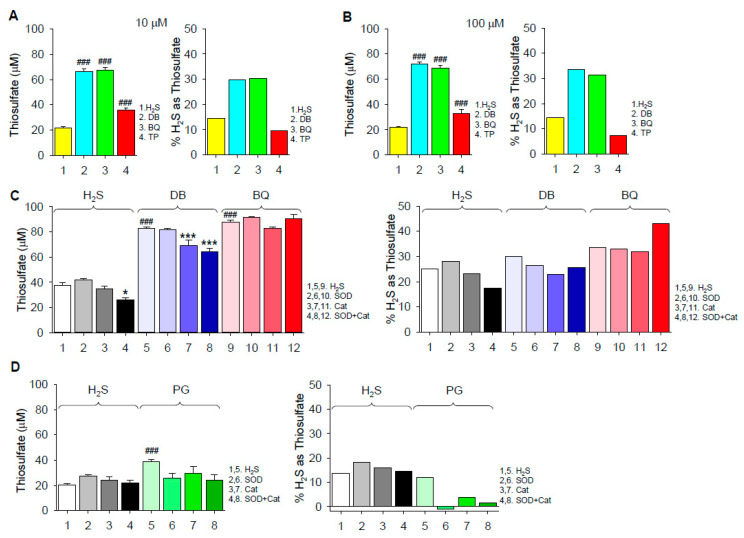
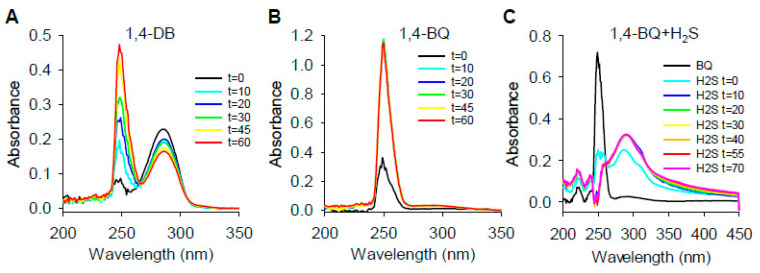
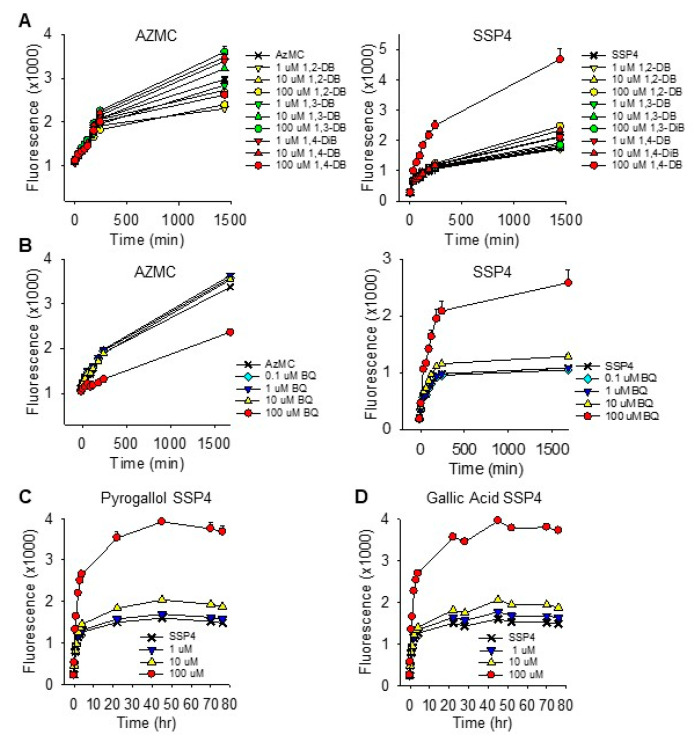
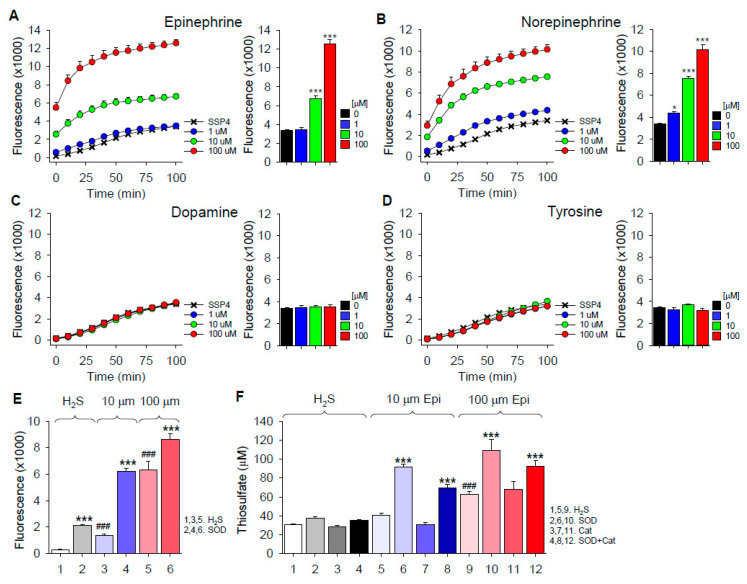
We have shown that autoxidized polyphenolic nutraceuticals oxidize HS to polysulfides and thiosulfate and this may convey their cytoprotective effects. Polyphenol reactivity is largely attributed to the B ring, which is usually a form of hydroxyquinone (HQ). Here, we examine the effects of HQs on sulfur metabolism using HS- and polysulfide-specific fluorophores (AzMC and SSP4, respectively) and thiosulfate sensitive silver nanoparticles (AgNP). In buffer, 1,4-dihydroxybenzene (1,4-DB), 1,4-benzoquinone (1,4-BQ), pyrogallol (PG) and gallic acid (GA) oxidized HS to polysulfides and thiosulfate, whereas 1,2-DB, 1,3-DB, 1,2-dihydroxy,3,4-benzoquinone and shikimic acid did not. In addition, 1,4-DB, 1,4-BQ, PG and GA also increased polysulfide production in HEK293 cells. In buffer, HS oxidation by 1,4-DB was oxygen-dependent, partially inhibited by tempol and trolox, and absorbance spectra were consistent with redox cycling between HQ autoxidation and HS-mediated reduction. Neither 1,2-DB, 1,3-DB, 1,4-DB nor 1,4-BQ reduced polysulfides to HS in either 21% or 0% oxygen. Epinephrine and norepinephrine also oxidized HS to polysulfides and thiosulfate; dopamine and tyrosine were ineffective. Polyphenones were also examined, but only 2,5-dihydroxy- and 2,3,4-trihydroxybenzophenones oxidized HS. These results show that HS is readily oxidized by specific hydroxyquinones and quinones, most likely through the formation of a semiquinone radical intermediate derived from either reaction of oxygen with the reduced quinones, or from direct reaction between HS and quinones. We propose that polysulfide production by these reactions contributes to the health-promoting benefits of polyphenolic nutraceuticals.
我们已经证明,自氧化多酚类营养保健品将 HS 氧化为多硫化物和硫代硫酸盐,这可能是它们发挥细胞保护作用的原因。多酚的反应性主要归因于 B 环,B 环通常是一种对苯二酚(HQ)形式。在这里,我们使用 HS 和多硫化物特异性荧光探针(分别为 AzMC 和 SSP4)和硫代硫酸盐敏感的银纳米颗粒(AgNP)来研究 HQ 对硫代谢的影响。在缓冲液中,1,4-二羟基苯(1,4-DB)、1,4-苯醌(1,4-BQ)、焦儿茶酚(PG)和没食子酸(GA)将 HS 氧化为多硫化物和硫代硫酸盐,而 1,2-DB、1,3-DB、1,2-二羟基、3,4-苯醌和莽草酸则没有。此外,1,4-DB、1,4-BQ、PG 和 GA 还增加了 HEK293 细胞中的多硫化物产生。在缓冲液中,1,4-DB 对 HS 的氧化是依赖于氧气的,部分被 tempol 和 trolox 抑制,并且吸收光谱与 HQ 自氧化和 HS 介导的还原之间的氧化还原循环一致。在 21%或 0%氧气中,1,2-DB、1,3-DB、1,4-DB 或 1,4-BQ 均不能将多硫化物还原为 HS。肾上腺素和去甲肾上腺素也将 HS 氧化为多硫化物和硫代硫酸盐;多巴胺和酪氨酸则无效。多酚也进行了检查,但只有 2,5-二羟基-和 2,3,4-三羟基二苯甲酮将 HS 氧化。这些结果表明,HS 很容易被特定的对苯二酚和醌类氧化,很可能是通过氧与还原醌类反应形成半醌自由基中间体,或者通过 HS 与醌类的直接反应。我们提出,这些反应产生的多硫化物有助于多酚类营养保健品的健康促进作用。