• 文献检索
  • 文档翻译
  • 深度研究
  • 学术资讯
  • Suppr Zotero 插件Zotero 插件
  • 邀请有礼
  • 套餐&价格
  • 历史记录
应用&插件
Suppr Zotero 插件Zotero 插件浏览器插件Mac 客户端Windows 客户端微信小程序
定价
高级版会员购买积分包购买API积分包
服务
文献检索文档翻译深度研究API 文档MCP 服务
关于我们
关于 Suppr公司介绍联系我们用户协议隐私条款
关注我们

Suppr 超能文献

核心技术专利:CN118964589B侵权必究
粤ICP备2023148730 号-1Suppr @ 2026

文献检索

告别复杂PubMed语法,用中文像聊天一样搜索,搜遍4000万医学文献。AI智能推荐,让科研检索更轻松。

立即免费搜索

文件翻译

保留排版,准确专业,支持PDF/Word/PPT等文件格式,支持 12+语言互译。

免费翻译文档

深度研究

AI帮你快速写综述,25分钟生成高质量综述,智能提取关键信息,辅助科研写作。

立即免费体验

被困在新形成冰中的微生物群:斯洛文尼亚 Paradana 冰洞。

Microbiota entrapped in recently-formed ice: Paradana Ice Cave, Slovenia.

机构信息

Karst Research Institute, Research Centre of the Slovenian Academy of Sciences and Arts, Titov trg 2, 6230, Postojna, Slovenia.

UNESCO Chair on Karst Education, University of Nova Gorica, Glavni trg 8, 5271, Vipava, Slovenia.

出版信息

Sci Rep. 2021 Jan 21;11(1):1993. doi: 10.1038/s41598-021-81528-6.

DOI:10.1038/s41598-021-81528-6
PMID:33479448
原文链接:https://pmc.ncbi.nlm.nih.gov/articles/PMC7820503/
Abstract

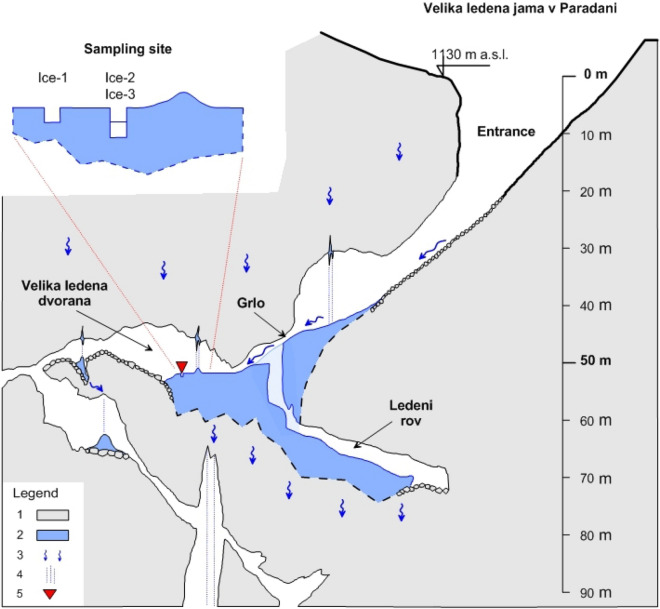
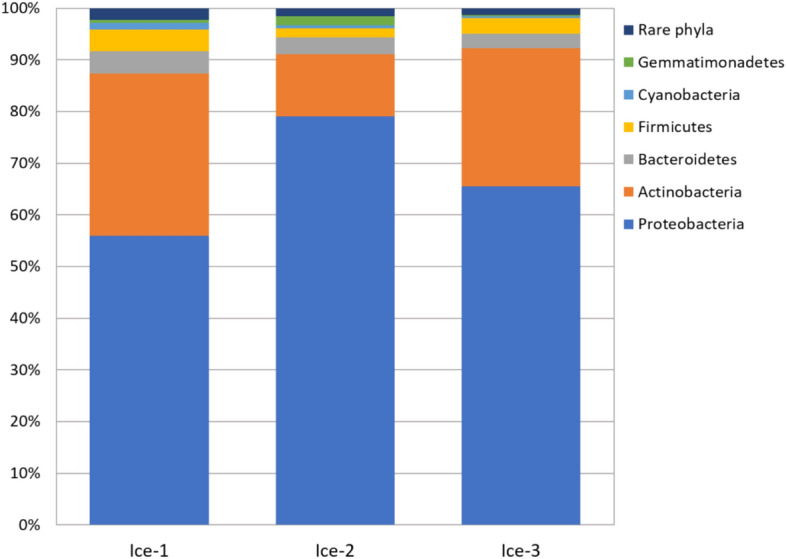
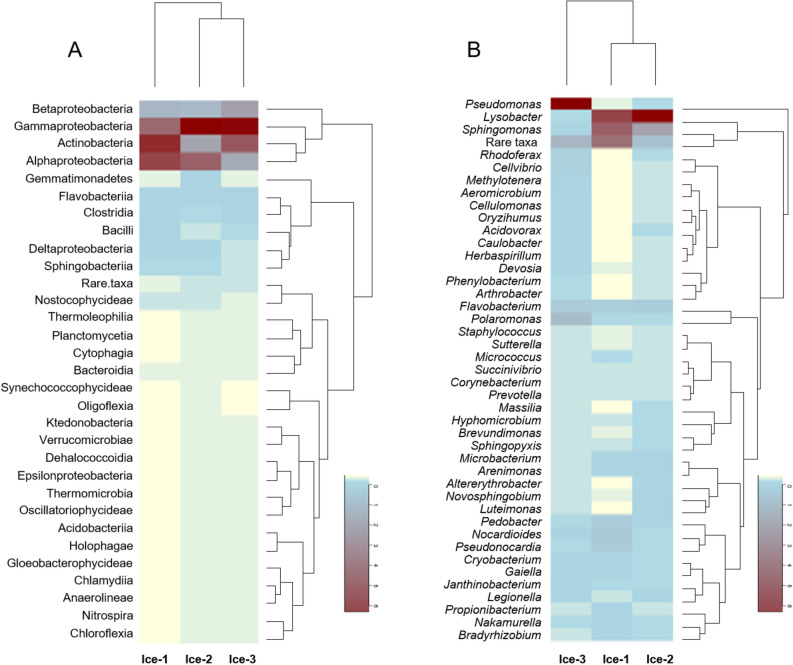
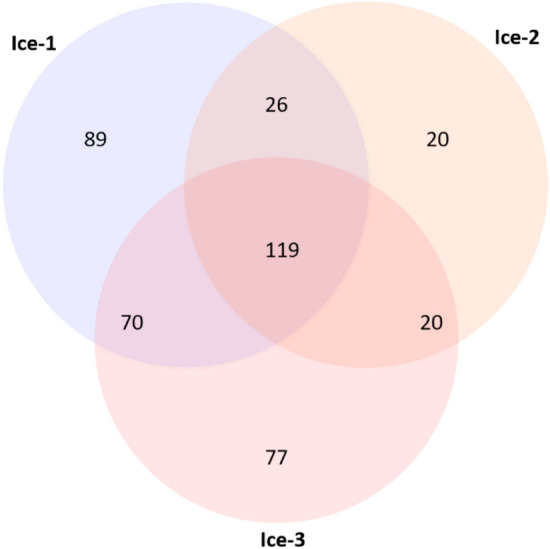
Paradana is one of the biggest ice caves in Slovenia, with an estimated ice volume of 8,000 m. Reflecting climatological conditions, the cave ice undergoes repeated freeze-thaw cycles and regular yearly deposition of fresh ice. Three distinct ice block samples, collected from the frozen lake in May 2016, were analysed to obtain data on ice physicochemical properties and the composition of associated microbiota. Isotopic composition of the ice samples (O, H) and a local meteoric water line (LMWL) constructed for monthly precipitation at Postojna were used to estimate the isotopic composition of the water that formed the ice, which had high values of deuterium excess and low concentrations of chloride, sulphate and nitrate. The values of total organic carbon (1.93-3.95 mg/l) within the ice blocks fall within the range of those measured in karst streams. Total cell count in the ice was high and the proportion of cell viability increased along the depth gradient and ranged from 4.67 × 10 to 1.52 × 10 cells/ml and from 51.0 to 85.4%, respectively. Proteobacteria represented the core of the cave-ice microbiome (55.9-79.1%), and probably play an essential role in this ecosystem. Actinobacteria was the second most abundant phylum (12.0-31.4%), followed in abundance by Bacteroidetes (2.8-4.3%). Ice phylotypes recorded amounted to 442 genera, but only 43 genera had abundances greater than 0.5%. Most abundant were Pseudomonas, a well-known ice dweller, and Lysobacter, which previously was not reported in this context. Finally, two xanthophytes, Chloridella glacialis and Ellipsoidion perminimum, known from polar environments, were cultured from the ice. This indicates that the abundance and ecological role of phototrophs in such environments might be greater than previously deduced.

摘要

帕拉达纳是斯洛文尼亚最大的冰洞之一,估计冰量为 8000 立方米。反映气候条件,洞穴冰经历了反复的冻融循环和每年定期的新冰沉积。从 2016 年 5 月冻结的湖泊中采集了三个不同的冰块样本,以获取有关冰物理化学性质和相关微生物群落组成的数据。冰样本的同位素组成(O,H)和为波斯特伊纳每月降水构建的本地大气水线(LMWL)用于估计形成冰的水的同位素组成,其氘过剩值较高,氯、硫酸盐和硝酸盐浓度较低。冰块内总有机碳(1.93-3.95mg/l)的值在测量的岩溶溪流范围内。冰内的总细胞计数很高,细胞活力的比例随着深度梯度的增加而增加,范围从 4.67×10到 1.52×10细胞/ml,分别为 51.0%到 85.4%。变形菌门是洞穴冰微生物组的核心(55.9-79.1%),可能在这个生态系统中发挥着重要作用。放线菌是第二丰富的门(12.0-31.4%),其次是拟杆菌门(2.8-4.3%)。记录的冰型达到 442 属,但只有 43 属的丰度大于 0.5%。最丰富的是假单胞菌,一种著名的冰栖生物,以及以前未在这种环境中报道过的 Lysobacter。最后,从冰中培养出两种黄藻,即来自极地环境的 Chloridella glacialis 和 Ellipsoidion perminimum。这表明,在这种环境中,光养生物的丰度和生态作用可能比以前推断的要大。
https://cdn.ncbi.nlm.nih.gov/pmc/blobs/47cf/7820503/8d1b39e8605c/41598_2021_81528_Fig4_HTML.jpg
https://cdn.ncbi.nlm.nih.gov/pmc/blobs/47cf/7820503/f522e7703ac7/41598_2021_81528_Fig1_HTML.jpg
https://cdn.ncbi.nlm.nih.gov/pmc/blobs/47cf/7820503/046b037bb8fd/41598_2021_81528_Fig2_HTML.jpg
https://cdn.ncbi.nlm.nih.gov/pmc/blobs/47cf/7820503/50eb8de4112e/41598_2021_81528_Fig3_HTML.jpg
https://cdn.ncbi.nlm.nih.gov/pmc/blobs/47cf/7820503/8d1b39e8605c/41598_2021_81528_Fig4_HTML.jpg
https://cdn.ncbi.nlm.nih.gov/pmc/blobs/47cf/7820503/f522e7703ac7/41598_2021_81528_Fig1_HTML.jpg
https://cdn.ncbi.nlm.nih.gov/pmc/blobs/47cf/7820503/046b037bb8fd/41598_2021_81528_Fig2_HTML.jpg
https://cdn.ncbi.nlm.nih.gov/pmc/blobs/47cf/7820503/50eb8de4112e/41598_2021_81528_Fig3_HTML.jpg
https://cdn.ncbi.nlm.nih.gov/pmc/blobs/47cf/7820503/8d1b39e8605c/41598_2021_81528_Fig4_HTML.jpg

相似文献

1
Microbiota entrapped in recently-formed ice: Paradana Ice Cave, Slovenia.被困在新形成冰中的微生物群:斯洛文尼亚 Paradana 冰洞。
Sci Rep. 2021 Jan 21;11(1):1993. doi: 10.1038/s41598-021-81528-6.
2
Total and Potentially Active Bacterial Communities Entrapped in a Late Glacial Through Holocene Ice Core From Scarisoara Ice Cave, Romania.罗马尼亚斯卡里索拉冰洞晚更新世至全新世冰芯中截留的总细菌群落和潜在活性细菌群落。
Front Microbiol. 2019 May 29;10:1193. doi: 10.3389/fmicb.2019.01193. eCollection 2019.
3
Bacterial and archaeal community structures in perennial cave ice.洞穴万年冰中细菌和古菌群落结构。
Sci Rep. 2018 Oct 23;8(1):15671. doi: 10.1038/s41598-018-34106-2.
4
[Changes in the Bacterioplankton Community Between "Ice" and "Water" in the Frozen Dali Lake].[冰封达里湖“冰”与“水”中浮游细菌群落的变化]
Huan Jing Ke Xue. 2021 May 8;42(5):2276-2286. doi: 10.13227/j.hjkx.202009218.
5
Stable water isotopic composition of the Antarctic subglacial Lake Vostok: implications for understanding the lake's hydrology.南极沃斯托克冰下湖稳定水同位素组成:对理解该湖水文状况的启示
Isotopes Environ Health Stud. 2016 Aug-Oct;52(4-5):468-76. doi: 10.1080/10256016.2015.1129327. Epub 2016 Feb 10.
6
Microbial Community Characterizing Vermiculations from Karst Caves and Its Role in Their Formation.微生物群落特征描述喀斯特洞穴的蚓孔及其形成作用。
Microb Ecol. 2021 May;81(4):884-896. doi: 10.1007/s00248-020-01623-5. Epub 2020 Nov 6.
7
Variation with depth of the abundance, diversity and pigmentation of culturable bacteria in a deep ice core from the Yuzhufeng Glacier, Tibetan Plateau.青藏高原玉珠峰冰川深层冰芯中可培养细菌的丰度、多样性和色素沉着随深度的变化
Extremophiles. 2018 Jan;22(1):29-38. doi: 10.1007/s00792-017-0973-8. Epub 2017 Oct 25.
8
Diversity, Distribution and Co-occurrence Patterns of Bacterial Communities in a Karst Cave System.喀斯特洞穴系统中细菌群落的多样性、分布及共生模式
Front Microbiol. 2019 Aug 6;10:1726. doi: 10.3389/fmicb.2019.01726. eCollection 2019.
9
Heat Shock Response of the Active Microbiome From Perennial Cave Ice.来自常年洞穴冰的活跃微生物群落的热休克反应
Front Microbiol. 2022 Mar 10;12:809076. doi: 10.3389/fmicb.2021.809076. eCollection 2021.
10
Comparison of monthly and daily isotopic composition of precipitation in the coastal area of Slovenia.斯洛文尼亚沿海地区降水的月同位素组成与日同位素组成对比。
Isotopes Environ Health Stud. 2007 Dec;43(4):307-21. doi: 10.1080/10256010701702739.

引用本文的文献

1
Molecular Screening for Cyanobacteria and Their Cyanotoxin Potential in Diverse Habitats.分子筛选不同生境中的蓝藻及其潜在的蓝藻毒素。
Toxins (Basel). 2024 Jul 27;16(8):333. doi: 10.3390/toxins16080333.
2
Calcium carbonate precipitating extremophilic bacteria in an Alpine ice cave.高山冰洞碳酸钙沉淀嗜极菌。
Sci Rep. 2024 Feb 1;14(1):2710. doi: 10.1038/s41598-024-53131-y.
3
The hidden microbial ecosystem in the perennial ice from a Pyrenean ice cave.来自比利牛斯山脉冰洞常年冰层中的隐藏微生物生态系统。

本文引用的文献

1
Interconnection of bacterial and phytoplanktonic communities with hydrochemical parameters from ice and under-ice water in coastal zone of Lake Baikal.贝加尔湖沿海地区冰下水体的细菌和浮游植物群落与水化学参数的相互关系。
Sci Rep. 2020 Jul 6;10(1):11087. doi: 10.1038/s41598-020-66519-3.
2
Distinctive microbial communities in subzero hypersaline brines from Arctic coastal sea ice and rarely sampled cryopegs.来自北极沿海海冰和极少采样的冷冻底冰的零下高盐卤水的独特微生物群落。
FEMS Microbiol Ecol. 2019 Dec 1;95(12). doi: 10.1093/femsec/fiz166.
3
Diversity, Distribution and Co-occurrence Patterns of Bacterial Communities in a Karst Cave System.
Front Microbiol. 2023 Jan 26;14:1110091. doi: 10.3389/fmicb.2023.1110091. eCollection 2023.
4
Extremophilic Microorganisms in Central Europe.中欧的嗜极微生物。
Microorganisms. 2021 Nov 10;9(11):2326. doi: 10.3390/microorganisms9112326.
喀斯特洞穴系统中细菌群落的多样性、分布及共生模式
Front Microbiol. 2019 Aug 6;10:1726. doi: 10.3389/fmicb.2019.01726. eCollection 2019.
4
Total and Potentially Active Bacterial Communities Entrapped in a Late Glacial Through Holocene Ice Core From Scarisoara Ice Cave, Romania.罗马尼亚斯卡里索拉冰洞晚更新世至全新世冰芯中截留的总细菌群落和潜在活性细菌群落。
Front Microbiol. 2019 May 29;10:1193. doi: 10.3389/fmicb.2019.01193. eCollection 2019.
5
Freezing/thawing index variations over the circum-Arctic from 1901 to 2015 and the permafrost extent.1901 年至 2015 年环北极地区的冻结/融解指数变化与永久冻土范围。
Sci Total Environ. 2019 Apr 10;660:1294-1305. doi: 10.1016/j.scitotenv.2019.01.121. Epub 2019 Jan 14.
6
Microbial ecology of the cryosphere (glacial and permafrost habitats): current knowledge.寒带(冰川和永久冻土地带)微生物生态学:现有知识。
Appl Microbiol Biotechnol. 2019 Mar;103(6):2537-2549. doi: 10.1007/s00253-019-09631-3. Epub 2019 Feb 5.
7
Cave Drip Water-Related Samples as a Natural Environment for Aromatic Hydrocarbon-Degrading Bacteria.洞穴滴水相关样本作为芳烃降解细菌的自然环境
Microorganisms. 2019 Jan 25;7(2):33. doi: 10.3390/microorganisms7020033.
8
Bacterial and archaeal community structures in perennial cave ice.洞穴万年冰中细菌和古菌群落结构。
Sci Rep. 2018 Oct 23;8(1):15671. doi: 10.1038/s41598-018-34106-2.
9
Resource limitation of soil microbes in karst ecosystems.岩溶生态系统中土壤微生物的资源限制。
Sci Total Environ. 2019 Feb 10;650(Pt 1):241-248. doi: 10.1016/j.scitotenv.2018.09.036. Epub 2018 Sep 4.
10
Fungi in perennial ice from Scărișoara Ice Cave (Romania).斯卡里绍拉冰洞(罗马尼亚)中的永久性冰中的真菌。
Sci Rep. 2018 Jul 4;8(1):10096. doi: 10.1038/s41598-018-28401-1.