Department of Psychiatry, Perelman School of Medicine, University of Pennsylvania, Philadelphia, PA, USA.
Lifespan Brain Institute, Children's Hospital of Philadelphia, University of Pennsylvania, Philadelphia, PA, USA.
Mol Psychiatry. 2021 Jun;26(6):2137-2147. doi: 10.1038/s41380-020-00986-y. Epub 2021 Jan 21.
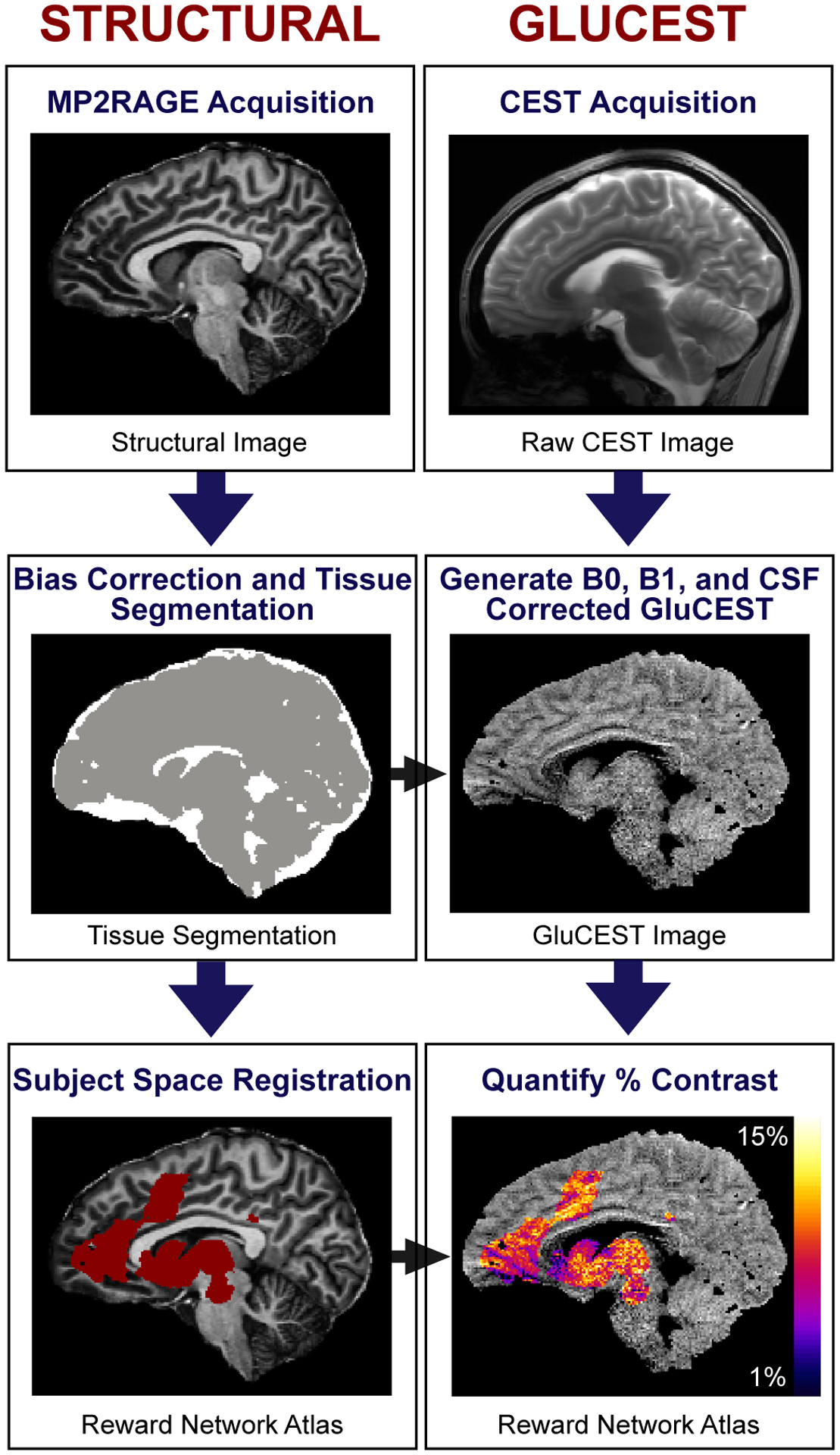
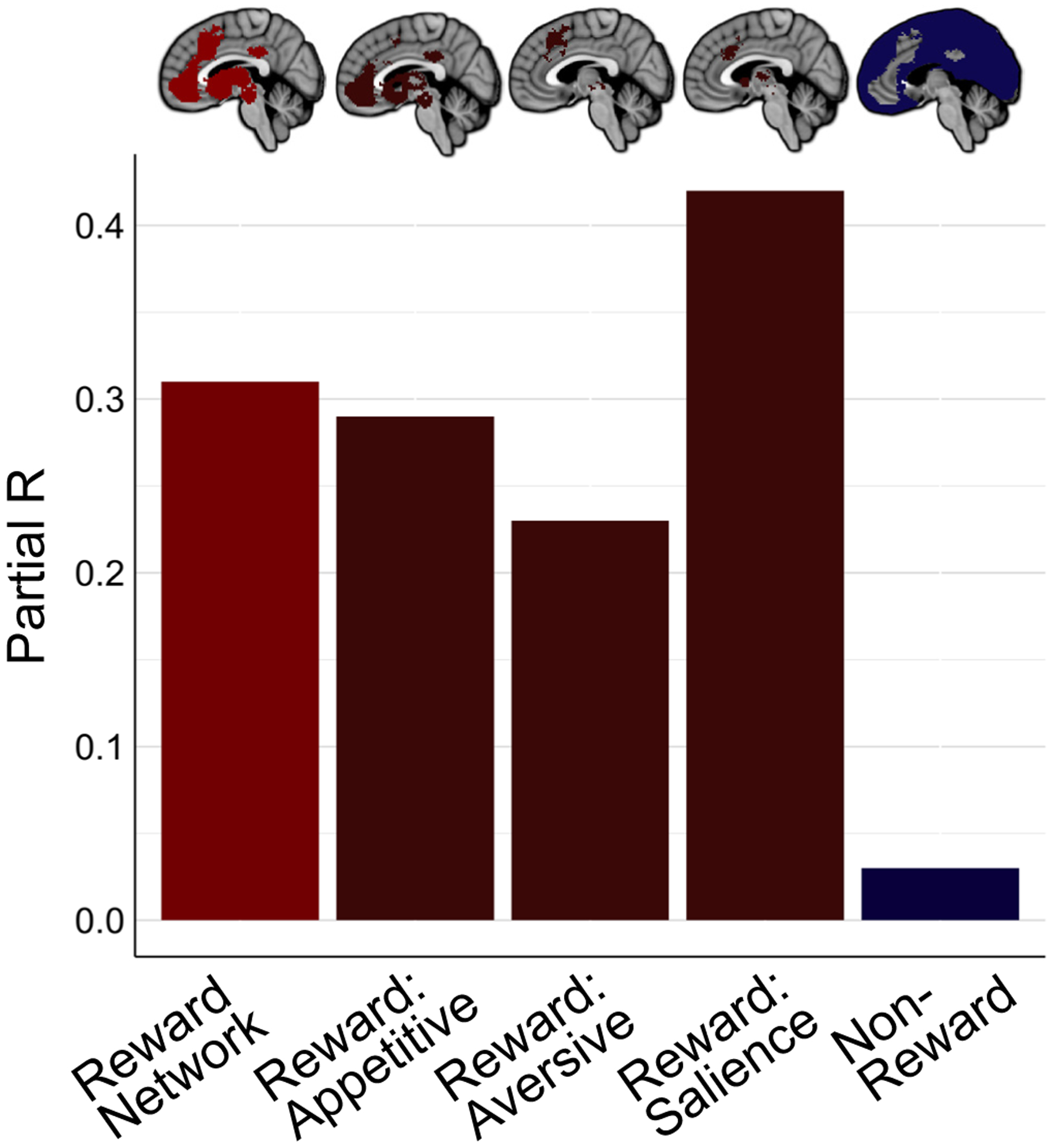
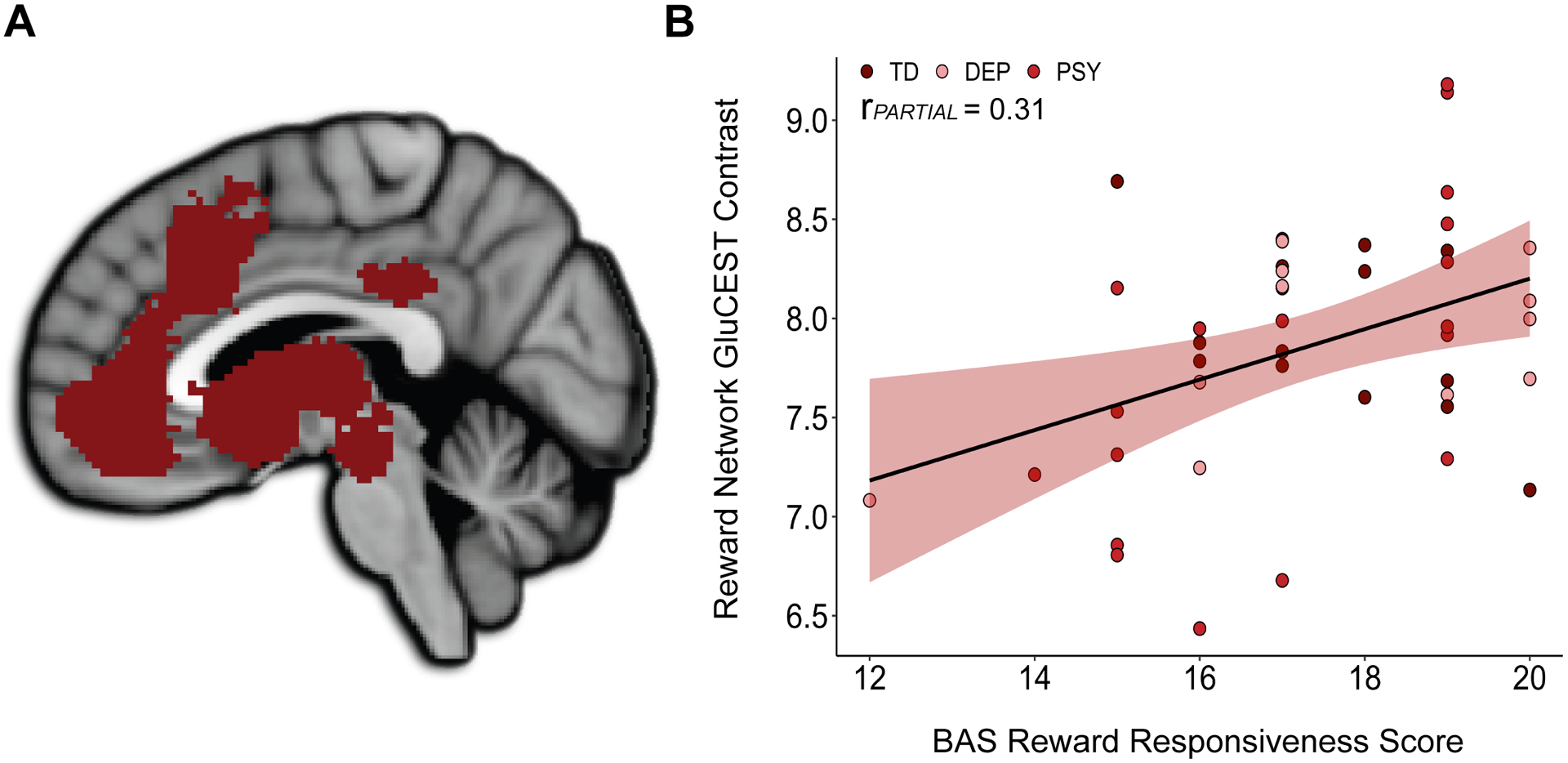
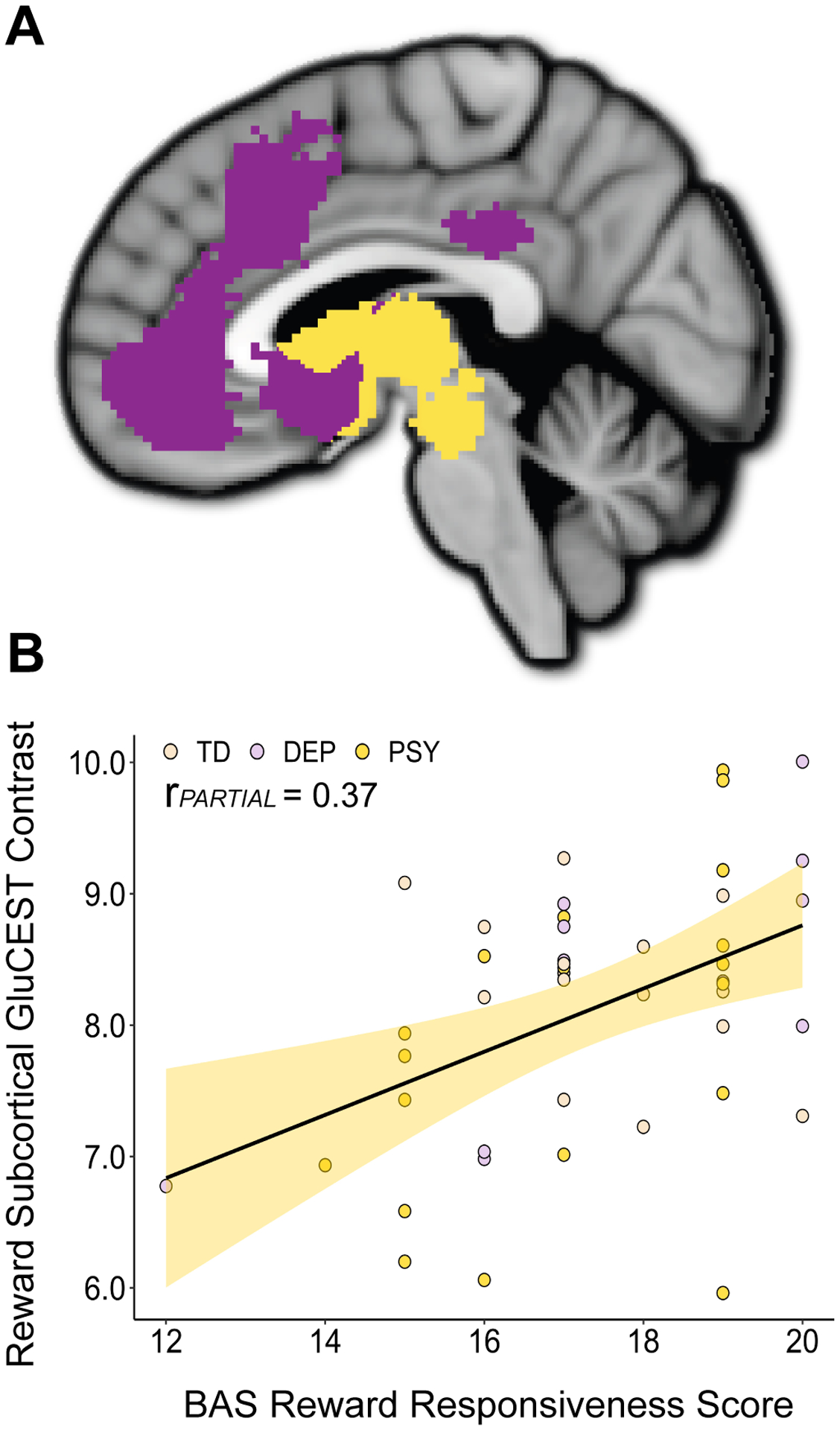
Low reward responsiveness (RR) is associated with poor psychological well-being, psychiatric disorder risk, and psychotropic treatment resistance. Functional MRI studies have reported decreased activity within the brain's reward network in individuals with RR deficits, however the neurochemistry underlying network hypofunction in those with low RR remains unclear. This study employed ultra-high field glutamate chemical exchange saturation transfer (GluCEST) imaging to investigate the hypothesis that glutamatergic deficits within the reward network contribute to low RR. GluCEST images were acquired at 7.0 T from 45 participants (ages 15-29, 30 females) including 15 healthy individuals, 11 with depression, and 19 with psychosis spectrum symptoms. The GluCEST contrast, a measure sensitive to local glutamate concentration, was quantified in a meta-analytically defined reward network comprised of cortical, subcortical, and brainstem regions. Associations between brain GluCEST contrast and Behavioral Activation System Scale RR scores were assessed using multiple linear regressions. Analyses revealed that reward network GluCEST contrast was positively and selectively associated with RR, but not other clinical features. Follow-up investigations identified that this association was driven by the subcortical reward network and network areas that encode the salience of valenced stimuli. We observed no association between RR and the GluCEST contrast within non-reward cortex. This study thus provides new evidence that reward network glutamate levels contribute to individual differences in RR. Decreased reward network excitatory neurotransmission or metabolism may be mechanisms driving reward network hypofunction and RR deficits. These findings provide a framework for understanding the efficacy of glutamate-modulating psychotropics such as ketamine for treating anhedonia.
低奖励反应性 (RR) 与心理健康状况不佳、精神障碍风险和精神药物治疗抵抗有关。功能磁共振成像研究报告称,RR 缺陷个体的大脑奖励网络内活动减少,然而,RR 较低者的网络功能低下的神经化学基础仍不清楚。本研究采用超高场谷氨酸化学交换饱和转移 (GluCEST) 成像来检验以下假设,即奖励网络内的谷氨酸能缺陷导致 RR 较低。从 45 名参与者(年龄 15-29 岁,女性 30 名)中采集了 7.0T 的 GluCEST 图像,包括 15 名健康个体、11 名抑郁症患者和 19 名精神病谱系症状患者。Glucest 对比是一种对局部谷氨酸浓度敏感的测量方法,在一个基于元分析定义的奖励网络中进行量化,该网络由皮质、皮质下和脑干区域组成。使用多元线性回归评估大脑 GluCEST 对比与行为激活系统量表 RR 评分之间的关联。分析显示,奖励网络 GluCEST 对比与 RR 呈正相关,与其他临床特征无关。后续调查确定,这种关联是由皮质下奖励网络和编码效价刺激显著性的网络区域驱动的。我们没有观察到 RR 与非奖励皮质内的 GluCEST 对比之间存在关联。因此,本研究提供了新的证据,表明奖励网络谷氨酸水平有助于 RR 的个体差异。奖励网络兴奋性神经递质传递或代谢的减少可能是驱动奖励网络功能低下和 RR 缺陷的机制。这些发现为理解谷氨酸调节精神药物(如氯胺酮)治疗快感缺失的疗效提供了一个框架。