• 文献检索
  • 文档翻译
  • 深度研究
  • 学术资讯
  • Suppr Zotero 插件Zotero 插件
  • 邀请有礼
  • 套餐&价格
  • 历史记录
应用&插件
Suppr Zotero 插件Zotero 插件浏览器插件Mac 客户端Windows 客户端微信小程序
定价
高级版会员购买积分包购买API积分包
服务
文献检索文档翻译深度研究API 文档MCP 服务
关于我们
关于 Suppr公司介绍联系我们用户协议隐私条款
关注我们

Suppr 超能文献

核心技术专利:CN118964589B侵权必究
粤ICP备2023148730 号-1Suppr @ 2026

文献检索

告别复杂PubMed语法,用中文像聊天一样搜索,搜遍4000万医学文献。AI智能推荐,让科研检索更轻松。

立即免费搜索

文件翻译

保留排版,准确专业,支持PDF/Word/PPT等文件格式,支持 12+语言互译。

免费翻译文档

深度研究

AI帮你快速写综述,25分钟生成高质量综述,智能提取关键信息,辅助科研写作。

立即免费体验

基于图卷积神经网络的癌症生存预测和解释。

Prediction and interpretation of cancer survival using graph convolution neural networks.

机构信息

Department of Electrical and Computer Engineering, The University of Texas at San Antonio, San Antonio, TX 78249, USA.

Greehey Children's Cancer Research Institute, The University of Texas Health San Antonio, San Antonio, Texas 78229, USA.

出版信息

Methods. 2021 Aug;192:120-130. doi: 10.1016/j.ymeth.2021.01.004. Epub 2021 Jan 21.

DOI:10.1016/j.ymeth.2021.01.004
PMID:33484826
原文链接:https://pmc.ncbi.nlm.nih.gov/articles/PMC8808665/
Abstract

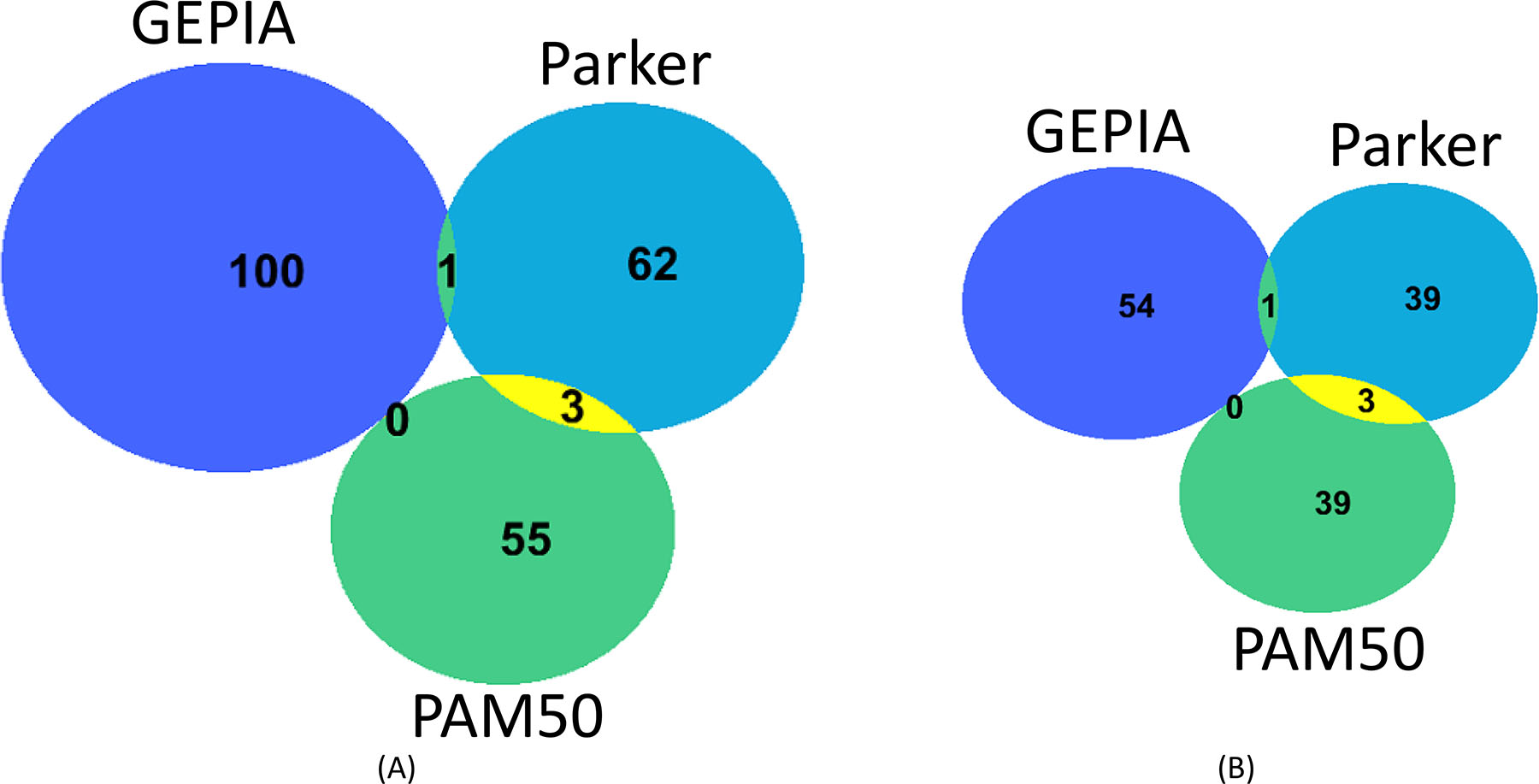
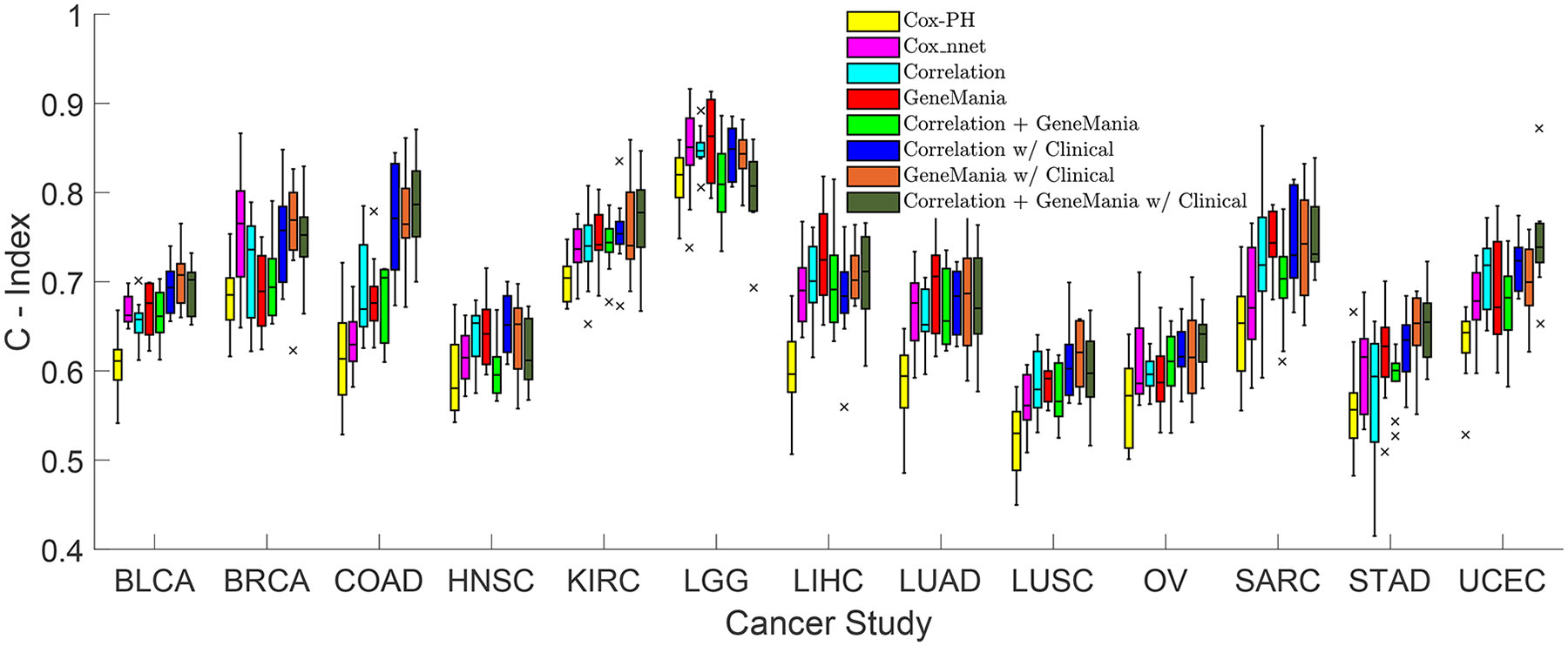
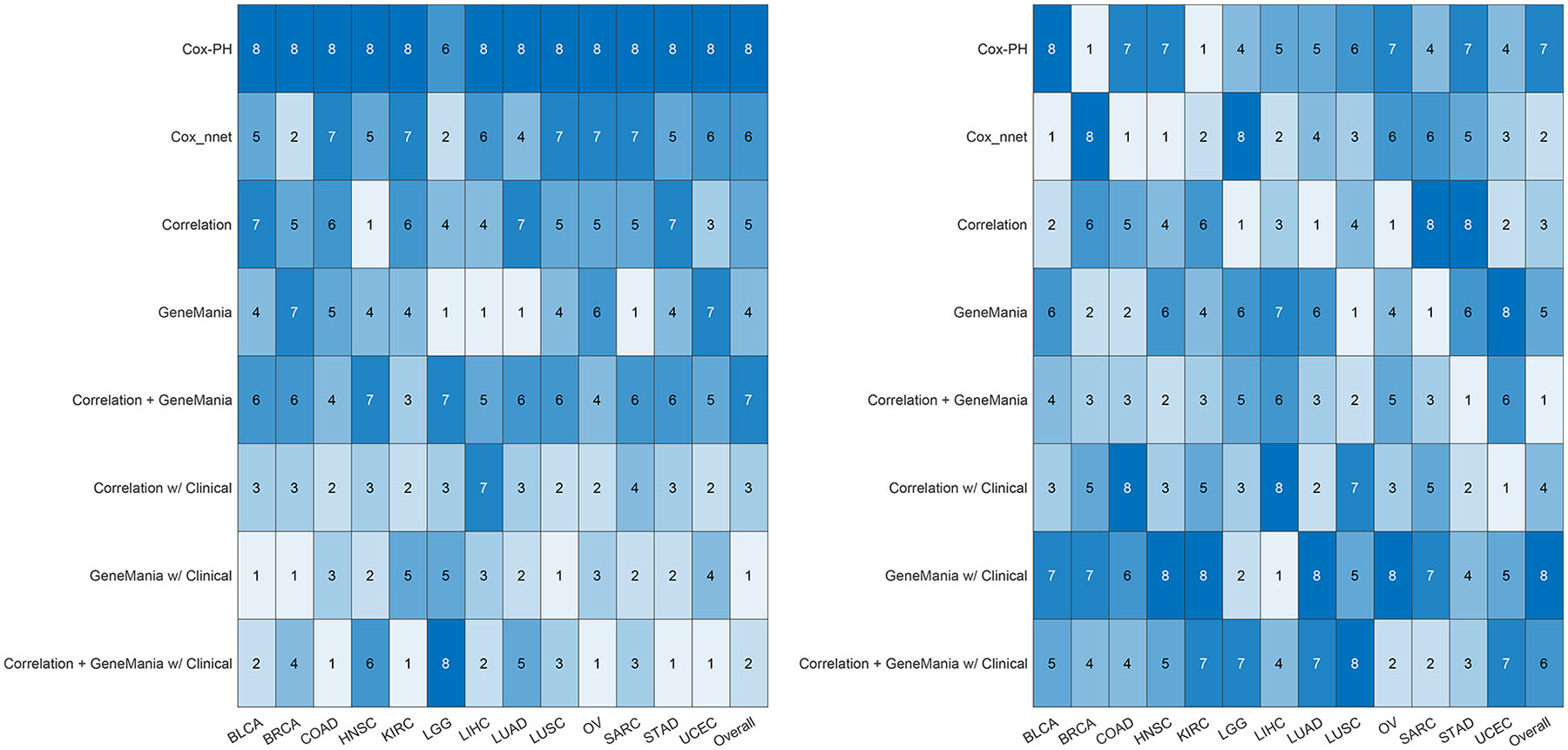
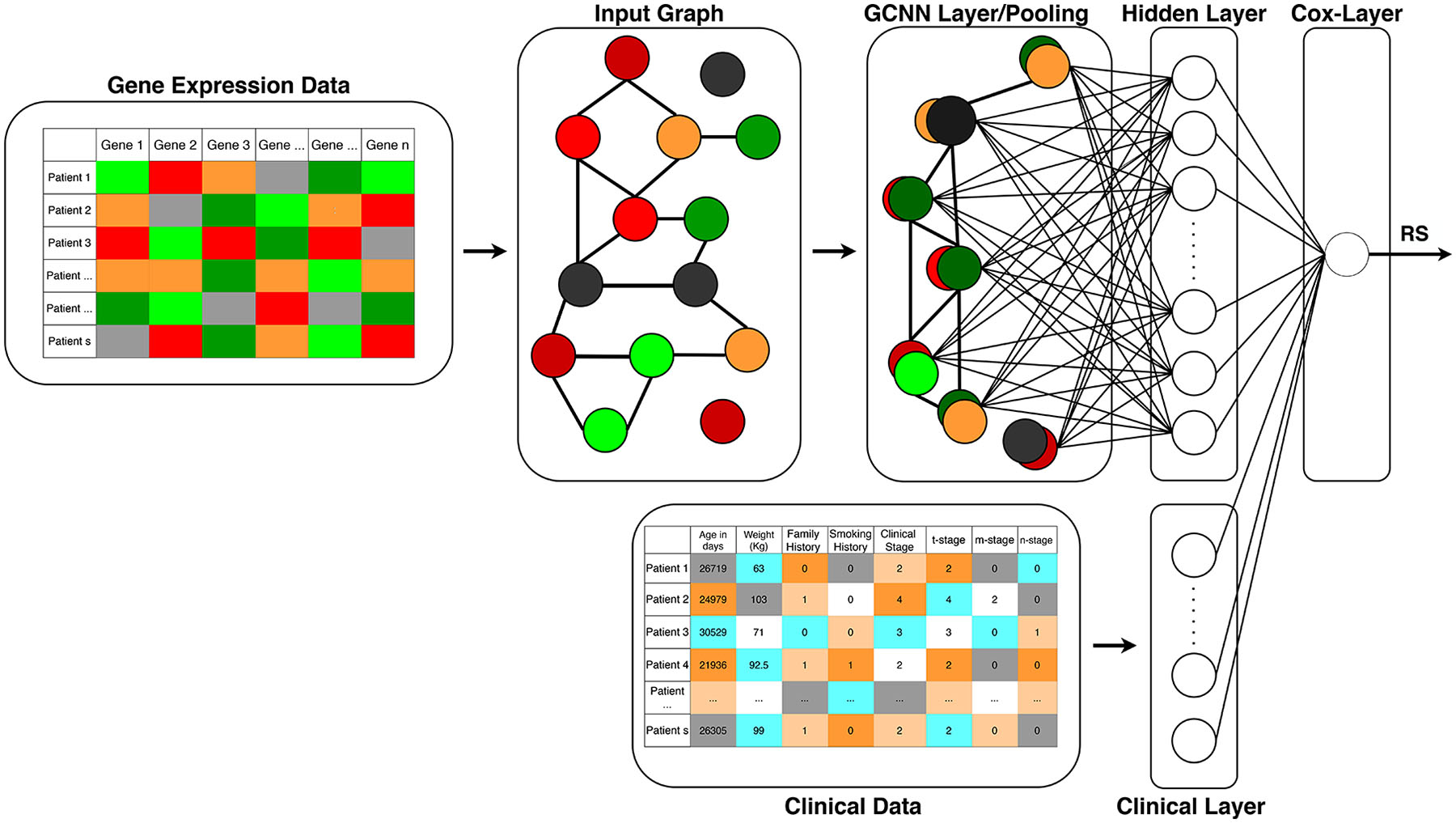
The survival rate of cancer has increased significantly during the past two decades for breast, prostate, testicular, and colon cancer, while the brain and pancreatic cancers have a much lower median survival rate that has not improved much over the last forty years. This has imposed the challenge of finding gene markers for early cancer detection and treatment strategies. Different methods including regression-based Cox-PH, artificial neural networks, and recently deep learning algorithms have been proposed to predict the survival rate for cancers. We established in this work a novel graph convolution neural network (GCNN) approach called Surv_GCNN to predict the survival rate for 13 different cancer types using the TCGA dataset. For each cancer type, 6 Surv_GCNN models with graphs generated by correlation analysis, GeneMania database, and correlation + GeneMania were trained with and without clinical data to predict the risk score (RS). The performance of the 6 Surv_GCNN models was compared with two other existing models, Cox-PH and Cox-nnet. The results showed that Cox-PH has the worst performance among 8 tested models across the 13 cancer types while Surv_GCNN models with clinical data reported the best overall performance, outperforming other competing models in 7 out of 13 cancer types including BLCA, BRCA, COAD, LUSC, SARC, STAD, and UCEC. A novel network-based interpretation of Surv_GCNN was also proposed to identify potential gene markers for breast cancer. The signatures learned by the nodes in the hidden layer of Surv_GCNN were identified and were linked to potential gene markers by network modularization. The identified gene markers for breast cancer have been compared to a total of 213 gene markers from three widely cited lists for breast cancer survival analysis. About 57% of gene markers obtained by Surv_GCNN with correlation + GeneMania graph either overlap or directly interact with the 213 genes, confirming the effectiveness of the identified markers by Surv_GCNN.

摘要

在过去的二十年中,乳腺癌、前列腺癌、睾丸癌和结肠癌的存活率显著提高,而脑癌和胰腺癌的中位存活率较低,在过去的四十年中没有太大改善。这就提出了寻找基因标志物以进行早期癌症检测和治疗策略的挑战。已经提出了包括基于回归的 Cox-PH、人工神经网络和最近的深度学习算法在内的不同方法来预测癌症的存活率。我们在这项工作中建立了一种新的图卷积神经网络(GCNN)方法,称为 Surv_GCNN,使用 TCGA 数据集预测 13 种不同癌症类型的存活率。对于每种癌症类型,我们使用相关性分析、GeneMania 数据库和相关性+GeneMania 生成的图训练了 6 个 Surv_GCNN 模型,这些模型有无临床数据用于预测风险评分(RS)。将 6 个 Surv_GCNN 模型的性能与另外两个现有的模型 Cox-PH 和 Cox-nnet 进行了比较。结果表明,在 13 种癌症类型中,Cox-PH 在 8 个测试模型中的性能最差,而具有临床数据的 surv_GCNN 模型报告了最佳的整体性能,在 7 种癌症类型中优于其他竞争模型,包括 BLCA、BRCA、COAD、LUSC、SARC、STAD 和 UCEC。还提出了一种基于网络的 surv_GCNN 新解释,以识别乳腺癌的潜在基因标志物。识别 surv_GCNN 隐藏层中节点的特征,并通过网络模块化将其与潜在的基因标志物联系起来。乳腺癌的鉴定基因标志物与三个广泛引用的乳腺癌生存分析列表中的总共 213 个基因标志物进行了比较。通过 surv_GCNN 与相关性+GeneMania 图获得的基因标志物中约有 57%与这 213 个基因重叠或直接相互作用,证实了 surv_GCNN 鉴定的标记物的有效性。
https://cdn.ncbi.nlm.nih.gov/pmc/blobs/2ecd/8808665/06b768499aba/nihms-1772101-f0005.jpg
https://cdn.ncbi.nlm.nih.gov/pmc/blobs/2ecd/8808665/abcd659c20e1/nihms-1772101-f0001.jpg
https://cdn.ncbi.nlm.nih.gov/pmc/blobs/2ecd/8808665/49013c448614/nihms-1772101-f0002.jpg
https://cdn.ncbi.nlm.nih.gov/pmc/blobs/2ecd/8808665/f5bd240c7808/nihms-1772101-f0003.jpg
https://cdn.ncbi.nlm.nih.gov/pmc/blobs/2ecd/8808665/7516e01dd1c9/nihms-1772101-f0004.jpg
https://cdn.ncbi.nlm.nih.gov/pmc/blobs/2ecd/8808665/06b768499aba/nihms-1772101-f0005.jpg
https://cdn.ncbi.nlm.nih.gov/pmc/blobs/2ecd/8808665/abcd659c20e1/nihms-1772101-f0001.jpg
https://cdn.ncbi.nlm.nih.gov/pmc/blobs/2ecd/8808665/49013c448614/nihms-1772101-f0002.jpg
https://cdn.ncbi.nlm.nih.gov/pmc/blobs/2ecd/8808665/f5bd240c7808/nihms-1772101-f0003.jpg
https://cdn.ncbi.nlm.nih.gov/pmc/blobs/2ecd/8808665/7516e01dd1c9/nihms-1772101-f0004.jpg
https://cdn.ncbi.nlm.nih.gov/pmc/blobs/2ecd/8808665/06b768499aba/nihms-1772101-f0005.jpg

相似文献

1
Prediction and interpretation of cancer survival using graph convolution neural networks.基于图卷积神经网络的癌症生存预测和解释。
Methods. 2021 Aug;192:120-130. doi: 10.1016/j.ymeth.2021.01.004. Epub 2021 Jan 21.
2
Classification of Cancer Types Using Graph Convolutional Neural Networks.使用图卷积神经网络对癌症类型进行分类
Front Phys. 2020 Jun;8. doi: 10.3389/fphy.2020.00203. Epub 2020 Jun 17.
3
Comparison of Two Modern Survival Prediction Tools, SORG-MLA and METSSS, in Patients With Symptomatic Long-bone Metastases Who Underwent Local Treatment With Surgery Followed by Radiotherapy and With Radiotherapy Alone.两种现代生存预测工具 SORG-MLA 和 METSSS 在接受手术联合放疗和单纯放疗治疗有症状长骨转移患者中的比较。
Clin Orthop Relat Res. 2024 Dec 1;482(12):2193-2208. doi: 10.1097/CORR.0000000000003185. Epub 2024 Jul 23.
4
NeuroEmo: A neuroimaging-based fMRI dataset to extract temporal affective brain dynamics for Indian movie video clips stimuli using dynamic functional connectivity approach with graph convolution neural network (DFC-GCNN).NeuroEmo:一个基于神经成像的功能磁共振成像(fMRI)数据集,使用带有图卷积神经网络的动态功能连接方法(DFC-GCNN)从印度电影视频片段刺激中提取颞叶情感脑动力学。
Comput Biol Med. 2025 Aug;194:110439. doi: 10.1016/j.compbiomed.2025.110439. Epub 2025 Jun 12.
5
Development and Validation of a Convolutional Neural Network Model to Predict a Pathologic Fracture in the Proximal Femur Using Abdomen and Pelvis CT Images of Patients With Advanced Cancer.利用晚期癌症患者腹部和骨盆 CT 图像建立卷积神经网络模型预测股骨近端病理性骨折的研究
Clin Orthop Relat Res. 2023 Nov 1;481(11):2247-2256. doi: 10.1097/CORR.0000000000002771. Epub 2023 Aug 23.
6
Cost-effectiveness of using prognostic information to select women with breast cancer for adjuvant systemic therapy.利用预后信息为乳腺癌患者选择辅助性全身治疗的成本效益
Health Technol Assess. 2006 Sep;10(34):iii-iv, ix-xi, 1-204. doi: 10.3310/hta10340.
7
A rapid and systematic review of the clinical effectiveness and cost-effectiveness of paclitaxel, docetaxel, gemcitabine and vinorelbine in non-small-cell lung cancer.对紫杉醇、多西他赛、吉西他滨和长春瑞滨在非小细胞肺癌中的临床疗效和成本效益进行的快速系统评价。
Health Technol Assess. 2001;5(32):1-195. doi: 10.3310/hta5320.
8
Prophylactic mastectomy for the prevention of breast cancer.预防性乳房切除术用于预防乳腺癌。
Cochrane Database Syst Rev. 2004 Oct 18(4):CD002748. doi: 10.1002/14651858.CD002748.pub2.
9
Integration of autoencoder and graph convolutional network for predicting breast cancer drug response.基于自动编码器和图卷积网络的乳腺癌药物反应预测
J Bioinform Comput Biol. 2024 Jun;22(3):2450013. doi: 10.1142/S0219720024500136.
10
Systemic pharmacological treatments for chronic plaque psoriasis: a network meta-analysis.系统性药理学治疗慢性斑块状银屑病:网络荟萃分析。
Cochrane Database Syst Rev. 2021 Apr 19;4(4):CD011535. doi: 10.1002/14651858.CD011535.pub4.

引用本文的文献

1
Advanced AI techniques for classifying Alzheimer's disease and mild cognitive impairment.用于诊断阿尔茨海默病和轻度认知障碍的先进人工智能技术。
Front Aging Neurosci. 2024 Nov 29;16:1488050. doi: 10.3389/fnagi.2024.1488050. eCollection 2024.
2
Designing interpretable deep learning applications for functional genomics: a quantitative analysis.设计可解释的深度学习应用于功能基因组学:一项定量分析。
Brief Bioinform. 2024 Jul 25;25(5). doi: 10.1093/bib/bbae449.
3
Integrating knowledge graphs into machine learning models for survival prediction and biomarker discovery in patients with non-small-cell lung cancer.

本文引用的文献

1
Classification of Cancer Types Using Graph Convolutional Neural Networks.使用图卷积神经网络对癌症类型进行分类
Front Phys. 2020 Jun;8. doi: 10.3389/fphy.2020.00203. Epub 2020 Jun 17.
2
Convolutional neural network models for cancer type prediction based on gene expression.基于基因表达的癌症类型预测卷积神经网络模型。
BMC Med Genomics. 2020 Apr 3;13(Suppl 5):44. doi: 10.1186/s12920-020-0677-2.
3
Deep learning-based cancer survival prognosis from RNA-seq data: approaches and evaluations.基于深度学习的 RNA-seq 数据癌症生存预后:方法与评估。
将知识图谱集成到机器学习模型中,以预测非小细胞肺癌患者的生存情况并发现生物标志物。
J Transl Med. 2024 Aug 5;22(1):726. doi: 10.1186/s12967-024-05509-9.
4
Robust evaluation of deep learning-based representation methods for survival and gene essentiality prediction on bulk RNA-seq data.基于深度学习的代表性方法在批量 RNA-seq 数据上的生存和基因必需性预测的稳健评估。
Sci Rep. 2024 Jul 24;14(1):17064. doi: 10.1038/s41598-024-67023-8.
5
Smart Biosensor for Breast Cancer Survival Prediction Based on Multi-View Multi-Way Graph Learning.基于多视图多向图学习的乳腺癌生存预测智能生物传感器
Sensors (Basel). 2024 May 21;24(11):3289. doi: 10.3390/s24113289.
6
Prior knowledge-guided multilevel graph neural network for tumor risk prediction and interpretation via multi-omics data integration.基于先验知识引导的多层次图神经网络的多组学生物数据融合肿瘤风险预测与解释
Brief Bioinform. 2024 Mar 27;25(3). doi: 10.1093/bib/bbae184.
7
Deep Learning Techniques with Genomic Data in Cancer Prognosis: A Comprehensive Review of the 2021-2023 Literature.癌症预后中基因组数据的深度学习技术:2021 - 2023年文献综述
Biology (Basel). 2023 Jun 21;12(7):893. doi: 10.3390/biology12070893.
8
AttOmics: attention-based architecture for diagnosis and prognosis from omics data.AttOmics:基于注意力的组学数据诊断和预后架构。
Bioinformatics. 2023 Jun 30;39(39 Suppl 1):i94-i102. doi: 10.1093/bioinformatics/btad232.
9
Platelet-Based Liquid Biopsies through the Lens of Machine Learning.基于机器学习视角的血小板液体活检
Cancers (Basel). 2023 Apr 17;15(8):2336. doi: 10.3390/cancers15082336.
10
Machine Learning Methods for Cancer Classification Using Gene Expression Data: A Review.使用基因表达数据进行癌症分类的机器学习方法:综述
Bioengineering (Basel). 2023 Jan 28;10(2):173. doi: 10.3390/bioengineering10020173.
BMC Med Genomics. 2020 Apr 3;13(Suppl 5):41. doi: 10.1186/s12920-020-0686-1.
4
Overall survival prediction of non-small cell lung cancer by integrating microarray and clinical data with deep learning.利用深度学习整合微阵列和临床数据对非小细胞肺癌进行总体生存预测。
Sci Rep. 2020 Mar 13;10(1):4679. doi: 10.1038/s41598-020-61588-w.
5
CNN-based survival model for pancreatic ductal adenocarcinoma in medical imaging.基于 CNN 的医学影像胰腺导管腺癌生存模型。
BMC Med Imaging. 2020 Feb 3;20(1):11. doi: 10.1186/s12880-020-0418-1.
6
Cancer statistics, 2020.癌症统计数据,2020 年。
CA Cancer J Clin. 2020 Jan;70(1):7-30. doi: 10.3322/caac.21590. Epub 2020 Jan 8.
7
Interpretable deep neural network for cancer survival analysis by integrating genomic and clinical data.基于基因组和临床数据的可解释深度神经网络在癌症生存分析中的应用。
BMC Med Genomics. 2019 Dec 23;12(Suppl 10):189. doi: 10.1186/s12920-019-0624-2.
8
Improving survival prediction using a novel feature selection and feature reduction framework based on the integration of clinical and molecular data.基于临床与分子数据整合的新型特征选择与降维框架提高生存预测。
Pac Symp Biocomput. 2020;25:415-426.
9
Utilizing Molecular Network Information via Graph Convolutional Neural Networks to Predict Metastatic Event in Breast Cancer.通过图卷积神经网络利用分子网络信息预测乳腺癌转移事件
Stud Health Technol Inform. 2019 Sep 3;267:181-186. doi: 10.3233/SHTI190824.
10
Correlation Analysis of Histopathology and Proteogenomics Data for Breast Cancer.乳腺癌组织病理学与蛋白质基因组学数据的相关性分析。
Mol Cell Proteomics. 2019 Aug 9;18(8 suppl 1):S37-S51. doi: 10.1074/mcp.RA118.001232. Epub 2019 Jul 8.