Department of Neuroscience, Baylor College of Medicine, Houston, TX, USA.
Department of Neuroscience, Baylor College of Medicine, Houston, TX, USA.
Curr Opin Neurobiol. 2021 Aug;69:51-57. doi: 10.1016/j.conb.2021.01.002. Epub 2021 Jan 21.
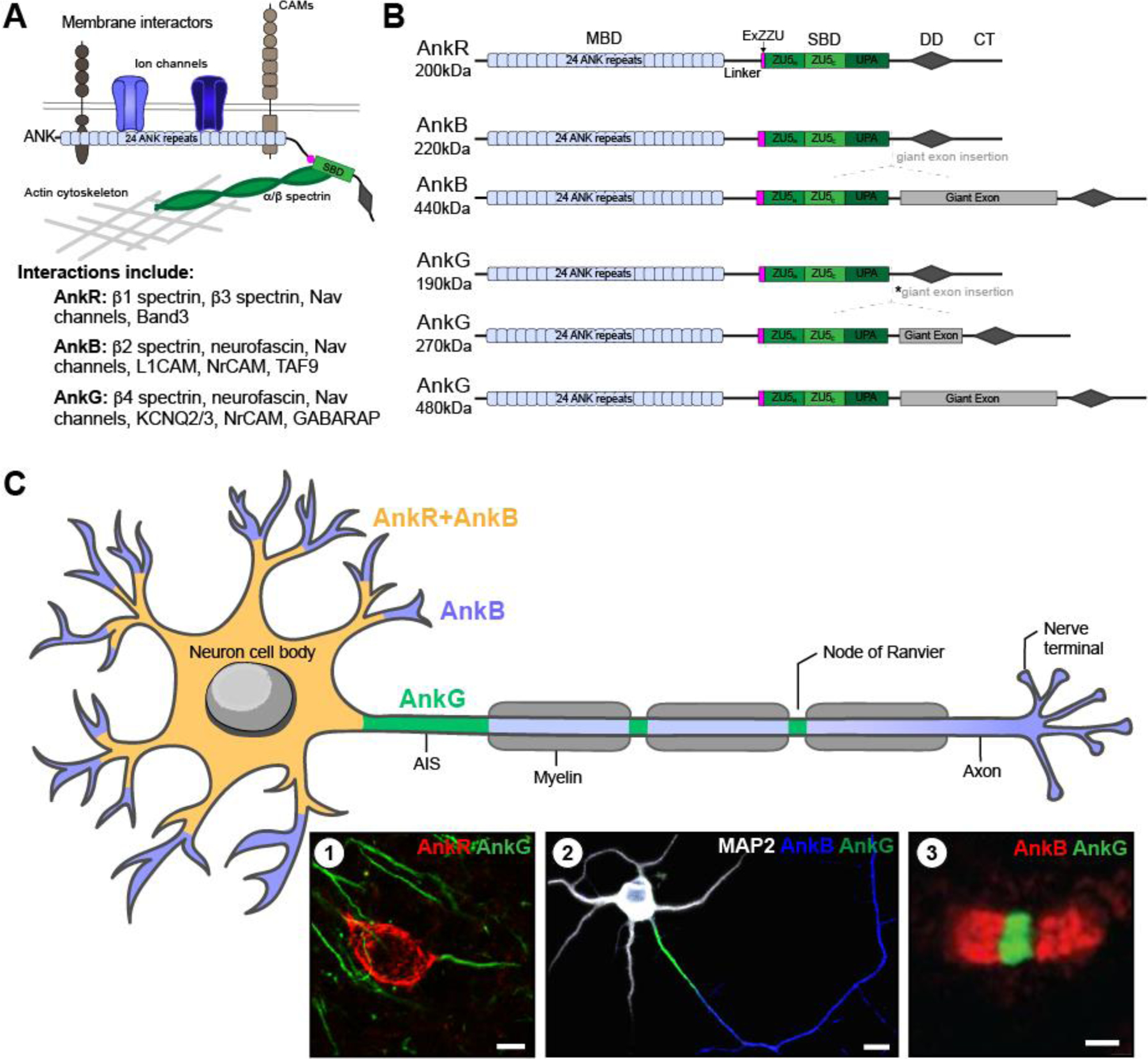
Ankyrins are scaffolding proteins widely expressed throughout the nervous system. Ankyrins recruit diverse membrane proteins, including ion channels and cell adhesion molecules, into specialized subcellular membrane domains. These domains are stabilized by ankyrins interacting with the spectrin cytoskeleton. Ankyrin genes are highly associated with a number of neurological disorders, including Alzheimer's disease, schizophrenia, autism spectrum disorders, and bipolar disorder. Here, we discuss ankyrin function and their role in neurological disease. We propose mutations in ankyrins contribute to disease through two primary mechanisms: 1) altered neuronal excitability by disrupting ion channel clustering at key excitable domains, and 2) altered neuronal connectivity via impaired stabilization of membrane proteins.
锚蛋白是一种广泛表达于神经系统的支架蛋白。锚蛋白将多种膜蛋白(包括离子通道和细胞黏附分子)募集到特化的亚细胞膜区域。这些区域通过锚蛋白与血影蛋白细胞骨架的相互作用而得到稳定。锚蛋白基因与许多神经疾病高度相关,包括阿尔茨海默病、精神分裂症、自闭症谱系障碍和双相情感障碍。本文讨论了锚蛋白的功能及其在神经疾病中的作用。我们提出,锚蛋白突变通过两种主要机制导致疾病:1)通过破坏关键可兴奋区域的离子通道聚集,改变神经元兴奋性;2)通过膜蛋白稳定性受损,改变神经元连接。