Shi Chengxin, Yue Fengli, Shi Feiyu, Qin Qian, Wang Lizhao, Wang Guanghui, Mu Lijun, Liu Dan, Li Yaguang, Yu Tianyu, She Junjun
Department of General Surgery, The First Affiliated Hospital of Xi'an Jiaotong University, Xi'an, Shaanxi 710061, People's Republic of China.
College of Basic Medical Sciences, Jilin University, Changchun 130021, People's Republic of China.
J Inflamm Res. 2021 Jan 14;14:85-95. doi: 10.2147/JIR.S288412. eCollection 2021.
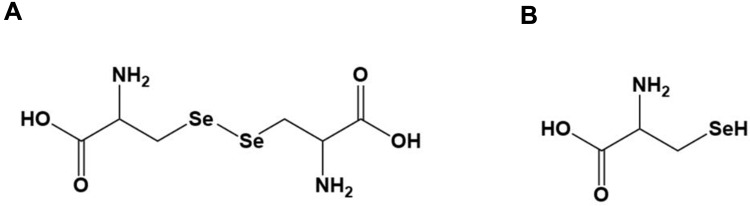
Inflammatory bowel disease (IBD) is characterized by chronic relapsing inflammation of the gastrointestinal tract. Oxidative stress plays a pivotal role in the pathogenesis of IBD. Selenium-containing amino acids reportedly have anti-oxidative and anti-inflammatory properties, but it remains unknown if selenium-containing amino acids can be used to treat IBD. This study aimed to investigate the effects of two selenium-containing amino acids - selenocysteine and selenocystine - on oxidative stress and chronic inflammation in a mouse model of dextran sulfate sodium (DSS)-induced IBD.
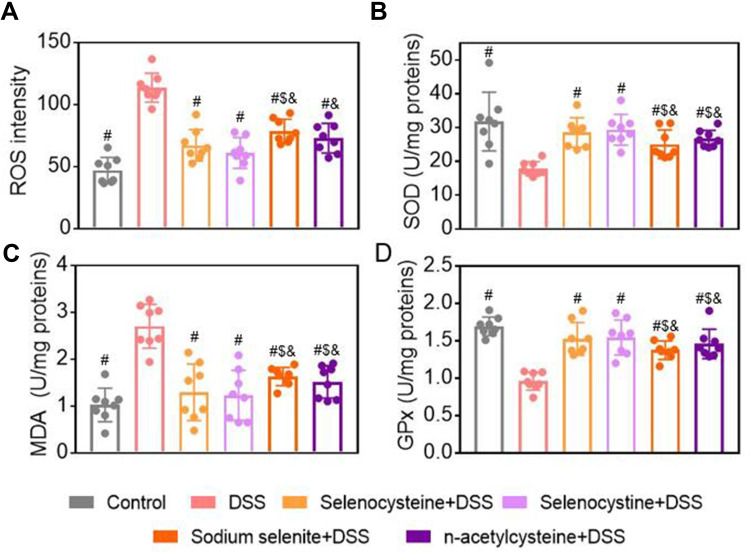
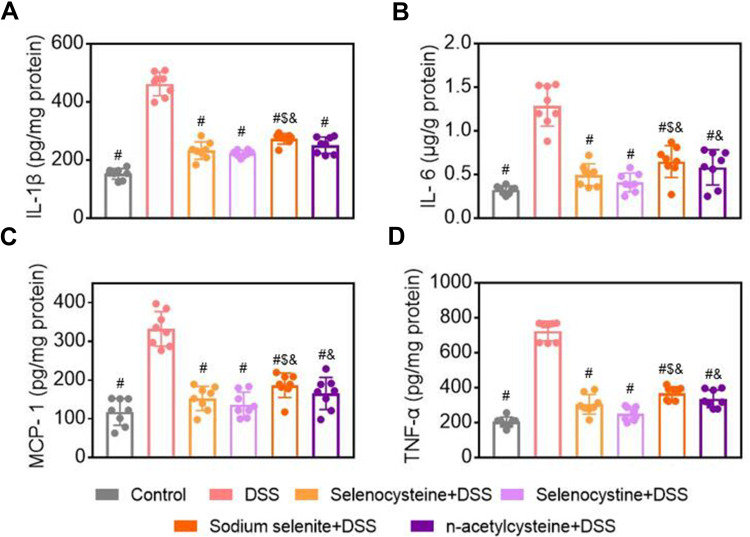
C57BL/6 mice were randomly assigned to the following six groups: control, DSS, DSS+selenocysteine, DSS+selenocystine, DSS+sodium selenite, and DSS+N-acetylcysteine (NAC). IBD was induced by 3% DSS. Pro-inflammatory cytokines [interleukin-1β (IL-1β), monocyte chemotactic protein 1 (MCP-1), IL-6, and tumor necrosis factor-α (TNF-α)] and markers for oxidative and anti-oxidative stress [malondialdehyde (MDA), reactive oxygen species (ROS), superoxide dismutase (SOD), and glutathione peroxidase (GPx)] were measured using immunohistochemical analysis.
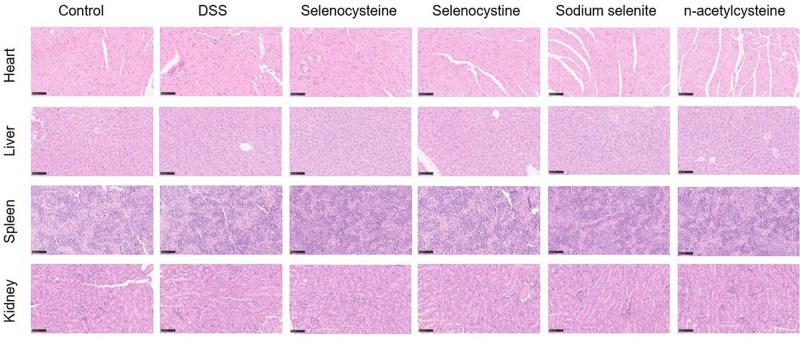
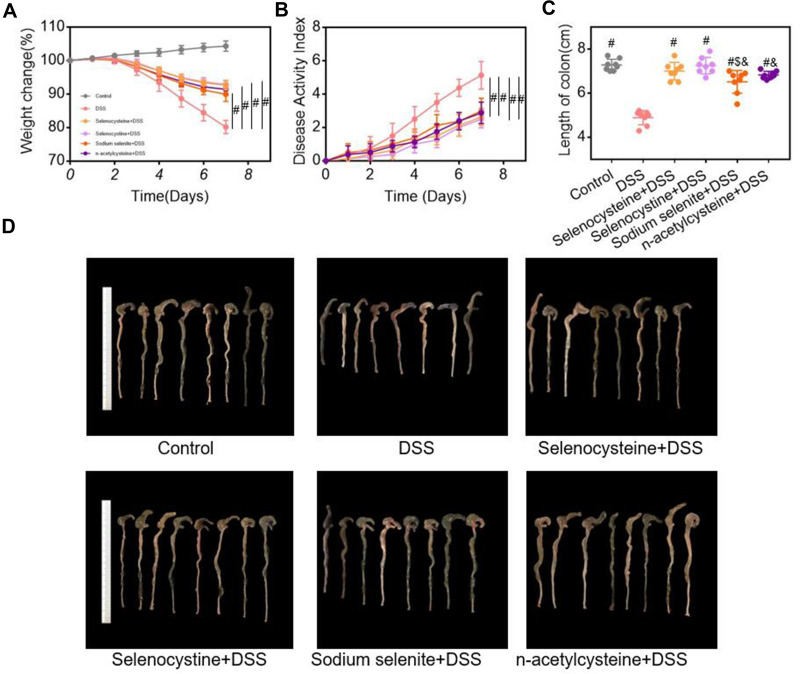
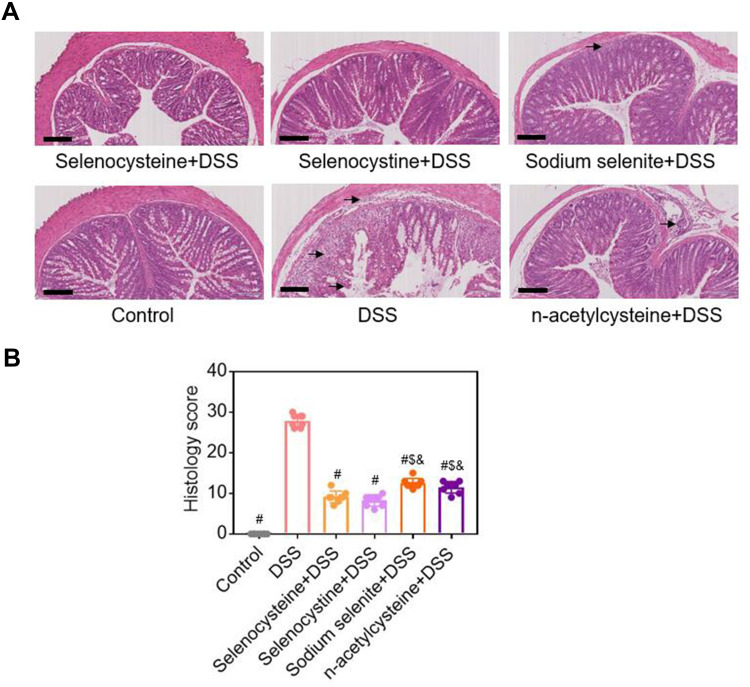
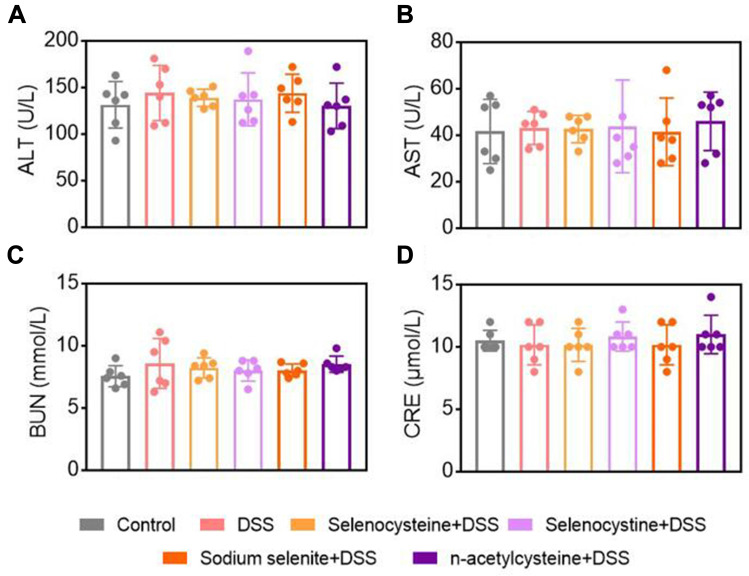
Selenocysteine and selenocystine significantly attenuated IBD-related symptoms, including preventing weight loss, decreasing disease activity index (DAI) scores, and increasing colon length. Selenocysteine and selenocystine significantly ameliorated the DSS-induced oxidative stress, as demonstrated by a reduction in ROS and MDA activity and an increase in SOD and GPx activity. IL-1, MCP-1, IL-6, and TNF-α levels were significantly increased in the IBD mice, while treatment with the selenium-containing amino acids significantly reduced the levels of these pro-inflammatory cytokines. In vivo safety analysis showed minimal side effects of the selenium-containing amino acids.
We found that selenocysteine and selenocystine ameliorated DSS-induced IBD via reducing oxidative stress and intestinal inflammation, indicating that selenium-containing amino acids could be a novel therapeutic option for patients with IBD.
炎症性肠病(IBD)的特征是胃肠道的慢性复发性炎症。氧化应激在IBD的发病机制中起关键作用。据报道,含硒氨基酸具有抗氧化和抗炎特性,但含硒氨基酸是否可用于治疗IBD仍不清楚。本研究旨在探讨两种含硒氨基酸——硒代半胱氨酸和硒代胱氨酸——对葡聚糖硫酸钠(DSS)诱导的IBD小鼠模型中氧化应激和慢性炎症的影响。
将C57BL/6小鼠随机分为以下六组:对照组、DSS组、DSS+硒代半胱氨酸组、DSS+硒代胱氨酸组、DSS+亚硒酸钠组和DSS+N-乙酰半胱氨酸(NAC)组。用3% DSS诱导IBD。使用免疫组织化学分析测量促炎细胞因子[白细胞介素-1β(IL-1β)、单核细胞趋化蛋白1(MCP-1)、IL-6和肿瘤坏死因子-α(TNF-α)]以及氧化和抗氧化应激标志物[丙二醛(MDA)、活性氧(ROS)、超氧化物歧化酶(SOD)和谷胱甘肽过氧化物酶(GPx)]。
硒代半胱氨酸和硒代胱氨酸显著减轻了IBD相关症状,包括防止体重减轻、降低疾病活动指数(DAI)评分和增加结肠长度。硒代半胱氨酸和硒代胱氨酸显著改善了DSS诱导的氧化应激,表现为ROS和MDA活性降低以及SOD和GPx活性增加。IBD小鼠中IL-1、MCP-1、IL-6和TNF-α水平显著升高,而用含硒氨基酸治疗显著降低了这些促炎细胞因子的水平。体内安全性分析表明含硒氨基酸的副作用最小。
我们发现硒代半胱氨酸和硒代胱氨酸通过降低氧化应激和肠道炎症改善了DSS诱导的IBD,表明含硒氨基酸可能是IBD患者的一种新的治疗选择。