Martinelli Natalia, Gil Sandrine, Belletier Clément, Chevalère Johann, Dezecache Guillaume, Huguet Pascal, Droit-Volet Sylvie
Université Clermont Auvergne, CNRS, LAPSCO, F-63000 Clermont-Ferrand, France.
Université de Poitiers et CNRS, UMR7295 Centre de Recherches sur la Cognition et l'Apprentissage, Poitiers, France.
Front Psychol. 2021 Jan 6;11:616169. doi: 10.3389/fpsyg.2020.616169. eCollection 2020.
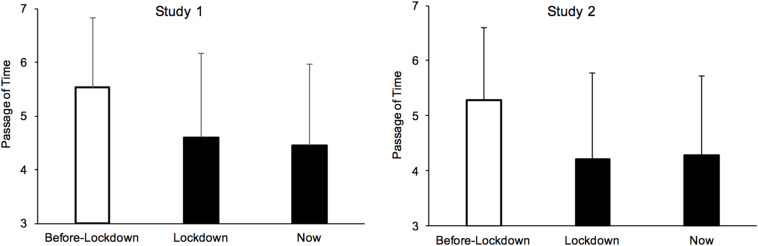
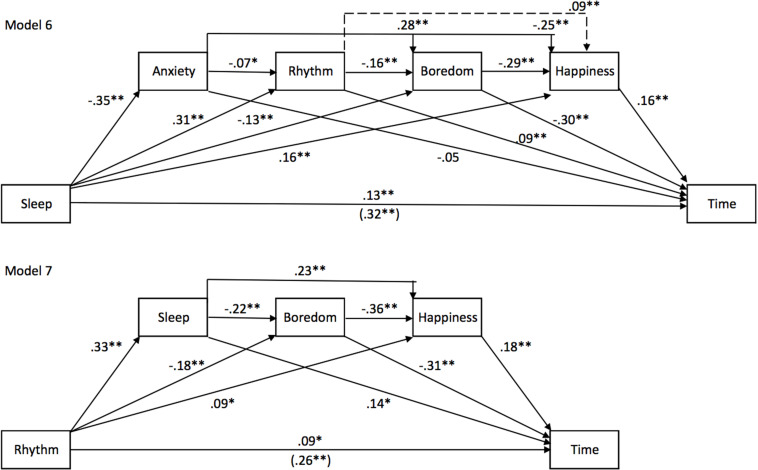
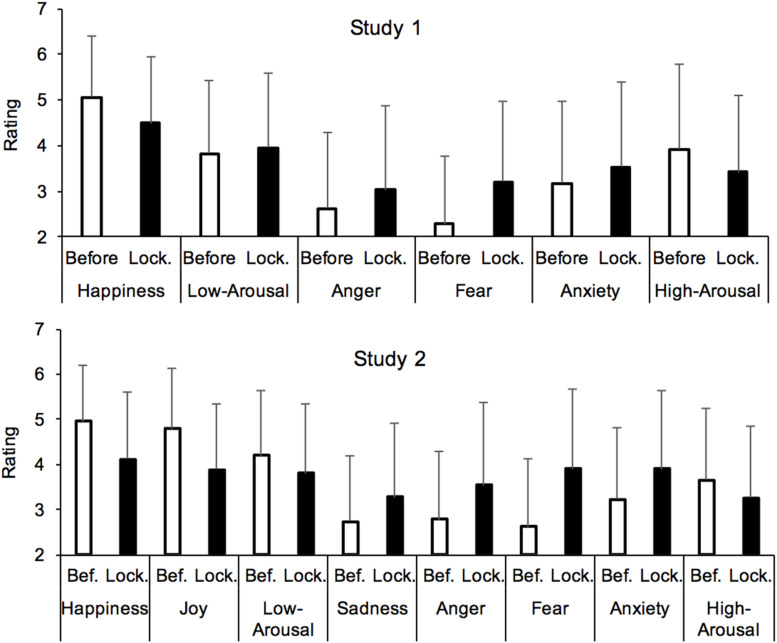
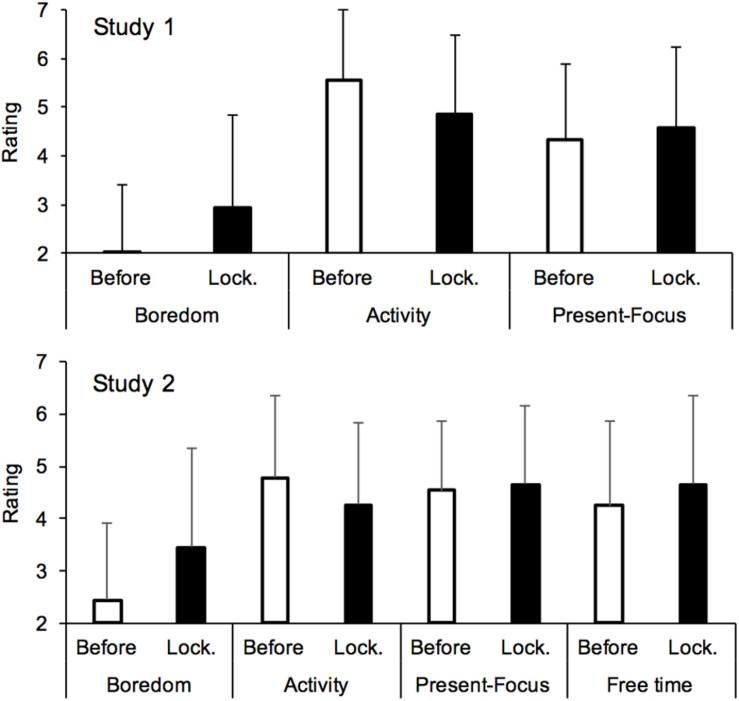
To fight against the spread of the coronavirus disease, more than 3 billion people in the world have been confined indoors. Although lockdown is an efficient solution, it has had various psychological consequences that have not yet been fully measured. During the lockdown period in France (April 2020), we conducted two surveys on two large panels of participants to examine how the lockdown disrupted their relationship with time and what this change in their experiences of time means. Numerous questions were asked about the experience of time but also the nature of life during the lockdown: the emotions felt, boredom, the activities performed, sleep quality, and the daily rhythm. The participants also completed a series of self-reported scales used to assess depression, anxiety, and impulsivity. The results showed that time seemed to pass more slowly during the lockdown compared to before. This feeling of a slowing down of time has little to do with living conditions during the lockdown and individual psychological characteristics. The main predictor of this time experience was boredom and partly mediated by the lack of activity. The feeling of being less happy and the presence of sleep disturbance also explained this specific experience of time albeit to a lesser extent.
为抗击新冠病毒疾病的传播,全球超过30亿人被限制居家。尽管封锁是一种有效的解决办法,但它产生了各种尚未得到充分衡量的心理影响。在法国的封锁期间(2020年4月),我们对两组大型参与者进行了两项调查,以研究封锁如何扰乱了他们与时间的关系,以及这种时间体验的变化意味着什么。我们询问了许多关于时间体验的问题,还有封锁期间的生活本质:所感受到的情绪、无聊感、进行的活动、睡眠质量和日常节奏。参与者还完成了一系列用于评估抑郁、焦虑和冲动性的自我报告量表。结果显示,与封锁前相比,封锁期间时间似乎过得更慢。这种时间变慢的感觉与封锁期间的生活条件和个体心理特征关系不大。这种时间体验的主要预测因素是无聊感,且部分由缺乏活动介导。幸福感降低的感觉和睡眠障碍的存在也解释了这种特殊的时间体验,尽管程度较小。