PCI Biotech AS, Oslo, Norway.
ZellNet Consulting, Inc., Fort Lee, NJ, United States.
Front Immunol. 2021 Jan 8;11:576756. doi: 10.3389/fimmu.2020.576756. eCollection 2020.
Photochemical internalization (PCI) is a technology for inducing release of endocytosed antigens into the cell cytosol a light-induced process. Preclinical experiments have shown that PCI improves MHC class I antigen presentation, resulting in strongly enhanced CD8+ T-cell responses to polypeptide antigens. In PCI vaccination a mixture of the photosensitizing compound fimaporfin, vaccine antigens, and an adjuvant is administered intradermally followed by illumination of the vaccination site. This work describes an open label, phase I study in healthy volunteers, to assess the safety, tolerability, and immune response to PCI vaccination in combination with the adjuvant poly-ICLC (Hiltonol) (ClinicalTrials.gov Identifier: NCT02947854).
The primary objective of the study was to assess the safety and local tolerance of PCI mediated vaccination, and to identify a safe fimaporfin dose for later clinical studies. A secondary objective was to analyze the immunological responses to the vaccination. Each subject received 3 doses of HPV16 E7 peptide antigens and two doses of Keyhole Limpet Hemocyanin (KLH) protein. A control group received Hiltonol and vaccine antigens only, whereas the PCI groups in addition received fimaporfin + light. Local and systemic adverse effects were assessed by standard criteria, and cellular and humoral immune responses were analyzed by ELISpot, flow cytometry, and ELISA assays.
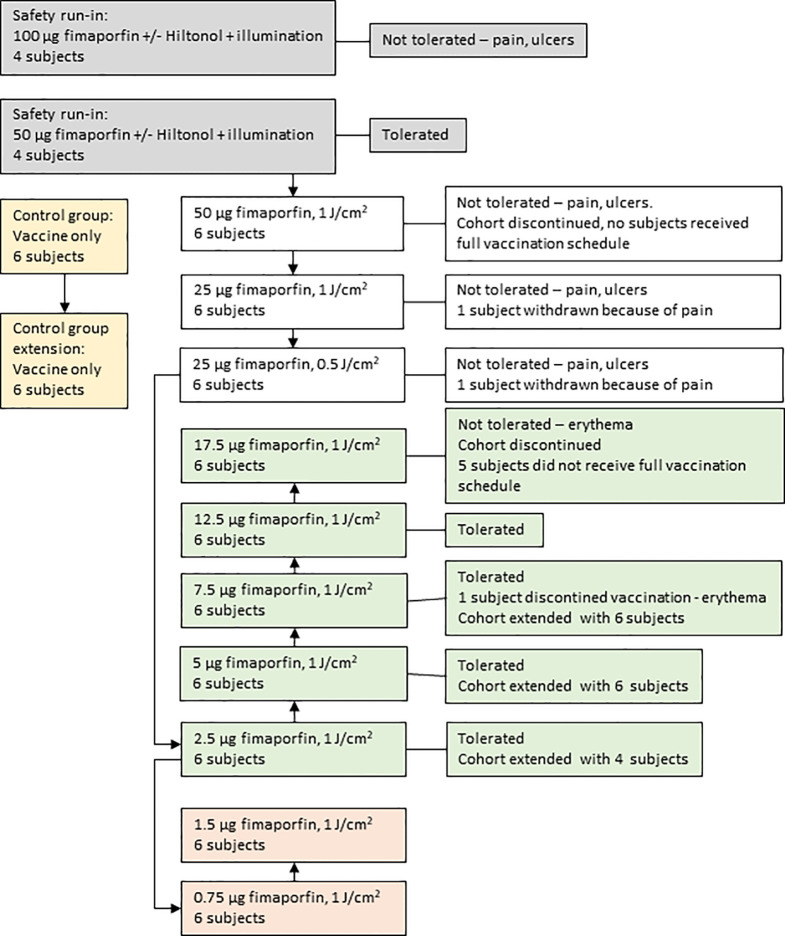
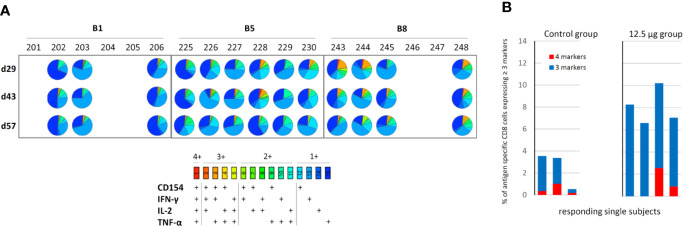
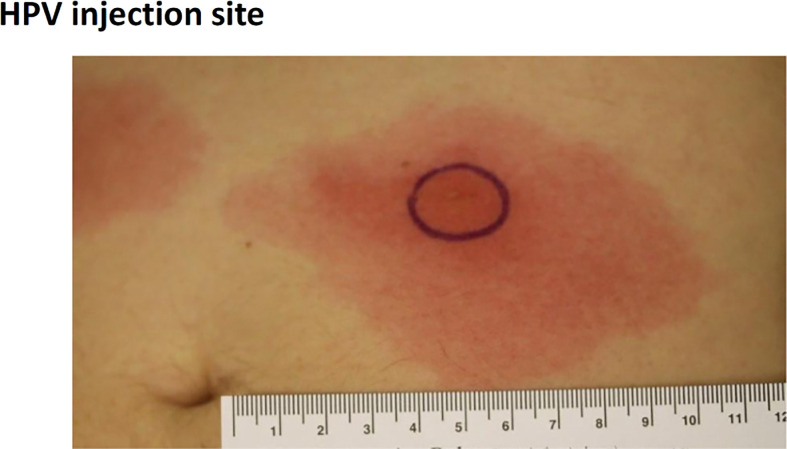
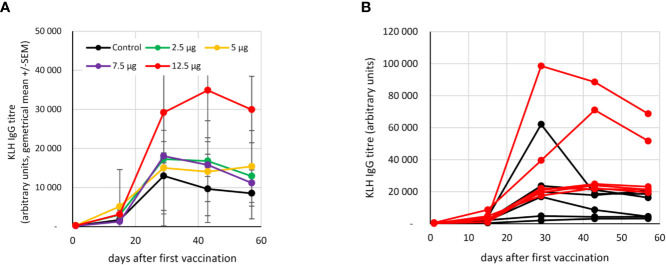
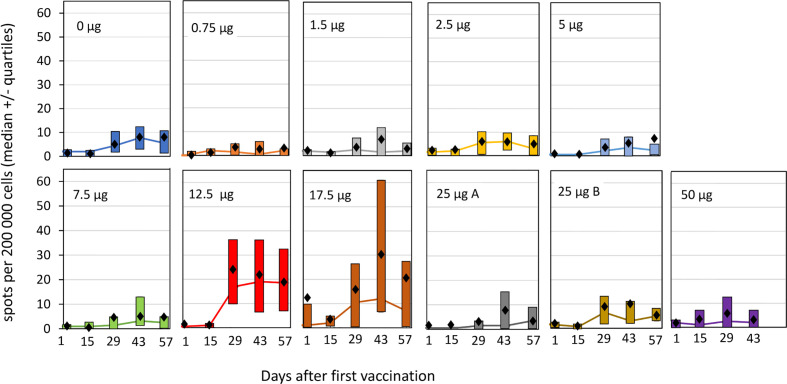
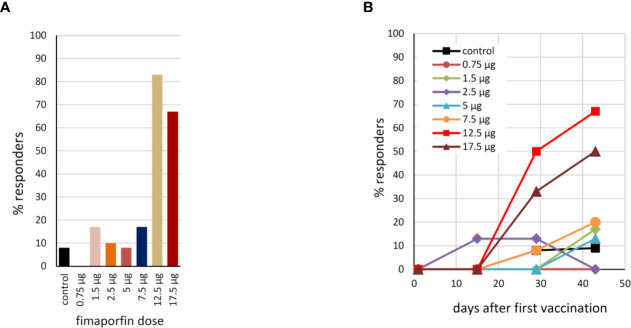
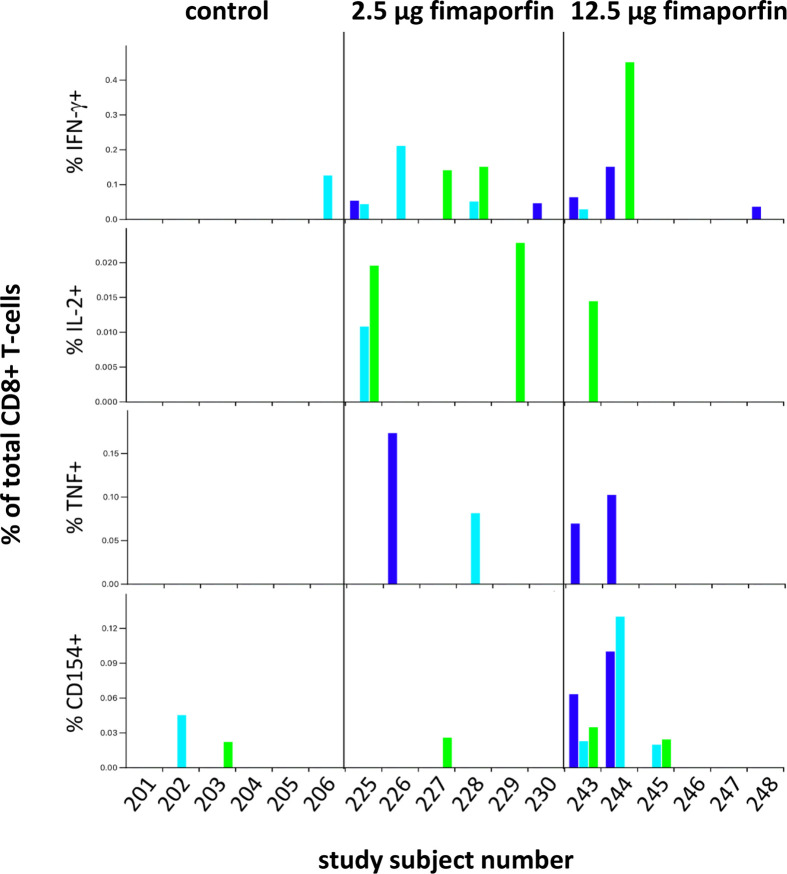
96 healthy volunteers were vaccinated with fimaporfin doses of 0.75-50 µg. Doses below 17.5 µg were safe and tolerable, higher doses exhibited local tolerability issues in some study subjects, mainly erythema, and pain during illumination. There were few, and only mild and expected systemic adverse events. The employment of PCI increased the number of subjects exhibiting a T-cell response to the HPV peptide vaccine about 10-fold over what was achieved with the antigen/Hiltonol combination without PCI. Moreover, the use of PCI seemed to result in a more consistent and multifunctional CD8+ T-cell response. An enhancement of the humoral immune response to KLH vaccination was also observed.
Using PCI in combination with Hiltonol for intradermal vaccination is safe at fimaporfin doses below 17.5 µg, and gives encouraging immune responses to peptide and protein based vaccination.
光化学内化(PCI)是一种将内吞的抗原释放到细胞胞质溶胶中的技术,这是一个光诱导的过程。临床前实验表明,PCI 可改善 MHC Ⅰ类抗原呈递,从而强烈增强多肽抗原的 CD8+T 细胞反应。在 PCI 疫苗接种中,将光敏化合物 fimaporfin、疫苗抗原和佐剂混合后皮内给药,然后对疫苗接种部位进行光照。这项工作描述了一项开放标签、I 期研究,在健康志愿者中评估 PCI 疫苗接种联合佐剂 poly-ICLC(Hiltonol)的安全性、耐受性和免疫应答(ClinicalTrials.gov 标识符:NCT02947854)。
该研究的主要目的是评估 PCI 介导的疫苗接种的安全性和局部耐受性,并确定用于后续临床研究的安全 fimaporfin 剂量。次要目的是分析疫苗接种的免疫反应。每位受试者接受 3 次 HPV16 E7 肽抗原和 2 次血蓝蛋白(KLH)蛋白的剂量。对照组仅接受 Hiltonol 和疫苗抗原,而 PCI 组除了接受 fimaporfin+光照外。通过标准标准评估局部和全身不良反应,并通过 ELISpot、流式细胞术和 ELISA 分析细胞和体液免疫反应。
96 名健康志愿者接受了 0.75-50μg 的 fimaporfin 剂量接种。低于 17.5μg 的剂量是安全且耐受的,较高的剂量在一些研究对象中显示出局部耐受性问题,主要是红斑和光照时疼痛。只有少数且仅为轻度和预期的全身不良反应。与抗原/Hiltonol 联合使用 PCI 相比,使用 PCI 可使 HPV 肽疫苗的 T 细胞反应的受试者数量增加约 10 倍。此外,使用 PCI 似乎会导致更一致和多功能的 CD8+T 细胞反应。还观察到 KLH 疫苗接种的体液免疫反应增强。
在低于 17.5μg 的 fimaporfin 剂量下,将 PCI 与 Hiltonol 联合用于皮内疫苗接种是安全的,并对肽和蛋白疫苗接种产生令人鼓舞的免疫反应。