De Santis Giorgio, Pinelli Massimo, Starnoni Marta
Department of Medical and Surgical Sciences, Division of Plastic Surgery, University of Modena and Reggio Emilia, Policlinico of Modena, Largo Pozzo 71, 41124, Modena, Italy.
Ann Med Surg (Lond). 2021 Jan 5;62:37-42. doi: 10.1016/j.amsu.2020.12.049. eCollection 2021 Feb.
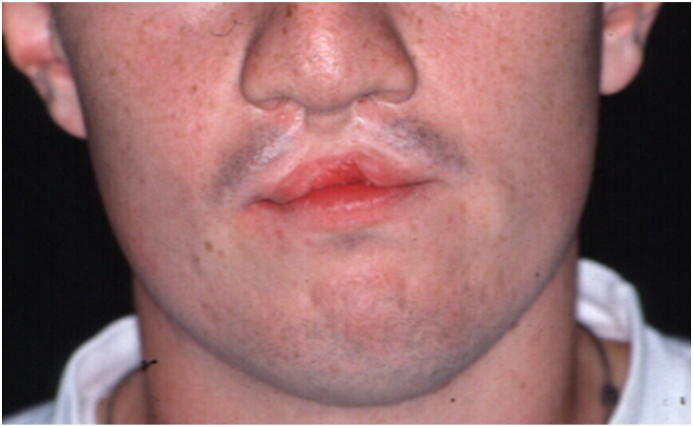
Since the introduction of fibula flap as a reconstructive technique, an evolution of indications has been observed. Our first report of a traumatic mandibular reconstruction using fibula flap was in 1992. The vast majority of indications for surgery, are: malignant tumors, benign neoplasms, osteoradionecrosis and traumas. Nevertheless, extended indications have been described such as the treatment of dentoalveolar defect without bone discontinuity or reconstruction of maxilla defect up to type III (A and B), according to Cordeiro's classification. Unusual indications include cleft palate malformations with bone discontinuity less than 6 cm. Moreover, a particular attention should be focus on fibula flap harvest with more innovative technologies than traditional use of monopolar or bipolar and their advantages in pre and postoperative management.
自从腓骨瓣作为一种重建技术被引入以来,其适应证一直在演变。我们首次报道使用腓骨瓣进行创伤性下颌骨重建是在1992年。手术的绝大多数适应证包括:恶性肿瘤、良性肿瘤、放射性骨坏死和创伤。然而,也有一些扩展的适应证被描述,例如根据科代罗分类法治疗无骨连续性中断的牙槽骨缺损或重建高达III型(A和B)的上颌骨缺损。不寻常的适应证包括骨连续性中断小于6厘米的腭裂畸形。此外,应特别关注采用比传统单极或双极使用更具创新性的技术获取腓骨瓣及其在术前和术后管理中的优势。