Banik Rajon, Rahman Mahmudur, Sikder Md Tajuddin, Rahman Quazi Maksudur, Pranta Mamun Ur Rashid
Department of Public Health and Informatics, Jahangirnagar University, Savar, Dhaka, 1342 Bangladesh.
Z Gesundh Wiss. 2023;31(1):9-19. doi: 10.1007/s10389-020-01432-7. Epub 2021 Jan 16.
This study aimed to assess knowledge, attitudes, and practices (KAP) toward COVID-19 among youth in Bangladesh.
A cross-sectional survey was conducted from 5 May to 25 May 2020. People aged between 18 and 35 years were approached via social media to complete an online questionnaire that consisted of socio-demographic information and KAP toward COVID-19. Descriptive statistics, t-tests, one-way analysis of variance (ANOVA), and logistic regression analyses were conducted.
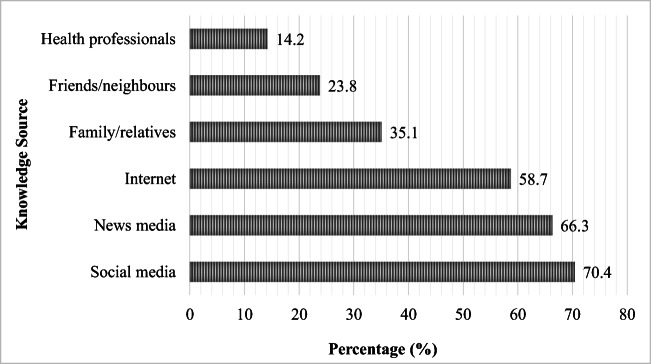
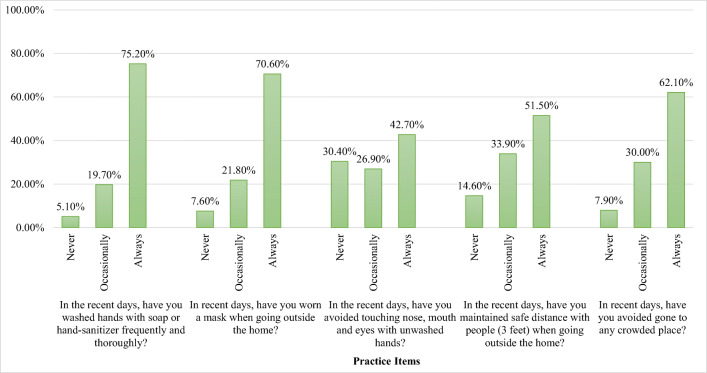
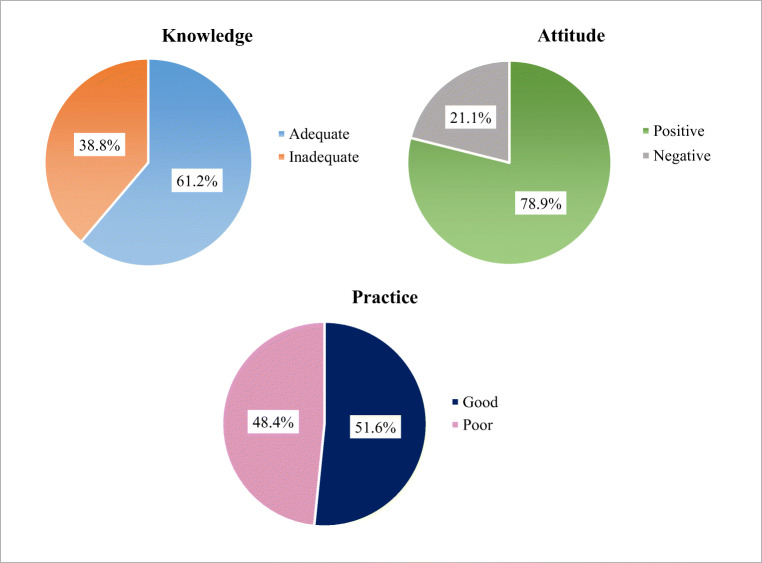
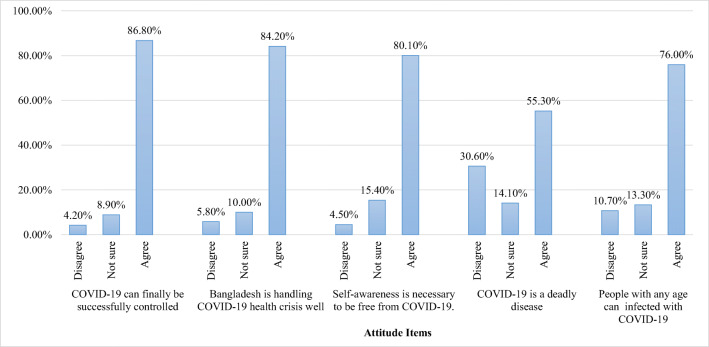
Out of 707 survey participants, 57.1% were male, the majority were students (60.3%), aged 24-29 years (61.5%), having a bachelor's degree (57%), having family income 25,000-50,000 BDT (40.5%) and living in urban areas (64.4%). Participants gathered information on COVID-19 mostly through social media (70.4%). Overall, 61.2% had adequate knowledge with 78.9% having a positive attitudes toward COVID-19 and only 51.6% had good practices. Most (86.8%) of the participants were confident that COVID-19 will be successfully controlled and Bangladesh was handling the COVID-19 health crisis well (84.2%). Only 75.2% of participants always washed their hands with soap or hand-sanitizer, and 70.6% wore a mask when going outside the home. Factors associated with adequate knowledge were being female, having a master's degree and above, and living in an urban area ( < 0.05). Participants having adequate knowledge of COVID-19 had higher likelihood of positive attitudes (OR: 6.41, 95% CI = 2.34-25.56, < 0.001) and good practices (OR: 8.93, 95% CI = 3.92-38.42, < 0.001).
The findings highlight the need for tailored education programs for COVID-19 which incorporates consideration of associated factors to improve the level of public knowledge, attitudes, and practices.
本研究旨在评估孟加拉国青年对2019冠状病毒病(COVID-19)的知识、态度和行为。
于2020年5月5日至5月25日进行了一项横断面调查。通过社交媒体联系年龄在18至35岁之间的人群,以完成一份在线问卷,该问卷包括社会人口统计学信息以及对COVID-19的知识、态度和行为。进行了描述性统计、t检验、单因素方差分析(ANOVA)和逻辑回归分析。
在707名调查参与者中,57.1%为男性,大多数为学生(60.3%),年龄在24 - 29岁之间(61.5%),拥有学士学位(57%),家庭收入为25,000 - 50,000孟加拉塔卡(40.5%),居住在城市地区(64.4%)。参与者大多通过社交媒体(70.4%)获取有关COVID-19的信息。总体而言,61.2%的人有足够的知识,78.9%的人对COVID-19持积极态度,只有51.6%的人有良好的行为。大多数(86.8%)参与者相信COVID-19将得到成功控制,并且孟加拉国在应对COVID-19健康危机方面做得很好(84.2%)。只有75.2%的参与者总是用肥皂或洗手液洗手,70.6%的人出门时会戴口罩。与足够知识相关的因素为女性、拥有硕士及以上学位以及居住在城市地区(<0.05)。对COVID-19有足够知识的参与者持积极态度的可能性更高(比值比:6.41,95%置信区间=2.34 - 25.56,<0.001),且有良好行为的可能性更高(比值比:8.93,95%置信区间=3.92 - 38.42,<0.001)。
研究结果凸显了针对COVID-19制定量身定制的教育项目的必要性,该项目应考虑相关因素以提高公众的知识、态度和行为水平。