Khalvandi Masoumeh, Siosemardeh Adel, Roohi Ebrahim, Keramati Sara
Department of Agronomy, Faculty of Agriculture, Shahrood University of Technology, Iran.
Department of Agronomy and Plant Breeding, Faculty of Agriculture, University of Kurdistan, Iran.
Heliyon. 2021 Jan 7;7(1):e05908. doi: 10.1016/j.heliyon.2021.e05908. eCollection 2021 Jan.
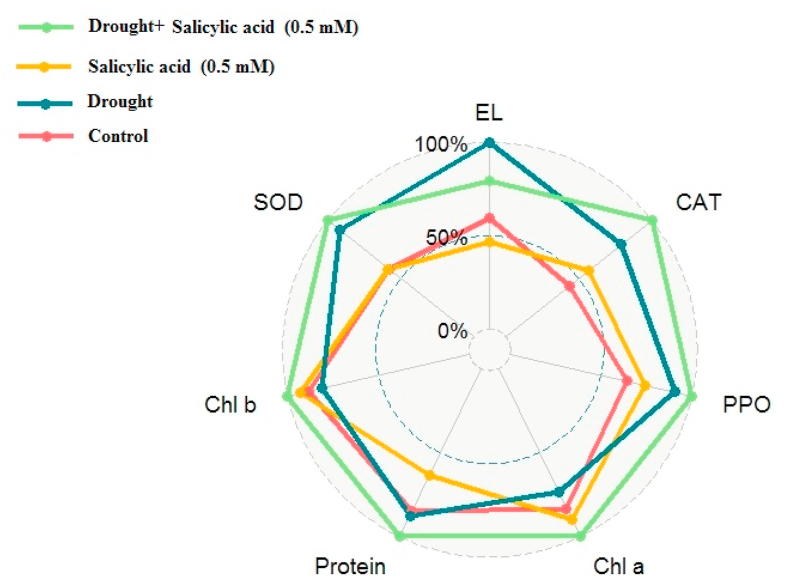
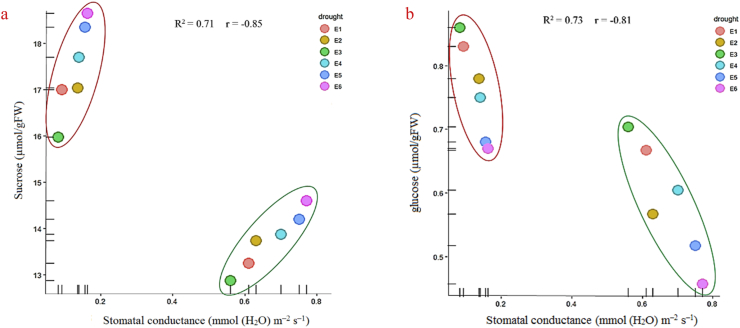
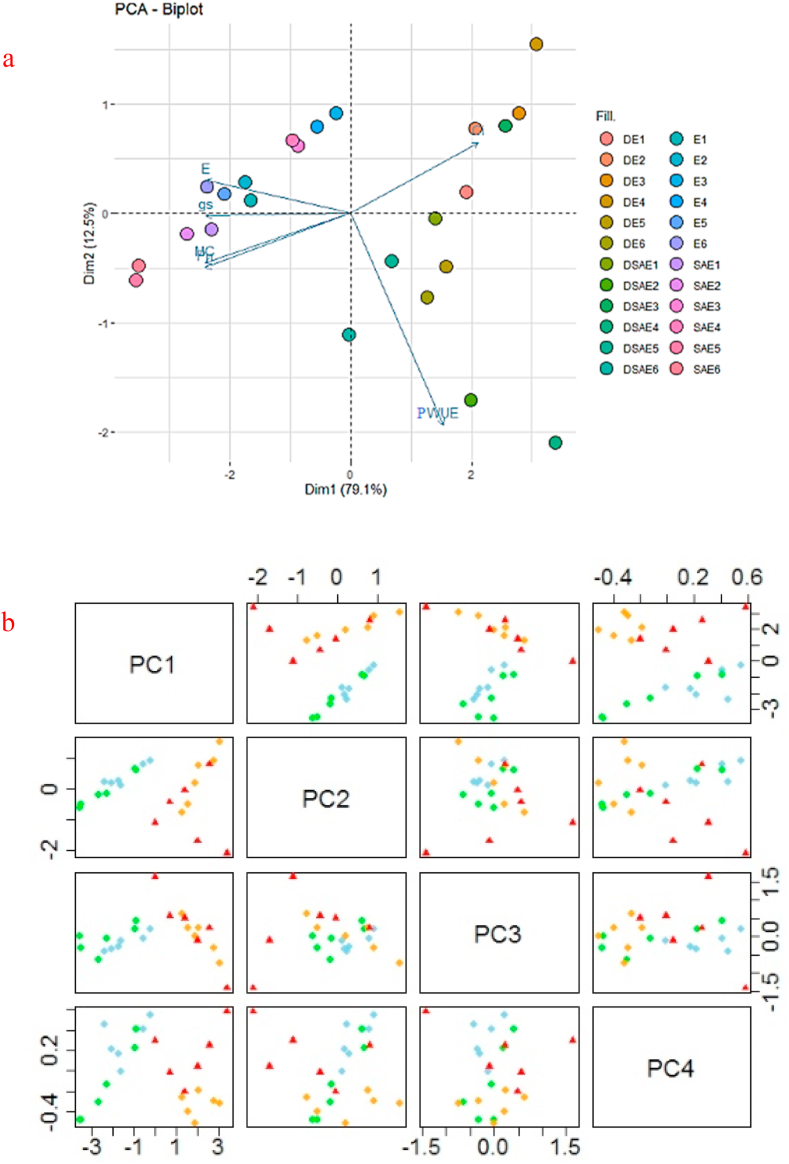
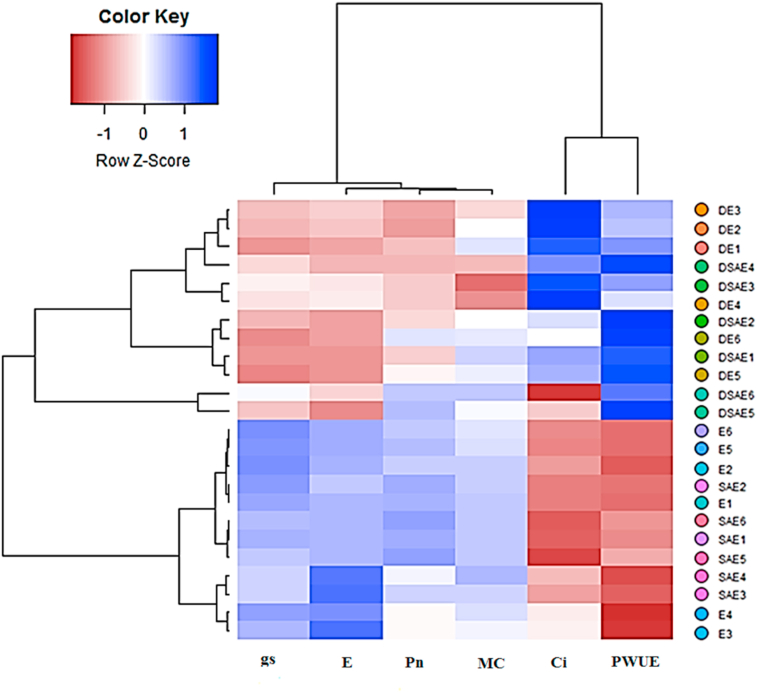
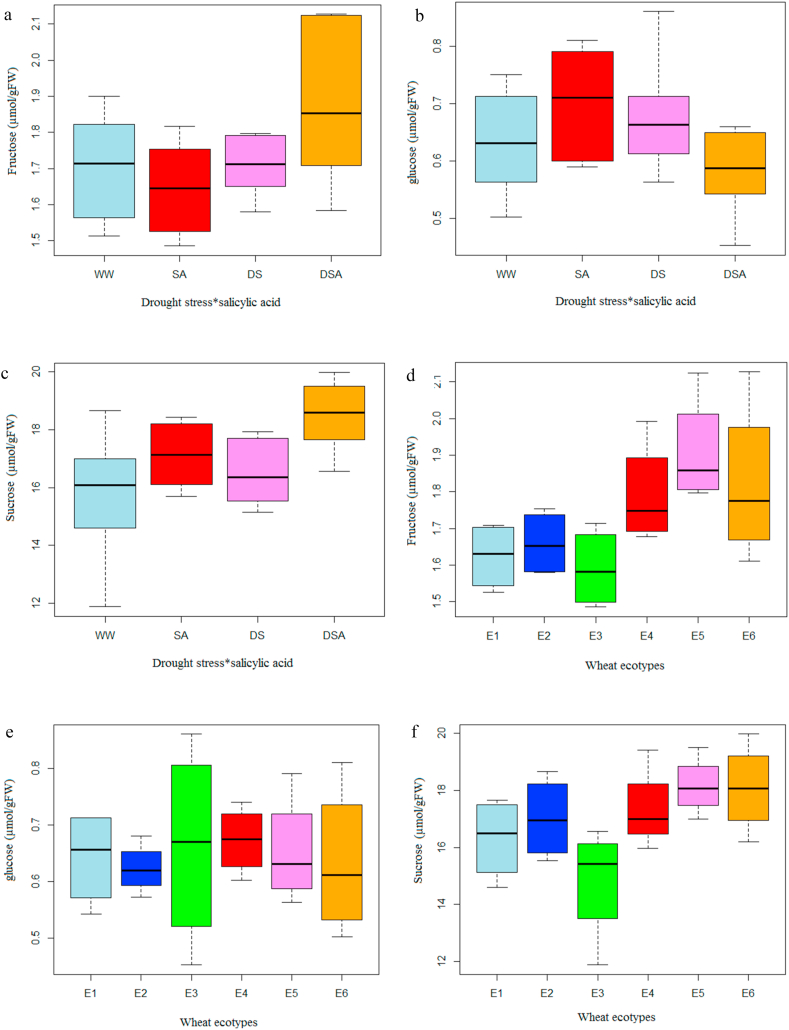
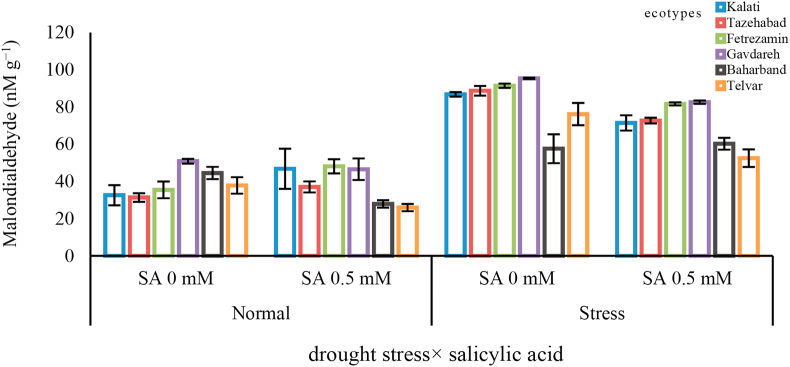
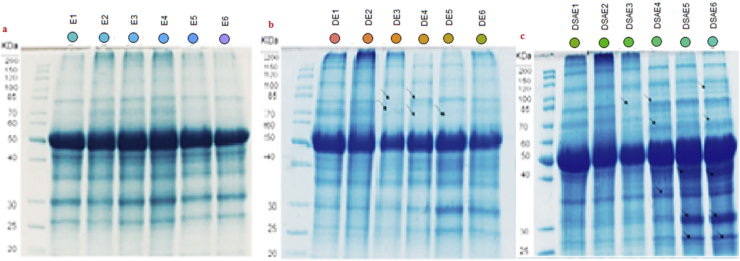
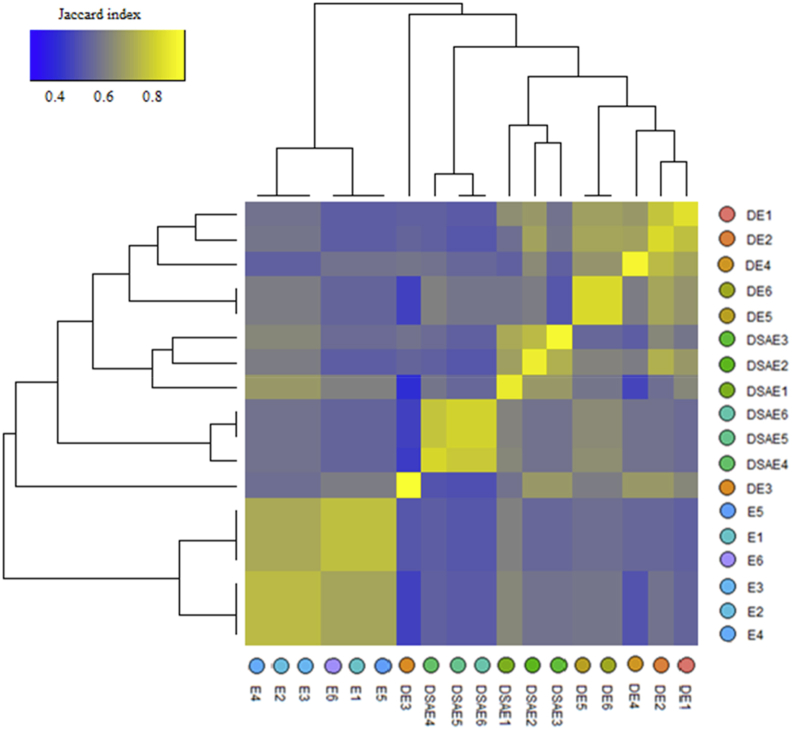
Salicylic acid (SA) is a promising compound to increase plant tolerance to drought stress, and it can affect many aspects of physiological and biochemical processes. This study was focused on the changes in proteins, photosynthesis, and antioxidant system of Sardari wheat ecotypes leave in response to the application of SA under drought stress conditions. Treatments included Sardari wheat ecotypes (Baharband, Kalati, Fetrezamin, Gavdareh, Telvar, and Tazehabad), salicylic acid at 0.5 mM (controls were untreated), and drought stress (30% of the field capacity). The results showed that membrane electrolyte leakage, and lipid peroxidation of all six ecotypes, were obviously increased under drought stress conditions. On the other hand, drought stress decreased leaf chlorophyll content, photosynthetic rate, stomatal conductance, carboxylation efficiency, and transpiration rate. The results of SDS-PAGE indicated that the abundance of some protein spots was downregulated when the plants were exposed to drought stress, while other protein spots' abundance was upregulated in such a situation. Under stress conditions, the highest antioxidant enzymatic activity, photosynthetic performance, cell membrane stability, and numbers of protein bands were observed in Baharband and Telvar, while the lowest was related to Fetrezamin. Salicylic acid treatments effectively ameliorated the negative effects of drought stress on Sardari ecotypes through improving the photosynthetic performance, keeping membrane permeability, induction of stress proteins, and enhancing the activity of antioxidant enzymes. The above findings suggest that ecotype ability to maintain photosynthetic performance was important to cope with drought stress.
水杨酸(SA)是一种有望提高植物耐旱性的化合物,它可以影响生理和生化过程的许多方面。本研究聚焦于干旱胁迫条件下,施用SA后萨达里小麦生态型叶片中蛋白质、光合作用和抗氧化系统的变化。处理包括萨达里小麦生态型(巴赫班德、卡拉蒂、费特雷扎明、加夫达雷、特尔瓦尔和塔泽哈巴德)、0.5 mM的水杨酸(对照为未处理)以及干旱胁迫(田间持水量的30%)。结果表明,在干旱胁迫条件下,所有六种生态型的膜电解质渗漏和脂质过氧化均明显增加。另一方面,干旱胁迫降低了叶片叶绿素含量、光合速率、气孔导度、羧化效率和蒸腾速率。SDS-PAGE结果表明,当植物受到干旱胁迫时,一些蛋白质斑点的丰度下调,而在这种情况下其他蛋白质斑点的丰度上调。在胁迫条件下,巴赫班德和特尔瓦尔的抗氧化酶活性、光合性能、细胞膜稳定性和蛋白带数量最高,而费特雷扎明最低。水杨酸处理通过改善光合性能、保持膜通透性、诱导胁迫蛋白和提高抗氧化酶活性,有效减轻了干旱胁迫对萨达里生态型的负面影响。上述研究结果表明,生态型维持光合性能的能力对于应对干旱胁迫至关重要。