Wabitsch Simon, McVey John C, Ma Chi, Ruf Benjamin, Kamenyeva Olena, McCallen Justin D, Diggs Laurence P, Heinrich Bernd, Greten Tim F
Gastrointestinal Malignancy Section, Thoracic and GI Malignancies Branch, Center for Cancer Research, National Cancer Institute, National Institutes of Health, 9000 Rockville Pike, 10/3B43, Bethesda, MD 20892, USA.
Cleveland Clinic Lerner College of Medicine at Case Western Reserve University, Cleveland, OH, USA.
iScience. 2020 Dec 26;24(1):101990. doi: 10.1016/j.isci.2020.101990. eCollection 2021 Jan 22.
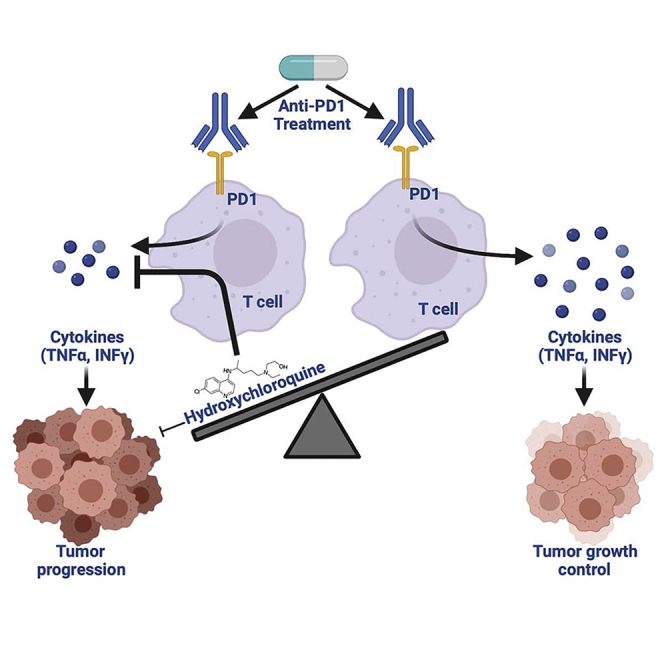
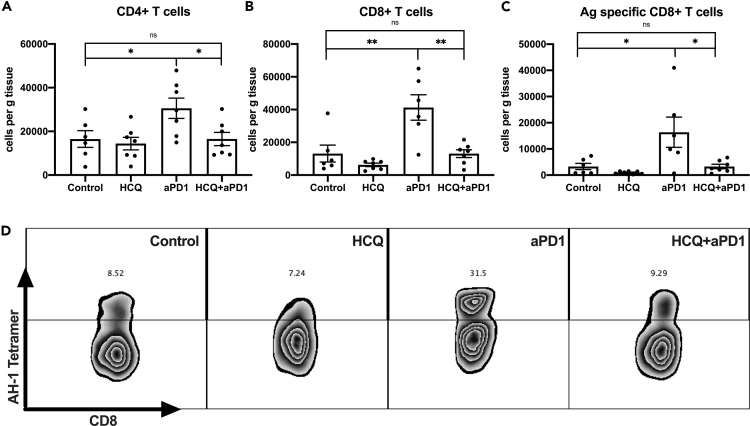
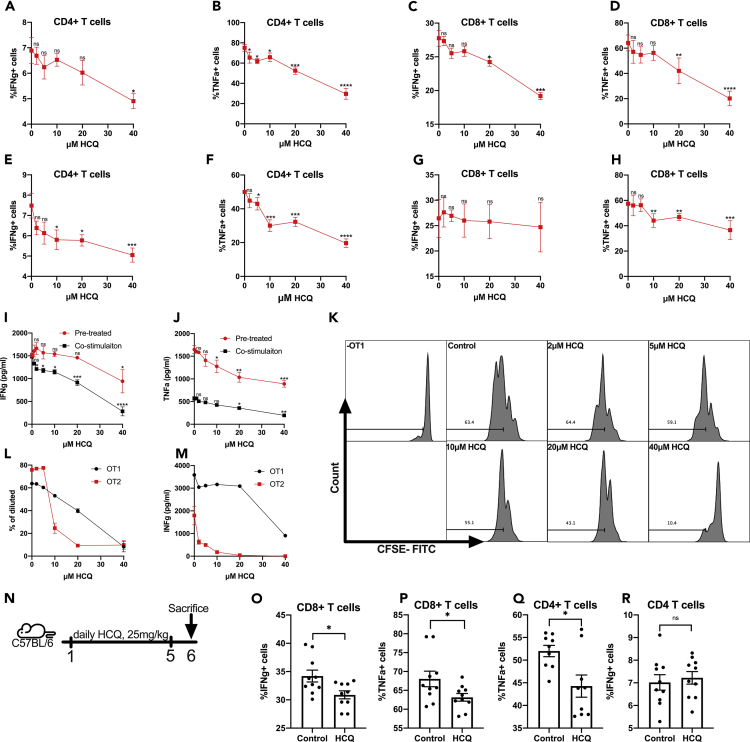
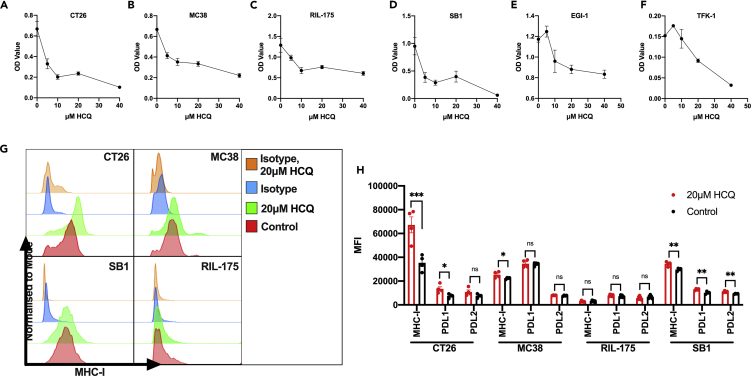
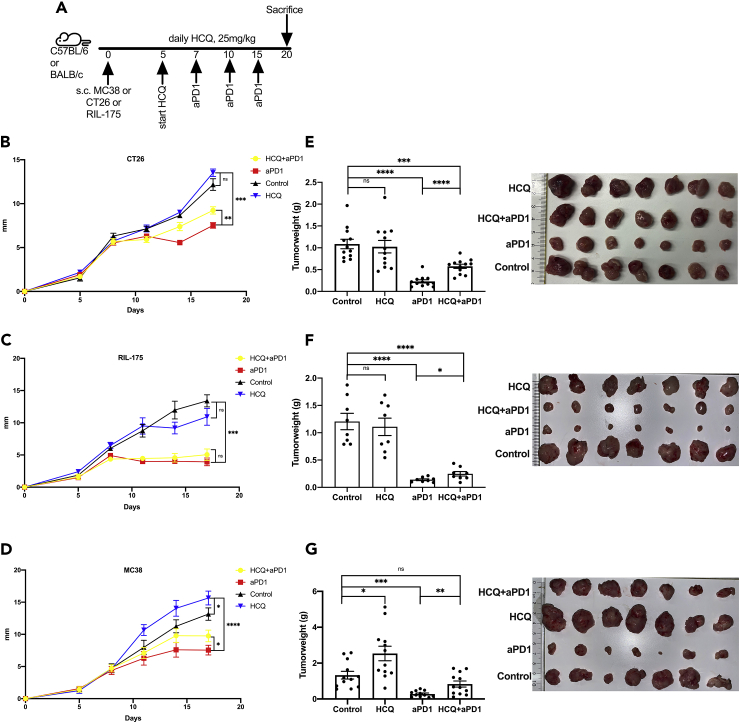
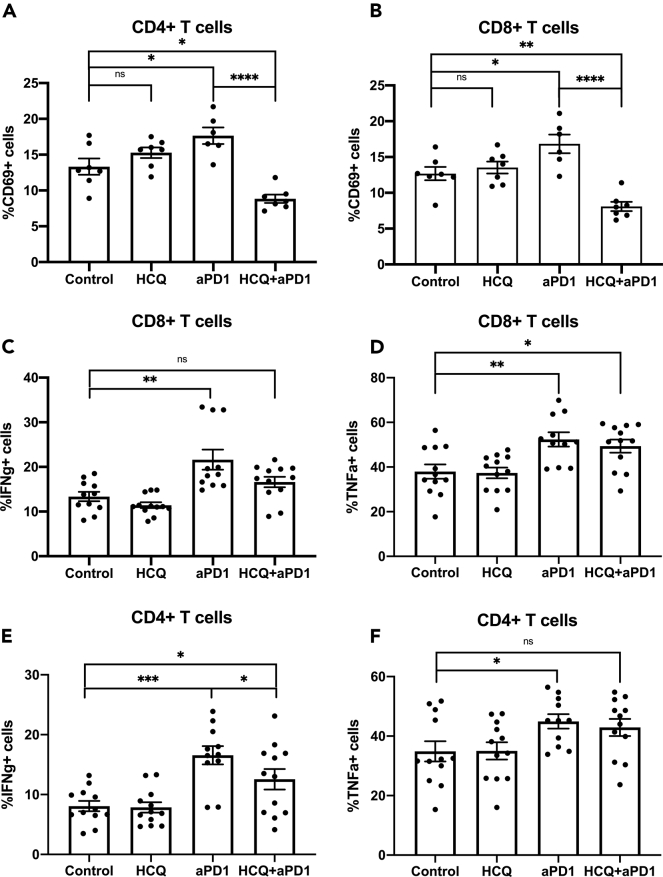
Hydroxychloroquine (HCQ) is a well-known anti-inflammatory drug but is also known as an anti-inflammatory drug. Here, we evaluate the influence of HCQ treatment on the effect of anti-PD1 tumor immunotherapy. Anti-PD1 therapy-sensitive tumor lines MC38, CT26, and RIL-175 were used to investigate the impact of HCQ on anti-PD1 therapy efficacy. assays demonstrated that HCQ directly inhibited tumor cell growth in all the tested tumor cell lines. HCQ treatment impaired both antigen-specific and nonspecific T-cell production of TNFα and IFNγ and . Importantly, in all the three tumor models, HCQ treatment significantly impaired the response to anti-PD1 treatment, accompanying diminished T-cell activation and reduced tumor-infiltrating, antigen-specific CD8 T cells. This study shows that HCQ treatment can result in immunotherapy failure due to its immunosuppressive effects that offset both increased MHC-I expression by tumor cell and direct cytotoxicity.
羟氯喹(HCQ)是一种知名的抗炎药物,但也被认为是一种抗疟药物。在此,我们评估了HCQ治疗对抗PD1肿瘤免疫疗法效果的影响。使用对抗PD1疗法敏感的肿瘤细胞系MC38、CT26和RIL-175来研究HCQ对抗PD1疗法疗效的影响。实验表明,HCQ在所有测试的肿瘤细胞系中均直接抑制肿瘤细胞生长。HCQ治疗损害了抗原特异性和非特异性T细胞产生TNFα和IFNγ的能力。重要的是,在所有三种肿瘤模型中,HCQ治疗均显著损害了对抗PD1治疗的反应,同时伴随着T细胞活化减弱以及肿瘤浸润性抗原特异性CD8 T细胞减少。本研究表明,HCQ治疗可导致免疫治疗失败,因为其免疫抑制作用抵消了肿瘤细胞MHC-I表达增加和直接细胞毒性。