• 文献检索
  • 文档翻译
  • 深度研究
  • 学术资讯
  • Suppr Zotero 插件Zotero 插件
  • 邀请有礼
  • 套餐&价格
  • 历史记录
应用&插件
Suppr Zotero 插件Zotero 插件浏览器插件Mac 客户端Windows 客户端微信小程序
定价
高级版会员购买积分包购买API积分包
服务
文献检索文档翻译深度研究API 文档MCP 服务
关于我们
关于 Suppr公司介绍联系我们用户协议隐私条款
关注我们

Suppr 超能文献

核心技术专利:CN118964589B侵权必究
粤ICP备2023148730 号-1Suppr @ 2026

文献检索

告别复杂PubMed语法,用中文像聊天一样搜索,搜遍4000万医学文献。AI智能推荐,让科研检索更轻松。

立即免费搜索

文件翻译

保留排版,准确专业,支持PDF/Word/PPT等文件格式,支持 12+语言互译。

免费翻译文档

深度研究

AI帮你快速写综述,25分钟生成高质量综述,智能提取关键信息,辅助科研写作。

立即免费体验

利用机器学习预测噪声性听力损失的贡献和局限性。

Contributions and limitations of using machine learning to predict noise-induced hearing loss.

机构信息

Centre for Speech and Language Therapy and Hearing Science, Cardiff School of Sport and Health Sciences, Cardiff Metropolitan University, Cardiff, UK.

Center for Rehabilitative Auditory Research, Guizhou Provincial People's Hospital, Guiyang, China.

出版信息

Int Arch Occup Environ Health. 2021 Jul;94(5):1097-1111. doi: 10.1007/s00420-020-01648-w. Epub 2021 Jan 25.

DOI:10.1007/s00420-020-01648-w
PMID:33491101
原文链接:https://pmc.ncbi.nlm.nih.gov/articles/PMC8238747/
Abstract

PURPOSE

Noise-induced hearing loss (NIHL) is a global issue that impacts people's life and health. The current review aims to clarify the contributions and limitations of applying machine learning (ML) to predict NIHL by analyzing the performance of different ML techniques and the procedure of model construction.

METHODS

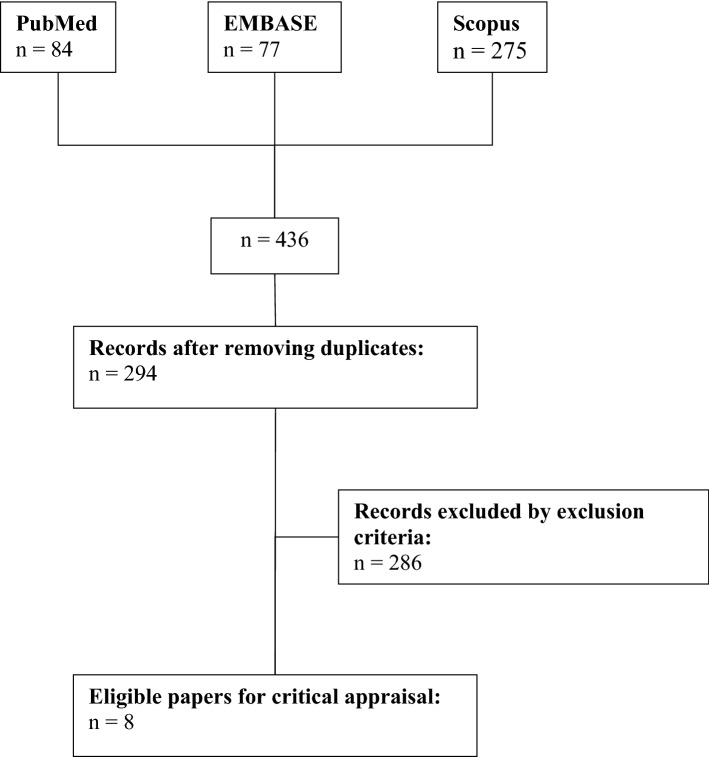
The authors searched PubMed, EMBASE and Scopus on November 26, 2020.

RESULTS

Eight studies were recruited in the current review following defined inclusion and exclusion criteria. Sample size in the selected studies ranged between 150 and 10,567. The most popular models were artificial neural networks (n = 4), random forests (n = 3) and support vector machines (n = 3). Features mostly correlated with NIHL and used in the models were: age (n = 6), duration of noise exposure (n = 5) and noise exposure level (n = 4). Five included studies used either split-sample validation (n = 3) or ten-fold cross-validation (n = 2). Assessment of accuracy ranged in value from 75.3% to 99% with a low prediction error/root-mean-square error in 3 studies. Only 2 studies measured discrimination risk using the receiver operating characteristic (ROC) curve and/or the area under ROC curve.

CONCLUSION

In spite of high accuracy and low prediction error of machine learning models, some improvement can be expected from larger sample sizes, multiple algorithm use, completed reports of model construction and the sufficient evaluation of calibration and discrimination risk.

摘要

目的

噪声性听力损失(NIHL)是一个全球性问题,影响着人们的生活和健康。本综述旨在通过分析不同机器学习(ML)技术的性能和模型构建过程,阐明应用 ML 预测 NIHL 的贡献和局限性。

方法

作者于 2020 年 11 月 26 日在 PubMed、EMBASE 和 Scopus 上进行了检索。

结果

本综述共纳入了 8 项符合纳入和排除标准的研究。入选研究的样本量范围为 150 至 10567。最受欢迎的模型是人工神经网络(n=4)、随机森林(n=3)和支持向量机(n=3)。与 NIHL 相关性最强且用于模型中的特征包括:年龄(n=6)、噪声暴露持续时间(n=5)和噪声暴露水平(n=4)。有 5 项研究分别使用了拆分样本验证(n=3)或 10 折交叉验证(n=2)。有 3 项研究评估准确性的范围值从 75.3%到 99%,预测误差/均方根误差较低。仅有 2 项研究使用接收者操作特征(ROC)曲线和/或 ROC 曲线下面积来衡量判别风险。

结论

尽管机器学习模型具有较高的准确性和较低的预测误差,但可以通过增加样本量、使用多种算法、完整报告模型构建过程以及充分评估校准和判别风险来进一步提高。
https://cdn.ncbi.nlm.nih.gov/pmc/blobs/d532/8238747/dcac36c1ef3e/420_2020_1648_Fig1_HTML.jpg

相似文献

1
Contributions and limitations of using machine learning to predict noise-induced hearing loss.利用机器学习预测噪声性听力损失的贡献和局限性。
Int Arch Occup Environ Health. 2021 Jul;94(5):1097-1111. doi: 10.1007/s00420-020-01648-w. Epub 2021 Jan 25.
2
Machine Learning Models for the Hearing Impairment Prediction in Workers Exposed to Complex Industrial Noise: A Pilot Study.机器在学习模型预测暴露在复杂工业噪声环境下工人的听力损失:一项试点研究。
Ear Hear. 2019 May/Jun;40(3):690-699. doi: 10.1097/AUD.0000000000000649.
3
Predicting hearing thresholds in occupational noise-induced hearing loss by auditory steady state responses.通过听觉稳态反应预测职业性噪声性听力损失的听阈
Ear Hear. 2014 May-Jun;35(3):330-8. doi: 10.1097/AUD.0000000000000001.
4
Analysis of correlation between window duration for kurtosis computation and accuracy of noise-induced hearing loss prediction.分析峭度计算的窗长与噪声性听力损失预测准确性之间的相关性。
J Acoust Soc Am. 2021 Apr;149(4):2367. doi: 10.1121/10.0003954.
5
Personal Health Information Inference Using Machine Learning on RNA Expression Data from Patients With Cancer: Algorithm Validation Study.利用癌症患者 RNA 表达数据进行机器学习的个人健康信息推断:算法验证研究。
J Med Internet Res. 2020 Aug 10;22(8):e18387. doi: 10.2196/18387.
6
Data-driven modeling and prediction of blood glucose dynamics: Machine learning applications in type 1 diabetes.基于数据驱动的血糖动力学建模与预测:机器学习在 1 型糖尿病中的应用。
Artif Intell Med. 2019 Jul;98:109-134. doi: 10.1016/j.artmed.2019.07.007. Epub 2019 Jul 26.
7
Predicting breast cancer 5-year survival using machine learning: A systematic review.使用机器学习预测乳腺癌 5 年生存率:系统评价。
PLoS One. 2021 Apr 16;16(4):e0250370. doi: 10.1371/journal.pone.0250370. eCollection 2021.
8
Predicting the hearing outcome in sudden sensorineural hearing loss via machine learning models.基于机器学习模型预测突发性聋的听力预后。
Clin Otolaryngol. 2018 Jun;43(3):868-874. doi: 10.1111/coa.13068. Epub 2018 Feb 20.
9
Analysis of plasma microRNA expression profiles in male textile workers with noise-induced hearing loss.噪声性听力损失男性纺织工人血浆微小RNA表达谱分析
Hear Res. 2016 Mar;333:275-282. doi: 10.1016/j.heares.2015.08.003. Epub 2015 Aug 13.
10
Construction and validation of a machine learning-based nomogram: A tool to predict the risk of getting severe coronavirus disease 2019 (COVID-19).基于机器学习的列线图的构建与验证:预测 2019 年冠状病毒病(COVID-19)重症风险的工具。
Immun Inflamm Dis. 2021 Jun;9(2):595-607. doi: 10.1002/iid3.421. Epub 2021 Mar 13.

引用本文的文献

1
Path Loss Prediction Model of 5G Signal Based on Fusing Data and XGBoost-SHAP Method.基于数据融合与XGBoost-SHAP方法的5G信号路径损耗预测模型
Sensors (Basel). 2025 Sep 2;25(17):5440. doi: 10.3390/s25175440.
2
Effects of air pollution and noise exposure on occupational hearing loss in oil workers: a prospective cohort study.空气污染和噪声暴露对石油工人职业性听力损失的影响:一项前瞻性队列研究。
BMC Public Health. 2025 Jul 23;25(1):2527. doi: 10.1186/s12889-025-23677-1.
3
Advancements in Robotics and AI Transforming Surgery and Rehabilitation.

本文引用的文献

1
Machine Learning Models for Predicting Hearing Prognosis in Unilateral Idiopathic Sudden Sensorineural Hearing Loss.用于预测单侧特发性突发性感音神经性听力损失听力预后的机器学习模型
Clin Exp Otorhinolaryngol. 2020 May;13(2):148-156. doi: 10.21053/ceo.2019.01858. Epub 2020 Mar 12.
2
Automated assessment of psychiatric disorders using speech: A systematic review.使用语音对精神疾病进行自动评估:一项系统综述。
Laryngoscope Investig Otolaryngol. 2020 Jan 31;5(1):96-116. doi: 10.1002/lio2.354. eCollection 2020 Feb.
3
Transient-evoked otoacoustic emission signals predicting outcomes of acute sensorineural hearing loss in patients with Ménière's disease.
机器人技术与人工智能的进步正在改变外科手术和康复治疗。
J Pharm Bioallied Sci. 2025 May;17(Suppl 1):S46-S48. doi: 10.4103/jpbs.jpbs_1937_24. Epub 2025 Apr 9.
4
Machine Learning Models Can Predict Tinnitus and Noise-Induced Hearing Loss.机器学习模型能够预测耳鸣和噪声性听力损失。
Ear Hear. 2025;46(5):1305-1316. doi: 10.1097/AUD.0000000000001670. Epub 2025 May 6.
5
Construction of a risk prediction model for occupational noise-induced hearing loss using routine blood and biochemical indicators in Shenzhen, China: a predictive modelling study.利用中国深圳的常规血液和生化指标构建职业性噪声性听力损失风险预测模型:一项预测建模研究
BMJ Open. 2025 Apr 28;15(4):e097249. doi: 10.1136/bmjopen-2024-097249.
6
Machine learning analysis of cardiovascular risk factors and their associations with hearing loss.心血管危险因素及其与听力损失关联的机器学习分析
Sci Rep. 2025 Mar 22;15(1):9944. doi: 10.1038/s41598-025-94253-1.
7
Research on noise-induced hearing loss based on functional and structural MRI using machine learning methods.基于功能和结构磁共振成像并运用机器学习方法的噪声性听力损失研究。
Sci Rep. 2025 Jan 26;15(1):3289. doi: 10.1038/s41598-025-87168-4.
8
Evaluating Prediction Models with Hearing Handicap Inventory for the Elderly in Chronic Otitis Media Patients.用老年人听力障碍量表评估慢性中耳炎患者的预测模型。
Diagnostics (Basel). 2024 Sep 10;14(18):2000. doi: 10.3390/diagnostics14182000.
9
Applications of Machine Learning in Meniere's Disease Assessment Based on Pure-Tone Audiometry.基于纯音听力测试的机器学习在梅尼埃病评估中的应用。
Otolaryngol Head Neck Surg. 2025 Jan;172(1):233-242. doi: 10.1002/ohn.956. Epub 2024 Aug 28.
10
Combination of static and dynamic neural imaging features to distinguish sensorineural hearing loss: a machine learning study.结合静态和动态神经影像学特征以区分感音神经性听力损失:一项机器学习研究。
Front Neurosci. 2024 Jun 12;18:1402039. doi: 10.3389/fnins.2024.1402039. eCollection 2024.
瞬态诱发耳声发射信号预测梅尼埃病患者急性感音神经性听力损失的预后
Acta Otolaryngol. 2020 Mar;140(3):230-235. doi: 10.1080/00016489.2019.1704865. Epub 2020 Jan 31.
4
Machine learning algorithm validation with a limited sample size.机器学习算法在有限样本量下的验证。
PLoS One. 2019 Nov 7;14(11):e0224365. doi: 10.1371/journal.pone.0224365. eCollection 2019.
5
Predicting and Weighting the Factors Affecting Workers' Hearing Loss Based on Audiometric Data Using C5 Algorithm.基于听力测试数据使用 C5 算法预测和加权影响工人听力损失的因素。
Ann Glob Health. 2019 Jun 18;85(1):88. doi: 10.5334/aogh.2522.
6
Predicting cochlear dead regions in patients with hearing loss through a machine learning-based approach: A preliminary study.基于机器学习的方法预测听力损失患者的耳蜗死区:一项初步研究。
PLoS One. 2019 Jun 3;14(6):e0217790. doi: 10.1371/journal.pone.0217790. eCollection 2019.
7
Development of an automatic classifier for the prediction of hearing impairment from industrial noise exposure.工业噪声暴露致听力损伤自动预测分类器的研发。
J Acoust Soc Am. 2019 Apr;145(4):2388. doi: 10.1121/1.5096643.
8
A systematic review shows no performance benefit of machine learning over logistic regression for clinical prediction models.系统评价显示,机器学习在临床预测模型中并未优于逻辑回归。
J Clin Epidemiol. 2019 Jun;110:12-22. doi: 10.1016/j.jclinepi.2019.02.004. Epub 2019 Feb 11.
9
Objective auditory brainstem response classification using machine learning.基于机器学习的客观听性脑干反应分类。
Int J Audiol. 2019 Apr;58(4):224-230. doi: 10.1080/14992027.2018.1551633. Epub 2019 Jan 21.
10
Performance of machine-learning algorithms to pattern recognition and classification of hearing impairment in Brazilian farmers exposed to pesticide and/or cigarette smoke.机器学习算法在识别和分类巴西农民因接触农药和/或吸烟而导致的听力损伤方面的性能。
Environ Sci Pollut Res Int. 2019 Mar;26(7):6481-6491. doi: 10.1007/s11356-018-04106-w. Epub 2019 Jan 8.