Department of Anatomy, Physiology, and Cell Biology, UC Davis School of Veterinary Medicine, UC Davis, Davis, CA, USA.
J Physiol. 2021 Apr;599(7):2075-2084. doi: 10.1113/JP281189. Epub 2021 Feb 4.
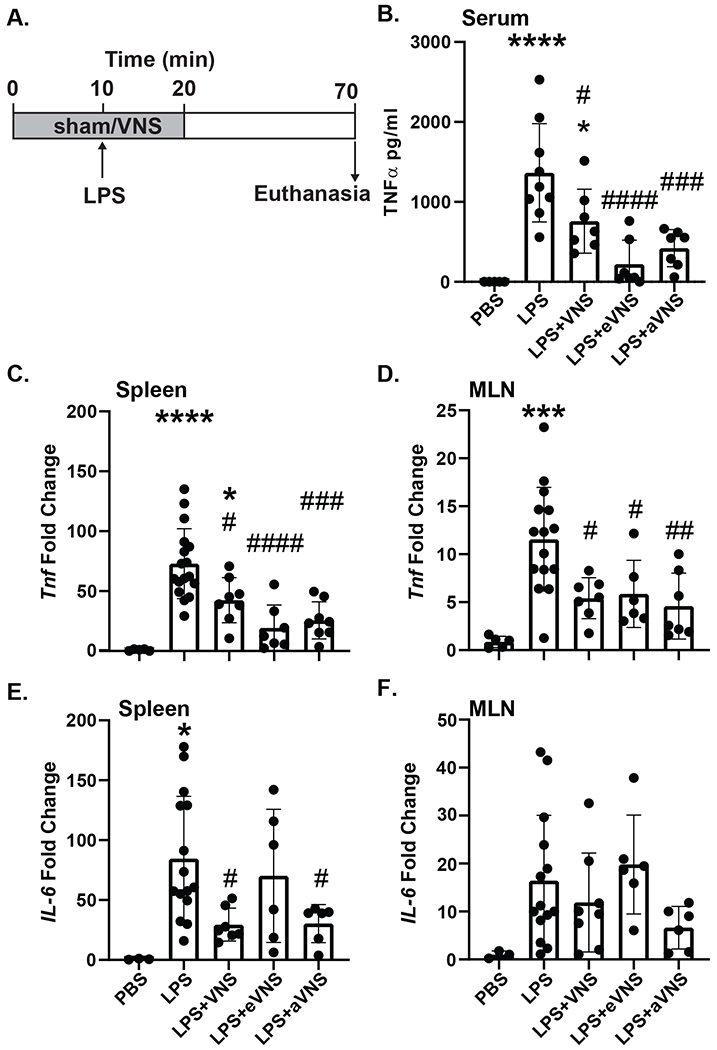
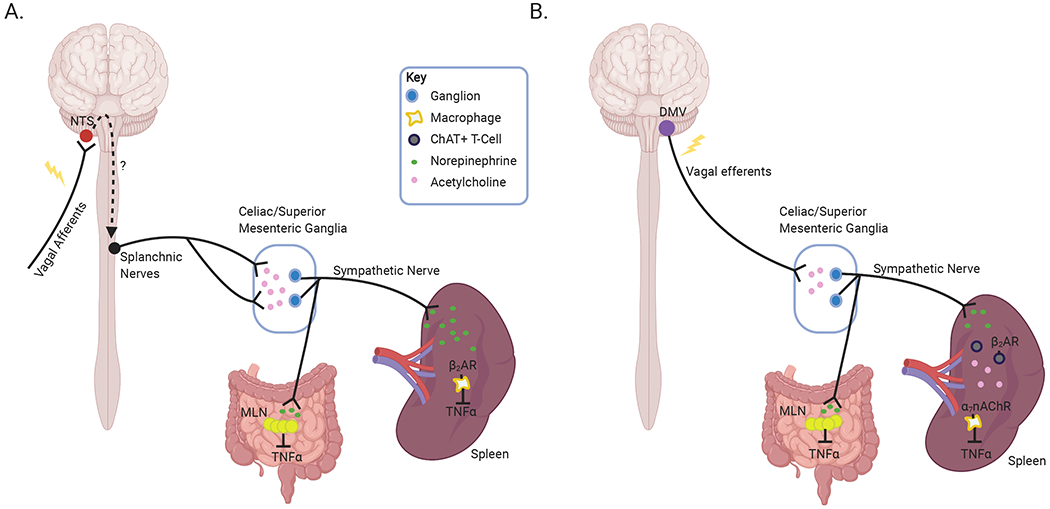
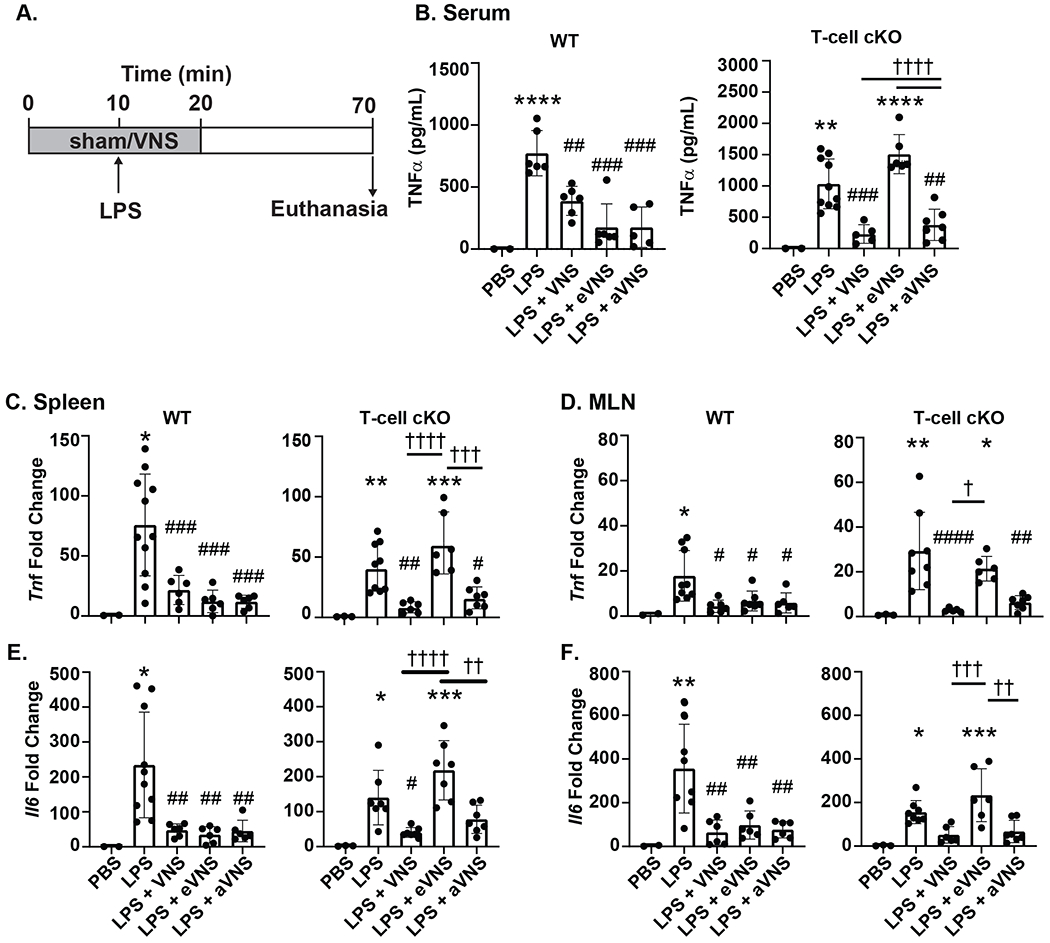
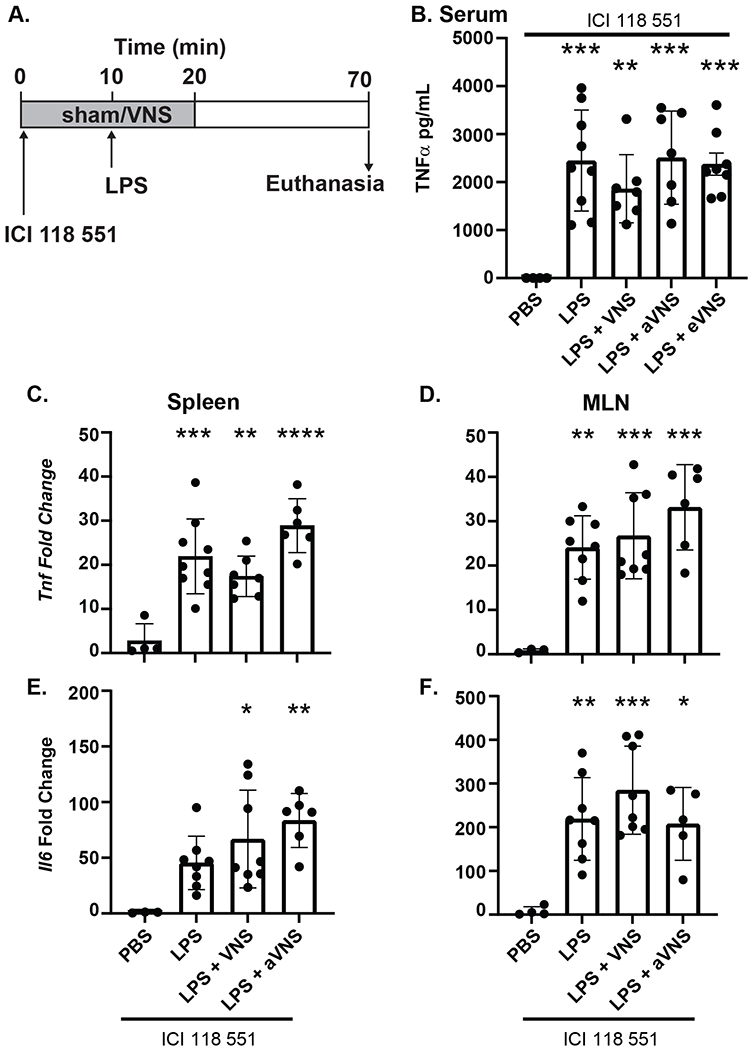
It has previously been shown that afferent and efferent vagal nerve stimulation potently inhibits lipopolysaccharide (LPS)-induced inflammation Our data show inhibition of inflammation by efferent but not afferent vagal nerve stimulation requires T-cell derived acetylcholine We show that afferent and efferent neuroimmune circuits require β -adrenergic receptor signalling ABSTRACT: Chronic inflammation due to inappropriate immune cell activation can have significant effects on a variety of organ systems, reducing lifespan and quality of life. As such, highly targeted control of immune cell activation is a major therapeutic goal. Vagus nerve stimulation (VNS) has emerged as a therapeutic modality that exploits neuroimmune communication to reduce immune cell activation and consequently inflammation. Although vagal efferent fibres were originally identified as the primary driver of anti-inflammatory actions, the vagus nerve in most species of animals predominantly comprises afferent fibres. Stimulation of vagal afferent fibres can also reduce inflammation; it is, however, uncertain how these two neuroimmune circuits diverge. Here we show that afferent VNS induces a mechanism distinct from efferent VNS, ameliorating lipopolysaccharide (LPS)-induced inflammation independently of T-cell derived acetylcholine (ACh) which is required by efferent VNS. Using a β -adrenergic receptor antagonist (β -AR), we find that immune regulation induced by intact, afferent, or efferent VNS occurs in a β AR-dependent manner. Together, our findings indicate that intact VNS activates at least two distinct neuroimmune circuits each with unique mechanisms of action. Selective targeting of either the vagal efferent or afferent fibres may provide more personalized, robust and effective control over inappropriate immune responses.
先前的研究表明,传入和传出迷走神经刺激可强烈抑制脂多糖(LPS)诱导的炎症。我们的数据表明,传出迷走神经刺激而非传入迷走神经刺激抑制炎症需要 T 细胞衍生的乙酰胆碱。我们表明,传入和传出神经免疫回路需要β-肾上腺素能受体信号。
由于免疫细胞激活不当而导致的慢性炎症会对各种器官系统产生重大影响,降低寿命和生活质量。因此,高度靶向控制免疫细胞激活是一个主要的治疗目标。迷走神经刺激(VNS)已成为一种治疗方式,利用神经免疫通讯来减少免疫细胞激活和炎症。虽然传出迷走神经纤维最初被确定为抗炎作用的主要驱动因素,但在大多数动物物种中,迷走神经主要由传入纤维组成。刺激迷走神经传入纤维也可以减轻炎症;然而,这两个神经免疫回路如何分化尚不清楚。在这里,我们表明传入 VNS 诱导的机制与传出 VNS 不同,可改善脂多糖(LPS)诱导的炎症,而传出 VNS 则需要 T 细胞衍生的乙酰胆碱(ACh)。使用β-肾上腺素能受体拮抗剂(β-AR),我们发现完整的、传入的或传出的 VNS 诱导的免疫调节以β-AR 依赖的方式发生。总之,我们的研究结果表明,完整的 VNS 至少激活了两个具有独特作用机制的不同神经免疫回路。选择性靶向迷走神经传出或传入纤维可能提供更个性化、更强大和更有效的控制不当免疫反应的方法。