Umar Haruna Isiyaku, Siraj Bushra, Ajayi Adeola, Jimoh Tajudeen O, Chukwuemeka Prosper Obed
Department of Biochemistry, School of Sciences, Federal University of Technology, Along Owo-Ilesha Express Way, P.M.B. 704, Akure, Ondo State, Nigeria.
Ioncure Tech Pvt. Ltd., Delhi, 110085, India.
J Genet Eng Biotechnol. 2021 Jan 25;19(1):16. doi: 10.1186/s43141-021-00120-7.
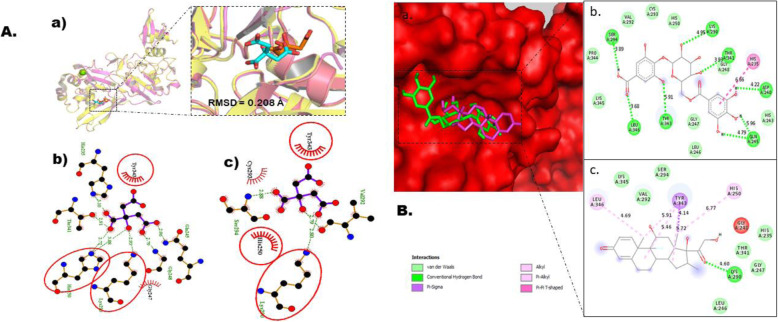
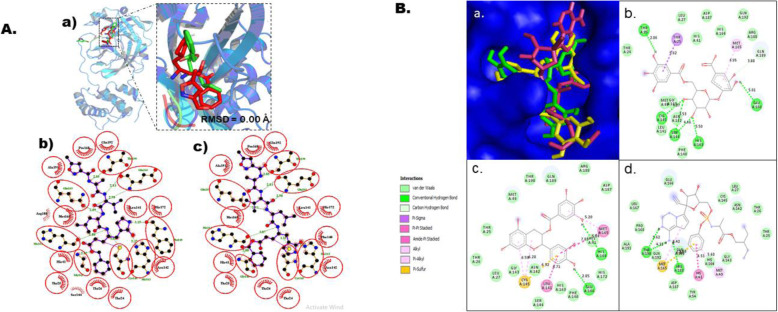
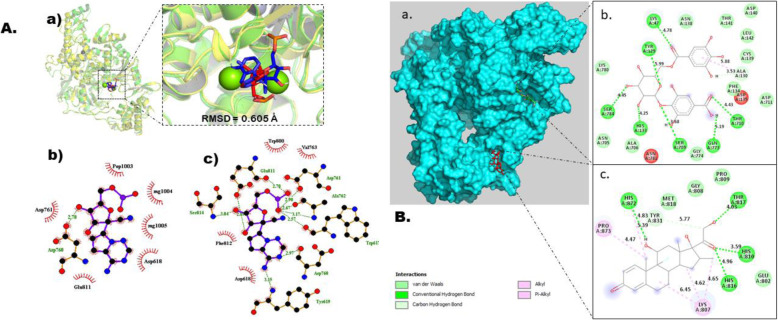
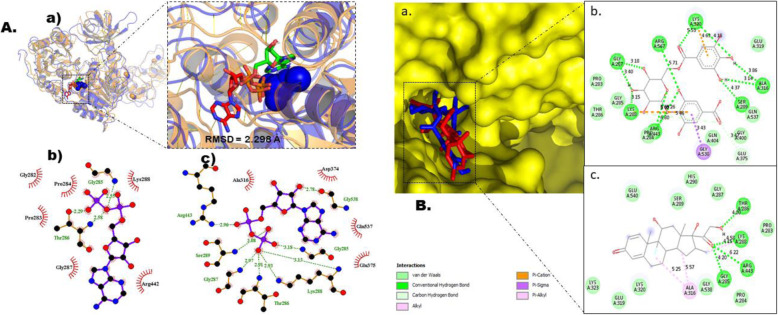
The World Health Organization has recently declared a new coronavirus disease (COVID-19) a pandemic and a global health emergency. The pressure to produce drugs and vaccines against the ongoing pandemic has resulted in the use of some drugs such as azithromycin, chloroquine (sulfate and phosphate), hydroxychloroquine, dexamethasone, favipiravir, remdesivir, ribavirin, ivermectin, and lopinavir/ritonavir. However, reports from some of the clinical trials with these drugs have proved detrimental on some COVID-19 infected patients with side effects more of which cardiomyopathy, cardiotoxicity, nephrotoxicity, macular retinopathy, and hepatotoxicity have been recently reported. Realizing the need for potent and harmless therapeutic compounds to combat COVID-19, we attempted in this study to find promising therapeutic compounds against the imminent threat of this virus. In this current study, 16 derivatives of gallic acid were docked against five selected non-structural proteins of SARS-COV-2 known to be a good target for finding small molecule inhibitors against the virus, namely, nsp3, nsp5, nsp12, nsp13, and nsp14. All the protein crystal structures and 3D structures of the small molecules (16 gallic acid derivatives and 3 control drugs) were retrieved from the Protein database (PDB) and PubChem server respectively. The compounds with lower binding energy than the control drugs were selected and subjected to pharmacokinetics screening using AdmetSAR server.
4-O-(6-galloylglucoside) gave binding energy values of - 8.4, - 6.8, - 8.9, - 9.1, and - 7.5 kcal/mol against Mpro, nsp3, nsp12, nsp13, and nsp15 respectively. Based on the ADMET profile, 4-O-(6-galloylglucoside) was found to be metabolized by the liver and has a very high plasma protein binding.
The result of this study revealed that 4-O-(6-galloylglucoside) could be a promising inhibitor against these SAR-Cov-2 proteins. However, there is still a need for further molecular dynamic simulation, in vivo and in vitro studies to support these findings.
世界卫生组织最近宣布新型冠状病毒病(COVID-19)为大流行病和全球卫生紧急情况。针对当前大流行病研发药物和疫苗的压力导致了一些药物的使用,如阿奇霉素、氯喹(硫酸盐和磷酸盐)、羟氯喹、地塞米松、法匹拉韦、瑞德西韦、利巴韦林、伊维菌素和洛匹那韦/利托那韦。然而,一些使用这些药物的临床试验报告显示,对一些COVID-19感染患者有害,最近报告了更多副作用,其中包括心肌病、心脏毒性、肾毒性、黄斑视网膜病变和肝毒性。意识到需要有效且无害的治疗化合物来对抗COVID-19,我们在本研究中试图寻找针对这种病毒迫在眉睫威胁的有前景的治疗化合物。在当前这项研究中,将16种没食子酸衍生物与严重急性呼吸综合征冠状病毒2(SARS-CoV-2)的5种选定非结构蛋白进行对接,已知这些蛋白是寻找针对该病毒的小分子抑制剂的良好靶点,即nsp3、nsp5、nsp12、nsp13和nsp14。所有蛋白质晶体结构和小分子(16种没食子酸衍生物和3种对照药物)的3D结构分别从蛋白质数据库(PDB)和PubChem服务器中检索。选择结合能低于对照药物的化合物,并使用AdmetSAR服务器进行药代动力学筛选。
4-O-(6-没食子酰葡萄糖苷)对Mpro、nsp3、nsp12、nsp13和nsp15的结合能值分别为-8.4、-6.8、-8.9、-9.1和-7.5千卡/摩尔。基于ADMET概况,发现4-O-(6-没食子酰葡萄糖苷)由肝脏代谢,并且具有非常高的血浆蛋白结合率。
本研究结果表明,4-O-(6-没食子酰葡萄糖苷)可能是针对这些SARS-CoV-2蛋白的一种有前景的抑制剂。然而,仍然需要进一步的分子动力学模拟、体内和体外研究来支持这些发现。