Moyne Oriane, Castelli Florence, Bicout Dominique J, Boccard Julien, Camara Boubou, Cournoyer Benoit, Faudry Eric, Terrier Samuel, Hannani Dalil, Huot-Marchand Sarah, Léger Claire, Maurin Max, Ngo Tuan-Dung, Plazy Caroline, Quinn Robert A, Attree Ina, Fenaille François, Toussaint Bertrand, Le Gouëllec Audrey
Département de Biochimie, Faculté de médecine de Grenoble, CNRS, CHU Grenoble Alpes, University Grenoble Alpes, Grenoble INP*, TIMC-IMAG, 38000 Grenoble, France.
Département Médicaments et Technologies pour la Santé (DMTS), University Paris-Saclay, CEA, INRAE, MetaboHUB, 91191 Gif sur Yvette, France.
Metabolites. 2021 Jan 21;11(2):63. doi: 10.3390/metabo11020063.
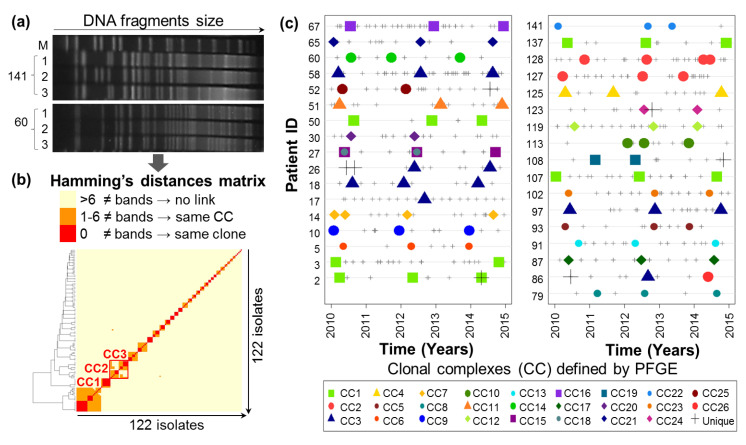
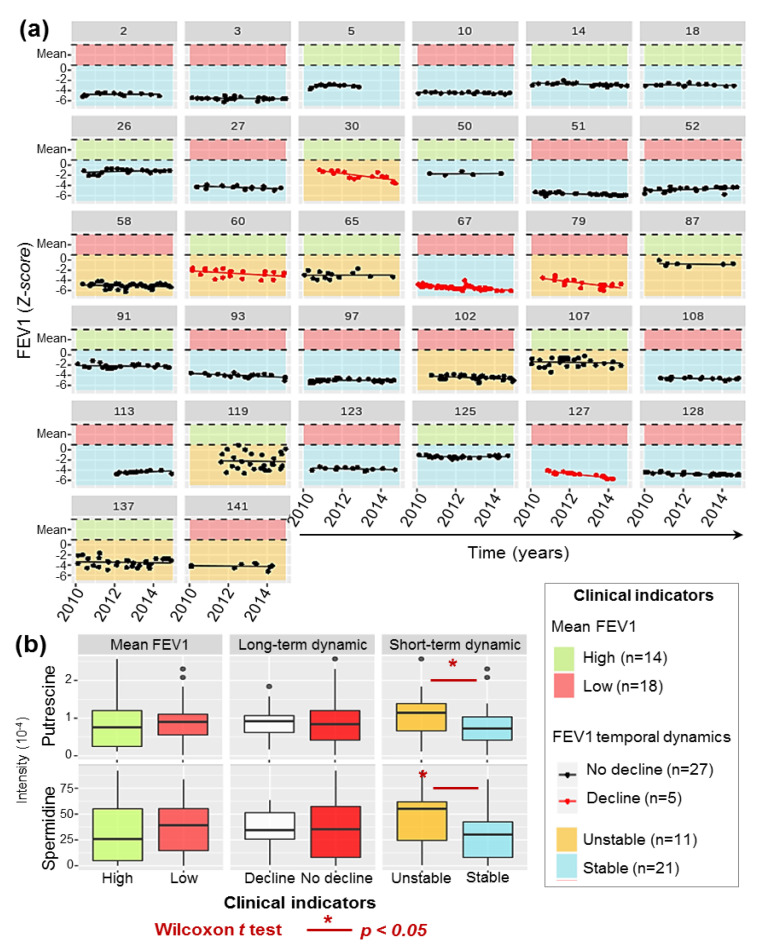
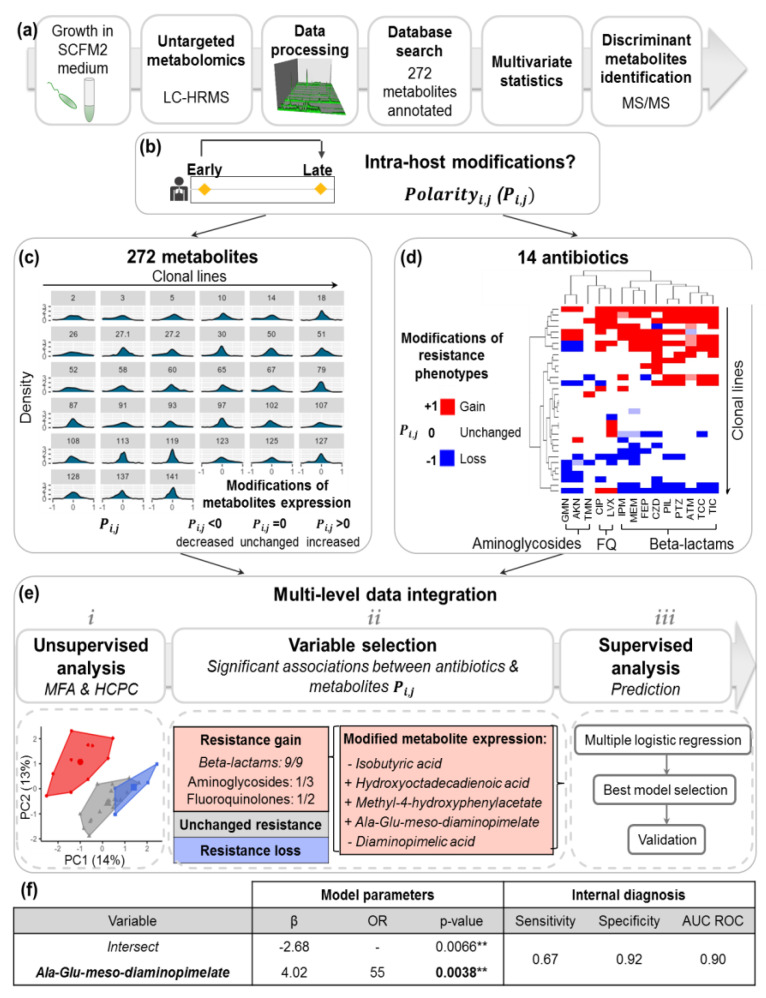
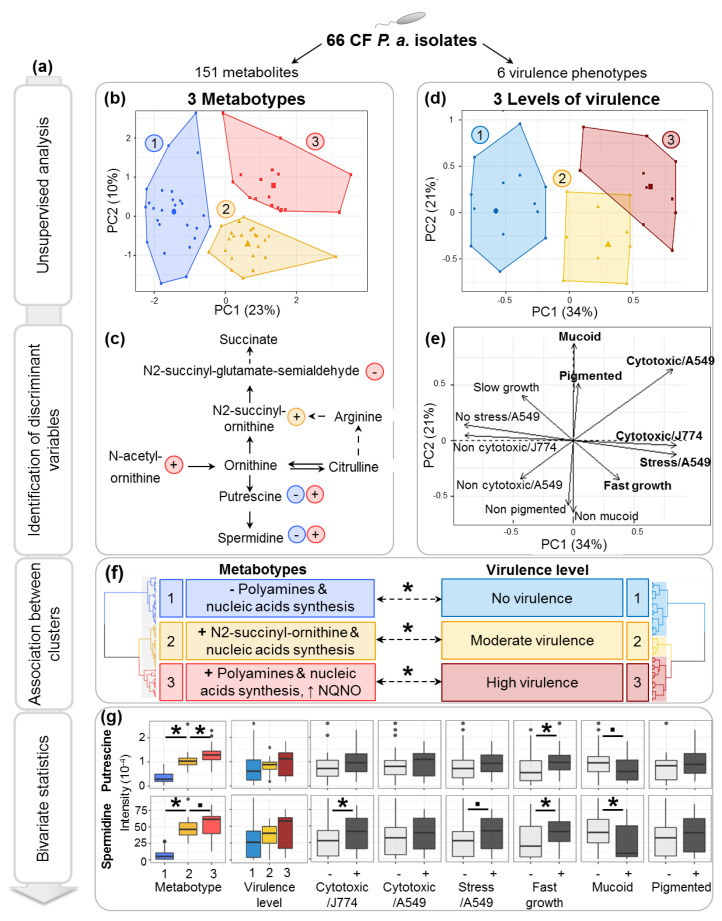
() is one of the most critical antibiotic resistant bacteria in the world and is the most prevalent pathogen in cystic fibrosis (CF), causing chronic lung infections that are considered one of the major causes of mortality in CF patients. Although several studies have contributed to understanding within-host adaptive evolution at a genomic level, it is still difficult to establish direct relationships between the observed mutations, expression of clinically relevant phenotypes, and clinical outcomes. Here, we performed a comparative untargeted LC/HRMS-based metabolomics analysis of sequential isolates from chronically infected CF patients to obtain a functional view of adaptation. Metabolic profiles were integrated with expression of bacterial phenotypes and clinical measurements following multiscale analysis methods. Our results highlighted significant associations between "metabotypes", expression of antibiotic resistance and virulence phenotypes, and frequency of clinical exacerbations, thus identifying promising biomarkers and therapeutic targets for difficult-to-treat infections.
(某细菌名称)是世界上最关键的抗生素耐药细菌之一,也是囊性纤维化(CF)中最普遍的病原体,会引发慢性肺部感染,而这被认为是CF患者死亡的主要原因之一。尽管多项研究有助于在基因组水平上理解宿主内适应性进化,但仍难以在观察到的突变、临床相关表型的表达和临床结果之间建立直接关系。在此,我们对慢性感染CF患者的连续分离株进行了基于液相色谱/高分辨率质谱的非靶向比较代谢组学分析,以获得该细菌适应性的功能视图。采用多尺度分析方法将代谢谱与细菌表型表达及临床测量结果相结合。我们的结果突出了该细菌“代谢型”、抗生素耐药性和毒力表型表达以及临床恶化频率之间的显著关联,从而确定了针对难治性该细菌感染的有前景的生物标志物和治疗靶点。