Lim Katherine Y L, Mullally Christopher A, Haese Ethan C, Kibble Emily A, McCluskey Nicolie R, Mikucki Edward C, Thai Van C, Stubbs Keith A, Sarkar-Tyson Mitali, Kahler Charlene M
Marshall Centre for Infectious Disease Research and Training, School of Biomedical Sciences, University of Western Australia, Crawley, WA 6009, Australia.
School of Veterinary and Life Sciences, Murdoch University, Murdoch, WA 6150, Australia.
Antibiotics (Basel). 2021 Jan 21;10(2):103. doi: 10.3390/antibiotics10020103.
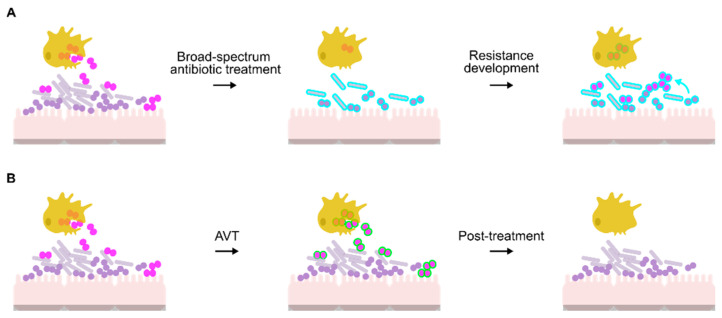
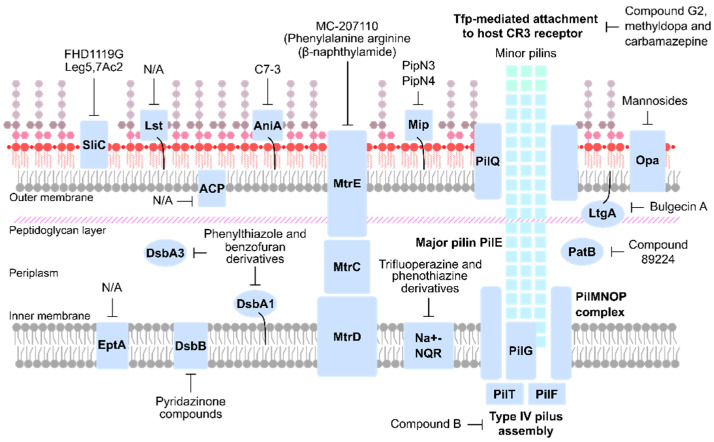
While antimicrobial resistance (AMR) is seen in both and , the former has become resistant to commonly available over-the-counter antibiotic treatments. It is imperative then to develop new therapies that combat current AMR isolates whilst also circumventing the pathways leading to the development of AMR. This review highlights the growing research interest in developing anti-virulence therapies (AVTs) which are directed towards inhibiting virulence factors to prevent infection. By targeting virulence factors that are not essential for gonococcal survival, it is hypothesized that this will impart a smaller selective pressure for the emergence of resistance in the pathogen and in the microbiome, thus avoiding AMR development to the anti-infective. This review summates the current basis of numerous anti-virulence strategies being explored for .
虽然在[具体内容缺失]和[具体内容缺失]中都观察到了抗菌药物耐药性(AMR),但前者已对常用的非处方抗生素治疗产生了耐药性。因此,必须开发新的疗法来对抗当前的AMR分离株,同时还要规避导致AMR产生的途径。本综述强调了在开发抗毒力疗法(AVTs)方面日益增长的研究兴趣,这些疗法旨在抑制毒力因子以预防感染。通过靶向对淋球菌生存并非必需的毒力因子,据推测这将对病原体和微生物群中耐药性的出现施加较小的选择压力,从而避免对抗感染药物产生AMR。本综述总结了目前正在探索的针对[具体内容缺失]的众多抗毒力策略的基础。