Xu Jun, Ma Hsiao-Yen, Liang Shuang, Sun Mengxi, Karin Gabriel, Koyama Yukinori, Hu Ronglin, Quehenberger Oswald, Davidson Nicholas O, Dennis Edward A, Kisseleva Tatiana, Brenner David A
Department of Medicine University of California San Diego La Jolla CA.
Department of Pharmacology University of California San Diego La Jolla CA.
Hepatol Commun. 2017 Oct 30;1(10):1043-1057. doi: 10.1002/hep4.1115. eCollection 2017 Dec.
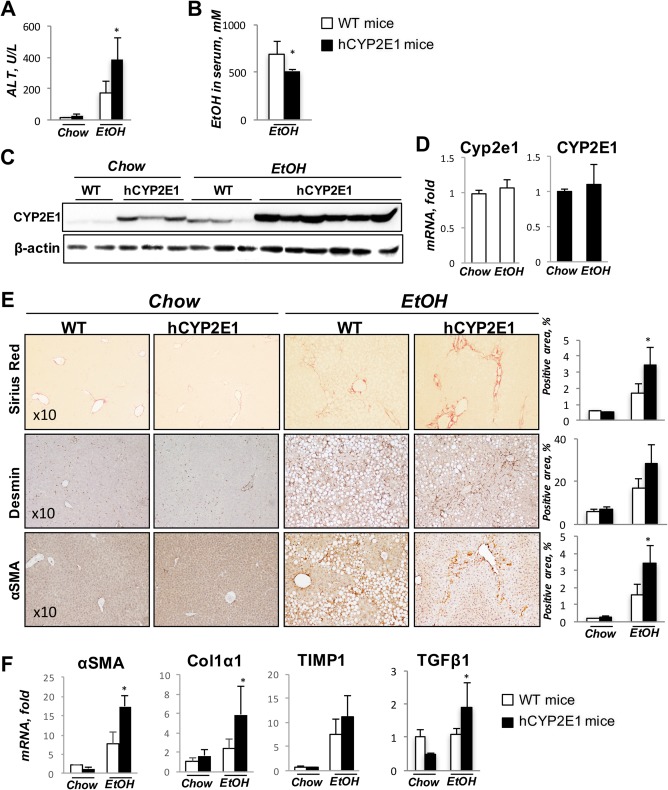
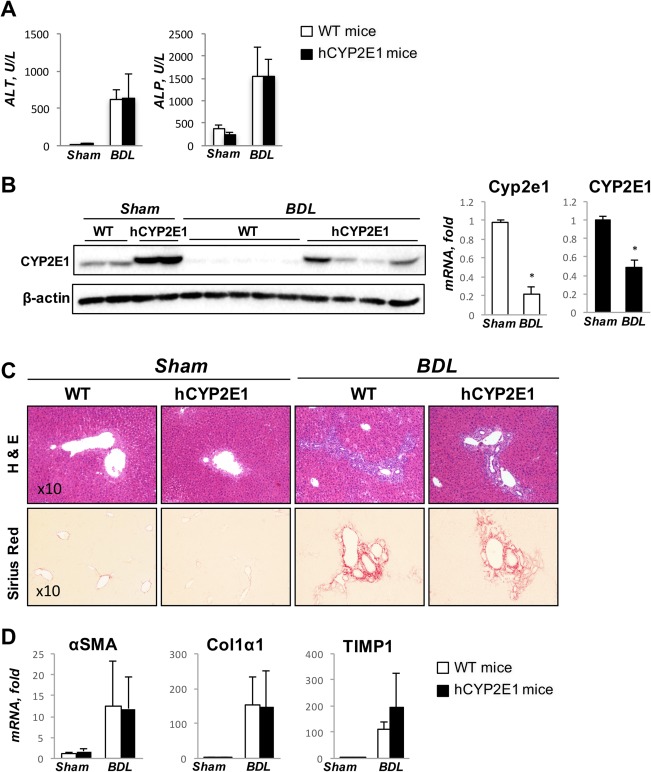
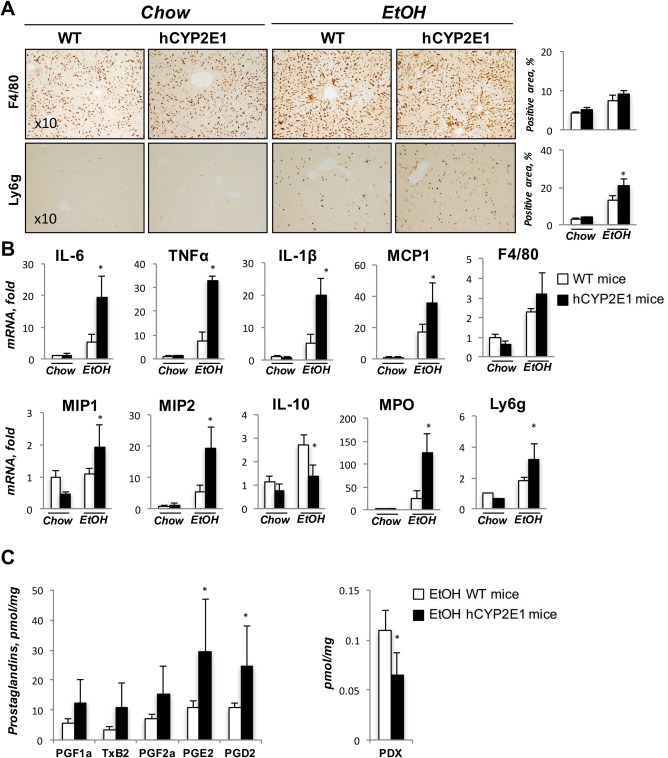
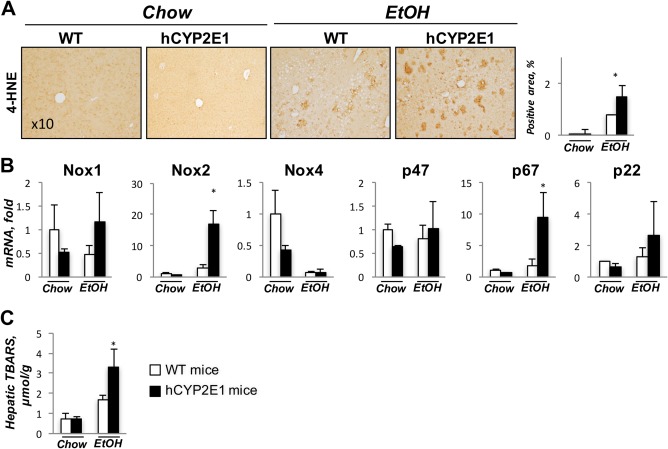
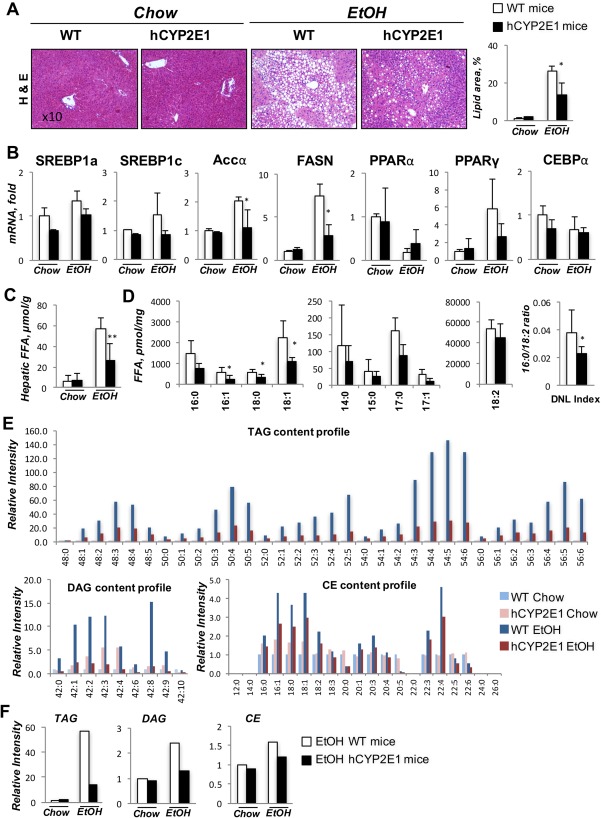
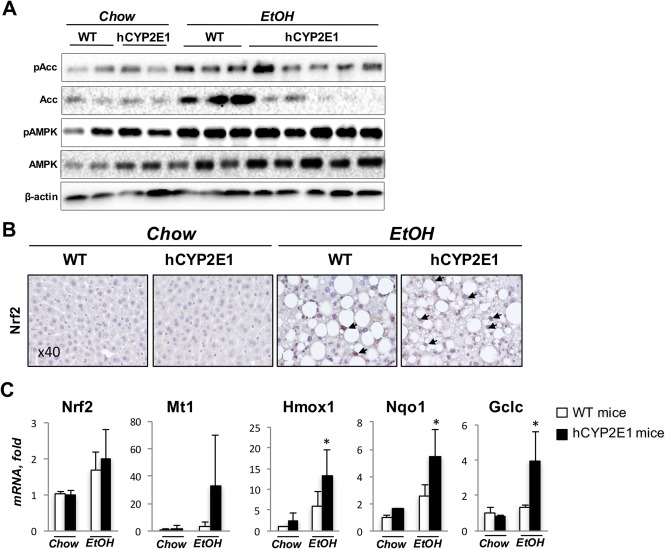
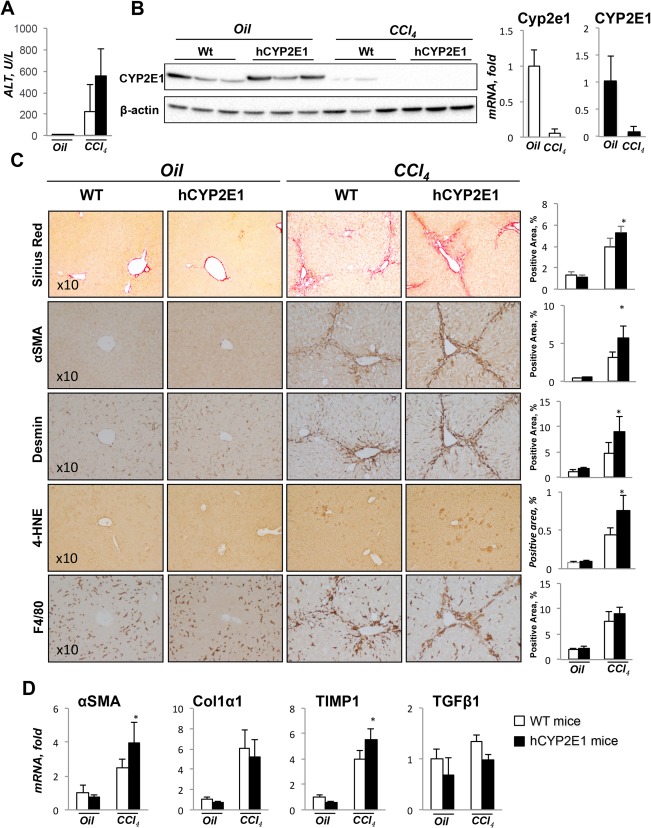
Cytochrome P450 2E1 () plays an important role in alcohol and toxin metabolism by catalyzing the conversion of substrates into more polar metabolites and producing reactive oxygen species. Reactive oxygen species-induced oxidative stress promotes hepatocyte injury and death, which in turn induces inflammation, activation of hepatic stellate cells, and liver fibrosis. Here, we analyzed mice expressing only the human gene (hCYP2E1) to determine differences in hCYP2E1 versus endogenous mouse Cyp2e1 function with different liver injuries. After intragastric alcohol feeding, expression was induced in both hCYP2E1 and wild-type (Wt) mice. hCYP2E1 mice had greater inflammation, fibrosis, and lipid peroxidation but less hepatic steatosis. In addition, hCYP2E1 mice demonstrated increased expression of fibrogenic and proinflammatory genes but decreased expression of lipogenic genes compared to Wt mice. Lipidomics of free fatty acid, triacylglycerol, diacylglycerol, and cholesterol ester species and proinflammatory prostaglandins support these conclusions. Carbon tetrachloride-induced injury suppressed expression of both mouse and human , but again hCYP2E1 mice exhibited greater hepatic stellate cell activation and fibrosis than Wt controls with comparable expression of proinflammatory genes. By contrast, 14-day bile duct ligation induced comparable cholestatic injury and fibrosis in both genotypes. : Alcohol-induced liver fibrosis but not hepatic steatosis is more severe in the hCYP2E1 mouse than in the Wt mouse, demonstrating the use of this model to provide insight into the pathogenesis of alcoholic liver disease. ( 2017;1:1043-1057).
细胞色素P450 2E1()通过催化底物转化为极性更强的代谢产物并产生活性氧,在酒精和毒素代谢中发挥重要作用。活性氧诱导的氧化应激促进肝细胞损伤和死亡,进而引发炎症、肝星状细胞活化及肝纤维化。在此,我们分析了仅表达人类基因(hCYP2E1)的小鼠,以确定hCYP2E1与内源性小鼠Cyp2e1在不同肝损伤情况下功能的差异。经胃内给予酒精后,hCYP2E1和野生型(Wt)小鼠中该基因的表达均被诱导。hCYP2E1小鼠有更严重的炎症、纤维化和脂质过氧化,但肝脂肪变性较轻。此外,与Wt小鼠相比,hCYP2E1小鼠中促纤维化和促炎基因的表达增加,而成脂基因的表达减少。游离脂肪酸、三酰甘油、二酰甘油和胆固醇酯类以及促炎前列腺素的脂质组学分析支持了这些结论。四氯化碳诱导的损伤抑制了小鼠和人类该基因的表达,但同样,hCYP2E1小鼠比Wt对照表现出更严重的肝星状细胞活化和纤维化,且促炎基因表达相当。相比之下,14天胆管结扎在两种基因型小鼠中诱导了相当程度的胆汁淤积性损伤和纤维化。结论:酒精性肝纤维化而非肝脂肪变性在hCYP2E1小鼠中比在Wt小鼠中更严重,表明该模型可用于深入了解酒精性肝病的发病机制。(2017;1:1043 - 1057)