Ladner Jason T, Henson Sierra N, Boyle Annalee S, Engelbrektson Anna L, Fink Zane W, Rahee Fatima, D'ambrozio Jonathan, Schaecher Kurt E, Stone Mars, Dong Wenjuan, Dadwal Sanjeet, Yu Jianhua, Caligiuri Michael A, Cieplak Piotr, Bjørås Magnar, Fenstad Mona H, Nordbø Svein A, Kainov Denis E, Muranaka Norihito, Chee Mark S, Shiryaev Sergey A, Altin John A
The Pathogen and Microbiome Institute, Northern Arizona University, Flagstaff, AZ, USA.
The Translational Genomics Research Institute (TGen), Phoenix and Flagstaff, AZ, USA.
Cell Rep Med. 2021 Jan 19;2(1):100189. doi: 10.1016/j.xcrm.2020.100189.
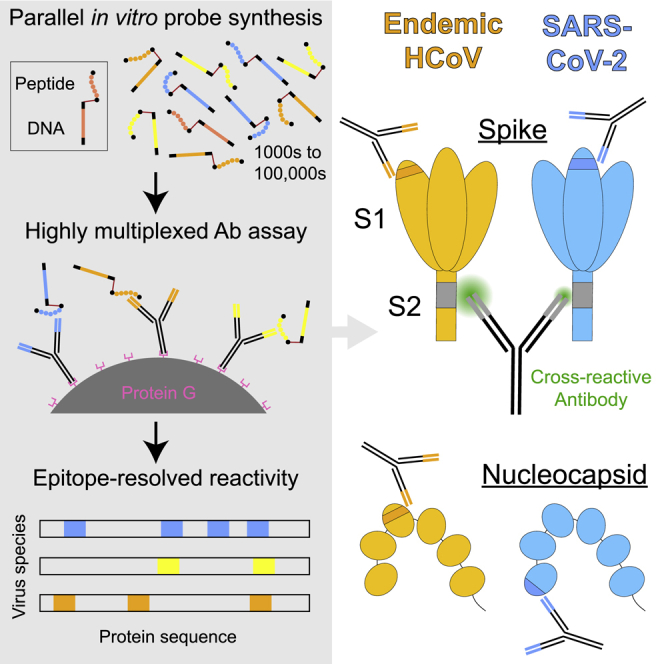
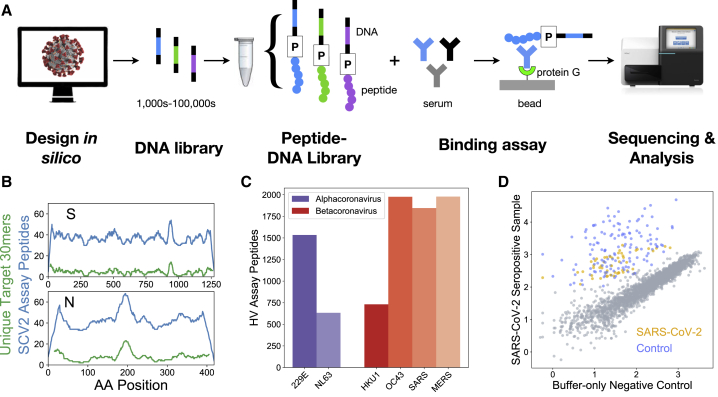
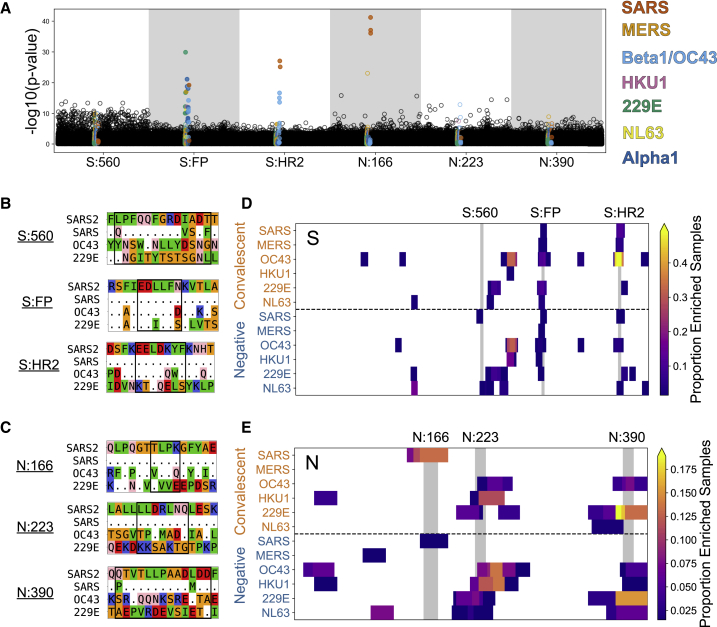
The SARS-CoV-2 proteome shares regions of conservation with endemic human coronaviruses (CoVs), but it remains unknown to what extent these may be cross-recognized by the antibody response. Here, we study cross-reactivity using a highly multiplexed peptide assay (PepSeq) to generate an epitope-resolved view of IgG reactivity across all human CoVs in both COVID-19 convalescent and negative donors. PepSeq resolves epitopes across the SARS-CoV-2 Spike and Nucleocapsid proteins that are commonly targeted in convalescent donors, including several sites also recognized in some uninfected controls. By comparing patterns of homologous reactivity between CoVs and using targeted antibody-depletion experiments, we demonstrate that SARS-CoV-2 elicits antibodies that cross-recognize pandemic and endemic CoV antigens at two Spike S2 subunit epitopes. We further show that these cross-reactive antibodies preferentially bind endemic homologs. Our findings highlight sites at which the SARS-CoV-2 response appears to be shaped by previous CoV exposures and which have the potential to raise broadly neutralizing responses.
严重急性呼吸综合征冠状病毒2(SARS-CoV-2)的蛋白质组与地方性人类冠状病毒(CoV)存在保守区域,但这些区域在多大程度上会被抗体反应交叉识别仍不清楚。在这里,我们使用一种高度多重的肽分析方法(PepSeq)研究交叉反应性,以生成新冠康复者和阴性捐赠者中所有人类冠状病毒IgG反应性的表位解析视图。PepSeq解析了SARS-CoV-2刺突蛋白和核衣壳蛋白上的表位,这些表位是康复者中常见的靶点,包括一些在一些未感染对照中也被识别的位点。通过比较不同冠状病毒之间的同源反应模式并进行靶向抗体去除实验,我们证明SARS-CoV-2在刺突蛋白S2亚基的两个表位上引发了交叉识别大流行和地方性冠状病毒抗原的抗体。我们进一步表明,这些交叉反应性抗体优先结合地方性同源物。我们的研究结果突出了一些位点,在这些位点上,SARS-CoV-2反应似乎受到先前冠状病毒暴露的影响,并且有可能引发广泛的中和反应。